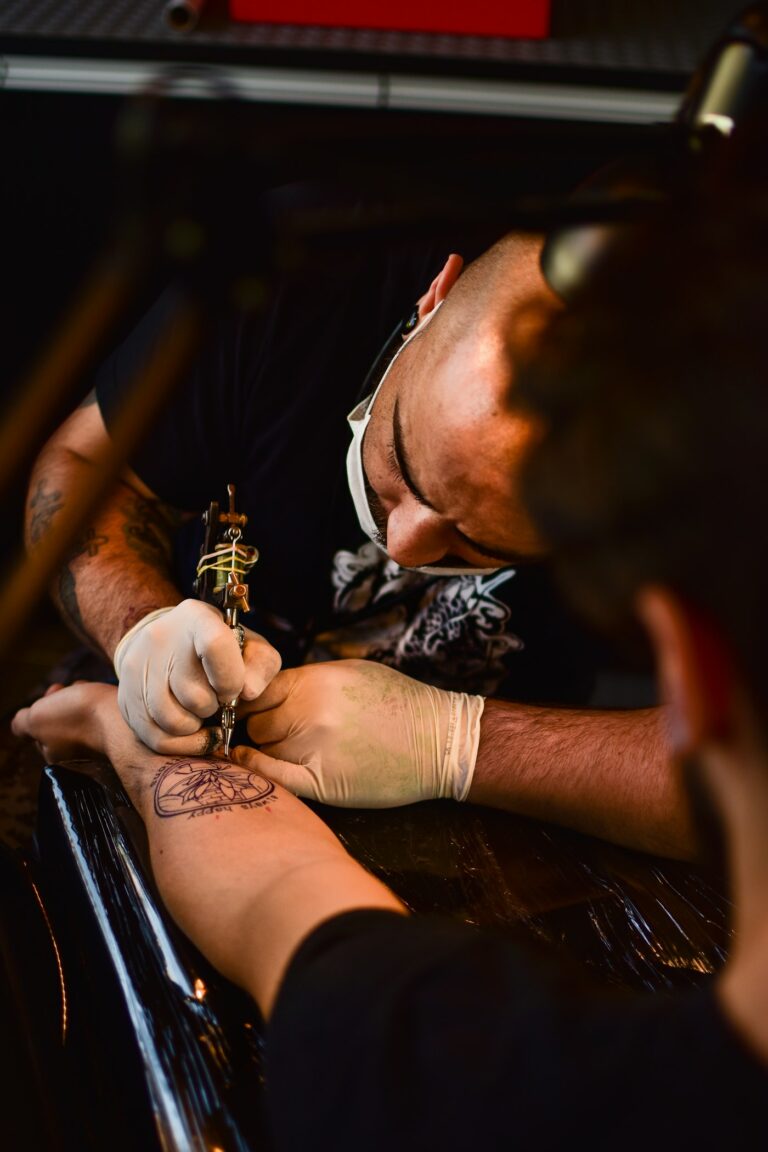
Tattoo Aftercare: 7 Best Steps for Safe, Fast Healing
Good tattoo aftercare is the difference between a piece that stays sharp for decades and one that heals patchy or faded. For the first couple of weeks your new tattoo is an open wound, and the way you treat it now decides how it will look for years.
This guide covers seven simple steps, a realistic healing timeline, what to avoid, and the warning signs that mean you should call a doctor. Always follow your artist's instructions first. Artists use different bandages and products, and their advice is tailored to the work they just did.
Table of Contents
Why Tattoo Aftercare Matters
During a session, the needle deposits ink into the dermis, the layer of skin below the surface. Your body immediately starts repairing the tiny wounds, and the top layer of skin closes over the ink within a few weeks. If that process is disturbed by scratching, soaking or sun, ink can be pulled out and lines can blur.
Poor care also raises the risk of infection. The Mayo Clinic notes that tattoos can lead to skin infections and allergic reactions, which is why clean hands and clean products matter so much in the first weeks.
7 Tattoo Aftercare Steps for the First Weeks
- Leave the wrap on as long as your artist says. A plastic wrap usually stays on for a few hours; an adhesive clear film, often called second skin, can stay on for three to five days.
- Wash your hands with soap before you touch the tattoo, every single time.
- Clean gently with lukewarm water and a mild, fragrance-free soap. Use your fingertips, never a washcloth or sponge.
- Pat dry with a clean paper towel and let the area air dry for a few minutes.
- Moisturize lightly with the ointment or unscented lotion your artist recommends. A thin layer is enough; too much can suffocate the skin.
- Let it breathe with loose, clean clothing that does not rub the area.
- Repeat two to three times a day until the peeling stage is over.
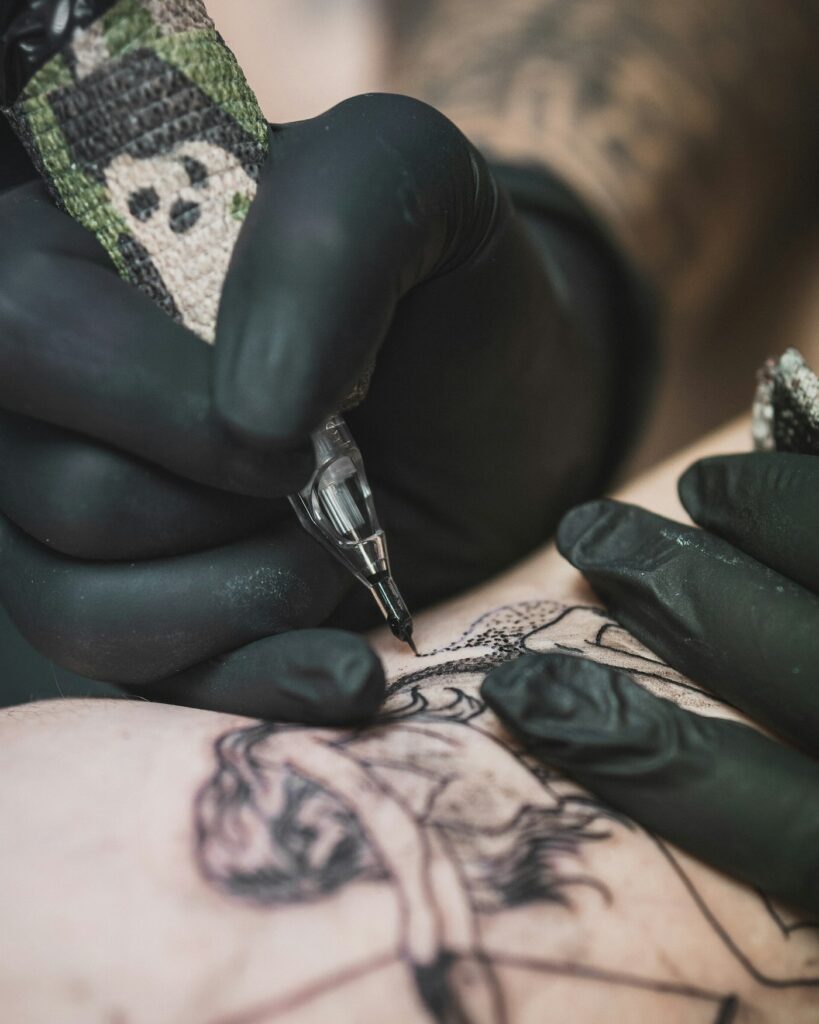
Tattoo Healing Timeline
Every body heals at its own pace, even with perfect aftercare, and large or heavily shaded pieces take longer. This timeline shows what most people can expect.
Days 1 to 3: Ooze and tenderness
Some redness, swelling, warmth and clear or ink-tinted fluid are normal. The area may feel like a sunburn. Stick to your aftercare routine: keep it clean and lightly moisturized.
Days 4 to 14: Peeling and itching
The tattoo will start to flake like a sunburn and may itch a lot. Do not scratch or pick. Pulling off flakes early can pull out ink and leave light spots. Lightly tap the area or apply a thin layer of lotion when the itch gets intense.
Weeks 2 to 4: Surface healed
The top layer of skin usually closes within two to four weeks. The tattoo may look slightly cloudy or dull; this is normal while the deeper layers settle.
Months 1 to 3: Fully settled
Deeper skin layers can take a few months to fully heal. After that, your tattoo will look its clearest, and you can judge whether any spots need a touch-up.
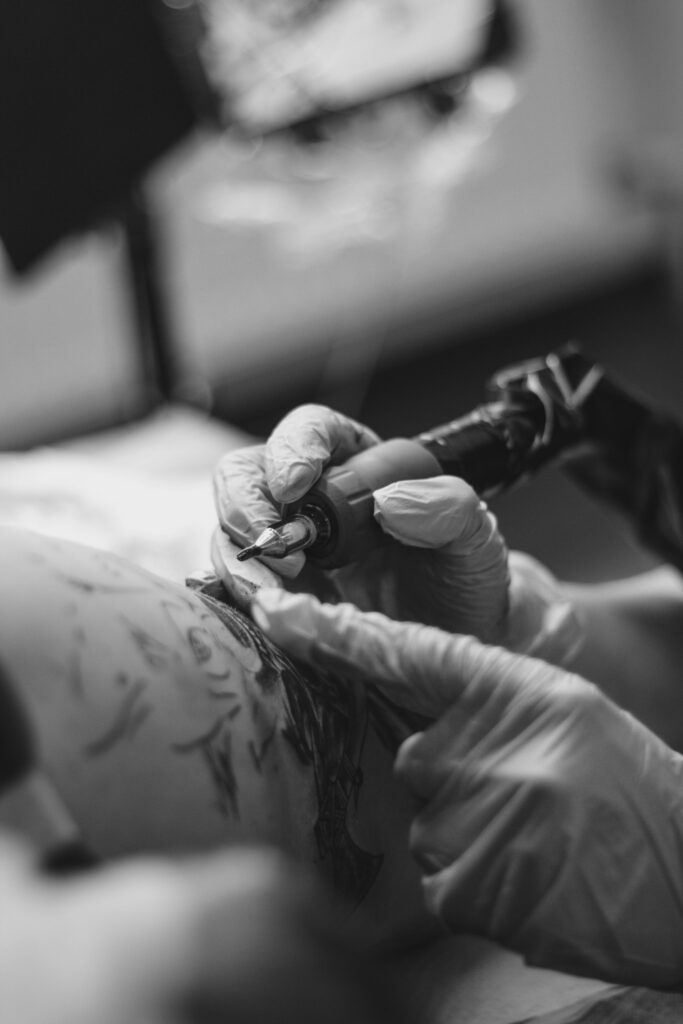
What to Avoid While Healing
- Swimming and soaking in pools, hot tubs, lakes, the ocean or baths for at least two to three weeks.
- Direct sun on the fresh tattoo; cover it with loose clothing instead of sunscreen until it is fully healed.
- Tight clothing that rubs, sticks or traps sweat.
- Heavy workouts that stretch the area or press it against gym equipment for the first few days.
- Scented lotions, thick layers of petroleum jelly and home remedies not approved by your artist.
- Shaving over the tattoo until it has fully healed.
Choosing Aftercare Products
You do not need expensive aftercare products. Most artists recommend a fragrance-free liquid soap and either a thin healing ointment for the first few days or a plain, unscented lotion. Avoid products with alcohol, heavy fragrance or glitter, since they can irritate healing skin.
The U.S. Food and Drug Administration encourages people to report any bad reaction to a tattoo or product to their health care provider. If a product burns or causes a rash, stop using it and contact your artist or doctor.
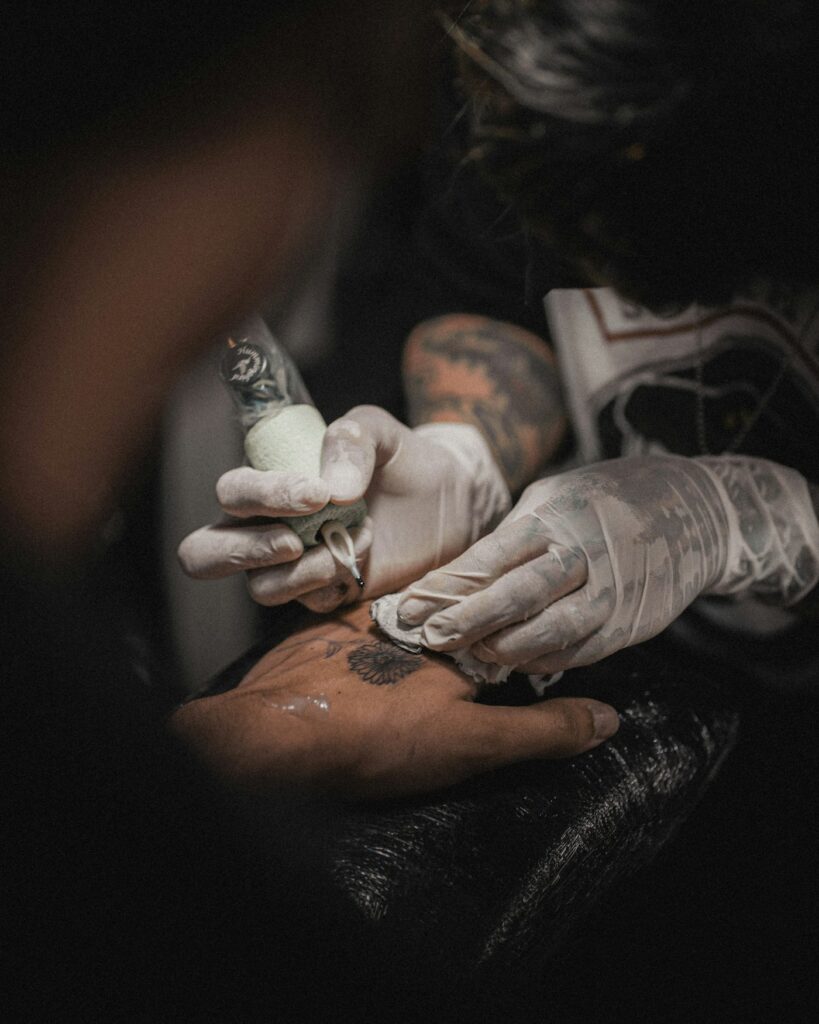
Long-Term Care for a Bright Tattoo
Once healed, sunscreen is your tattoo's best friend. UV light breaks down ink over time, so use a broad-spectrum SPF 30 or higher on exposed tattoos, as recommended by the Skin Cancer Foundation. Keeping skin moisturized and staying hydrated also help colors look vibrant.
Fine line and color pieces are the most sensitive to sun. Learn more in our guide to fine line tattoos.
Signs of Infection and When to See a Doctor
Mild redness and swelling in the first days are normal. Contact a doctor if you notice any of the following:
- Redness or swelling that spreads or gets worse after day three.
- Increasing pain, heat or throbbing.
- Pus, a bad smell or yellow crust.
- Red streaks spreading from the tattoo.
- Fever or chills.
Your artist can advise on normal healing, but only a medical professional should assess a possible infection or allergic reaction.
Tattoo Aftercare by Placement
Where your tattoo sits changes your tattoo aftercare routine. Areas that move, sweat or rub against clothing need a little extra attention during aftercare.
- Hands and fingers: you wash your hands often, so pat the tattoo dry every time and reapply a thin layer of lotion. Expect faster fading and possible touch-ups.
- Feet and ankles: wear open or loose shoes for the first days and keep socks clean. Swelling is common, so rest with your feet up when you can.
- Ribs and back: choose soft, loose shirts and sleep on your other side. Ask someone to help with hard-to-reach spots.
- Neck and behind the ear: keep hair products, perfume and makeup away from the area.
- Inner arm and legs: avoid tight sleeves, leggings and skinny jeans that rub the healing skin.
Common Aftercare Mistakes
Most healing problems come from a few simple aftercare mistakes. Avoiding them is the easiest way to protect your investment.
- Over-moisturizing: thick layers of ointment trap moisture and can cause bubbling or pimples. Use a thin layer and wipe off any excess.
- Picking and scratching: pulling off flakes takes ink with them.
- Re-wrapping with plastic at home: unless your artist tells you to, let the tattoo breathe.
- Using the wrong products: scented lotions, alcohol and harsh soaps irritate healing skin.
- Sleeping on dirty sheets: change your bedding the night of your appointment.
- Going back to the pool too soon: chlorine and bacteria in water can cause infection and fading.
Good aftercare is simple, but it takes consistency. Set a reminder on your phone to wash and moisturize at the same times each day, and your new tattoo will heal clean and bright. If you plan to add more work later, our tattoo cost guide can help you budget for your next session.
Frequently Asked Questions
When can I shower after getting a tattoo?
You can usually shower the same day once the wrap comes off. Keep showers short, avoid very hot water, and do not let the spray beat directly on the tattoo.
How long does tattoo aftercare last?
Daily aftercare usually lasts two to four weeks, until the peeling is over. Sun protection is for life.
Why does my new tattoo look faded?
During healing, a layer of new skin forms over the ink and can make it look cloudy. It typically clears up within a month.
Can I work out after a new tattoo?
Light activity is fine, but avoid heavy sweating, stretching and gym equipment contact on the area for a few days. Planning your next piece? Read our first tattoo tips, tattoo pain chart and more tattoo tips.