Blackwork Tattoo: 6 Striking Designs and the Best Style Guide
A blackwork tattoo uses only black ink, often in large solid areas, bold patterns and strong contrast with bare skin. There is no color and very little grey shading, just black and skin working together. The result is graphic, powerful and timeless, which is why blackwork has become one of the most requested styles in tattoo studios across the USA. Norse symbols look great in blackwork, see our Viking tattoo ideas.
This guide explains where the style comes from, the main types of blackwork, why it ages so well, 6 striking designs on real skin, and practical advice on placement, cover ups, pain, cost and healing heavy black ink.
Table of Contents
What Is a Blackwork Tattoo?
Blackwork is defined by its ink rather than its subject. Any image can be done in blackwork, from mandalas to animals, as long as it relies on pure black lines, fills, patterns and dots. Artists use negative space, the bare skin left inside the design, as an important part of the composition, much like a woodcut print or paper cut-out.
Where Blackwork Comes From
Pure black tattooing is one of the oldest traditions in the world. Polynesian, Micronesian, Borneo and many other Indigenous cultures used bold black patterns for thousands of years; read more in our tribal tattoo guide. The name blackwork is often linked to a style of black thread embroidery that was popular in England in the 1500s. Modern blackwork grew in the 2000s and 2010s, when artists combined these traditions with sacred geometry, dotwork, illustration and graphic design.
Types of Blackwork Tattoos
- Ornamental: lace, filigree, mandalas and jewelry-inspired shapes.
- Geometric and sacred geometry: lines, triangles, circles and patterns with mathematical balance.
- Dotwork: shading built from thousands of tiny dots, often combined with geometry.
- Illustrative blackwork: animals, skulls, flowers and scenes drawn like engravings or woodcuts.
- Neo tribal: sharp, flowing black shapes inspired by traditional tribal work.
- Blackout: large areas of skin filled completely with solid black.
- Abstract and brutal black: free, expressive shapes and heavy black fills.
Why Blackwork Tattoos Age So Well
Black ink is the most stable tattoo pigment. It resists fading better than color, and bold lines hold their shape as the skin ages. Blackwork also looks striking on every skin tone, and its high contrast reads clearly even from across a room. That combination makes it one of the most durable styles you can choose.
6 Blackwork Tattoo Designs on Real Skin
These examples show the range of the style, from patterned forearm pieces to full face work.
1. Hexagon Pattern Forearm
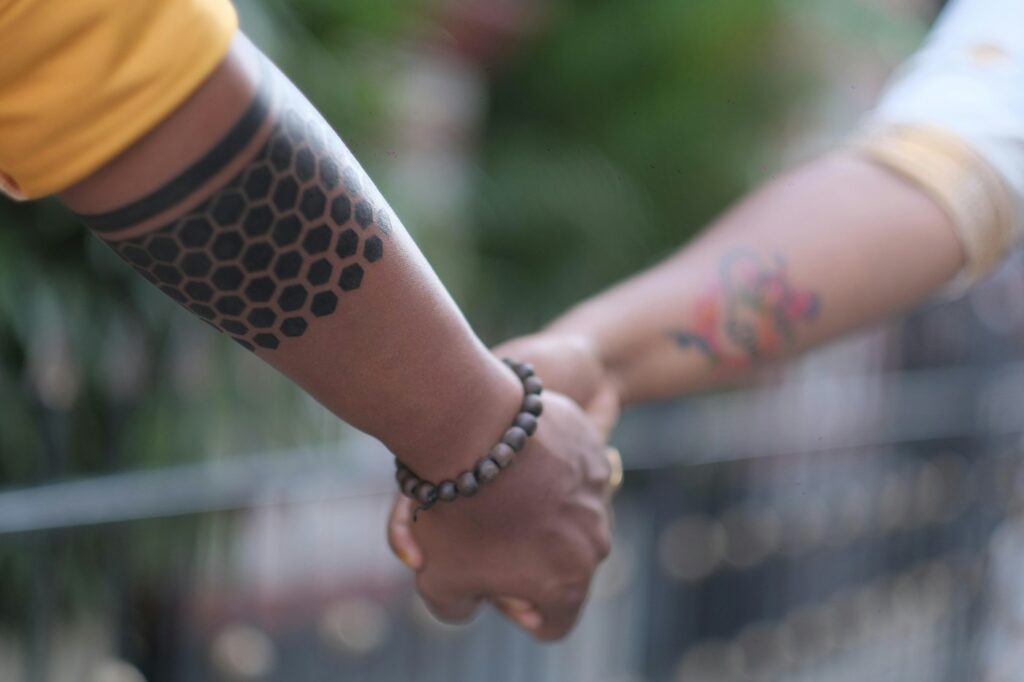
Repeating hexagons filled with solid black and fine dots create a honeycomb effect that wraps the forearm. Patterns like this are a great first blackwork tattoo because they are bold but easy to expand later into a sleeve.
2. Ornamental Blackwork Forearm
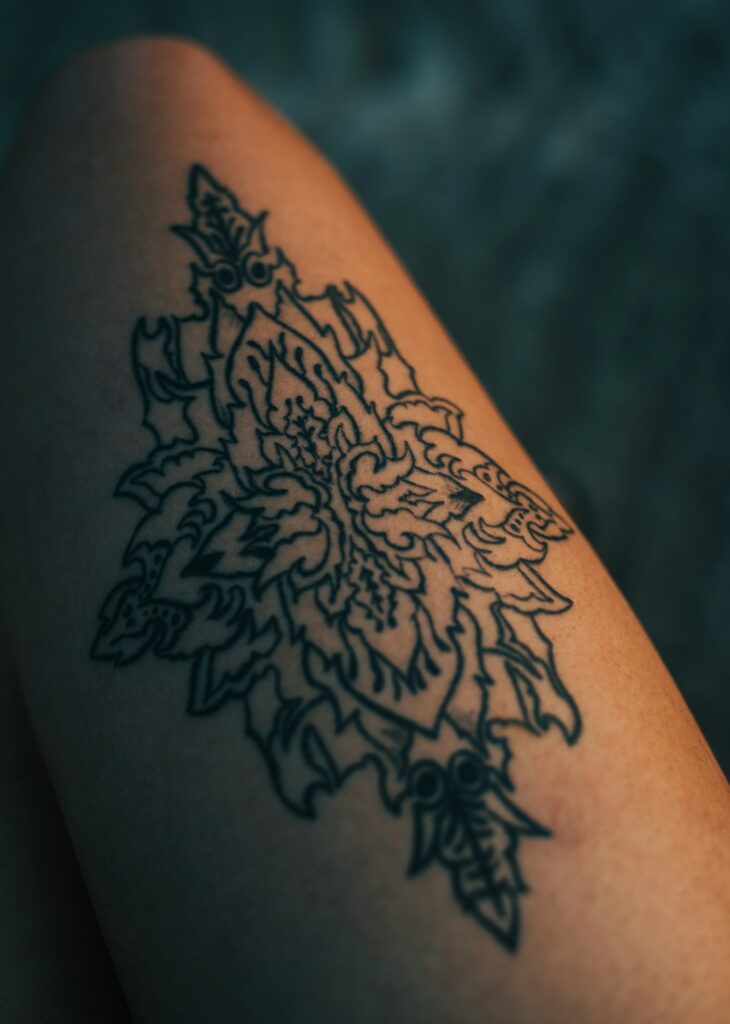
Ornamental blackwork uses lace-like shapes, petals and symmetrical details inspired by jewelry, architecture and mandalas. The strong outlines and filled areas keep the design clear from a distance.
3. Geometric Calf Pieces
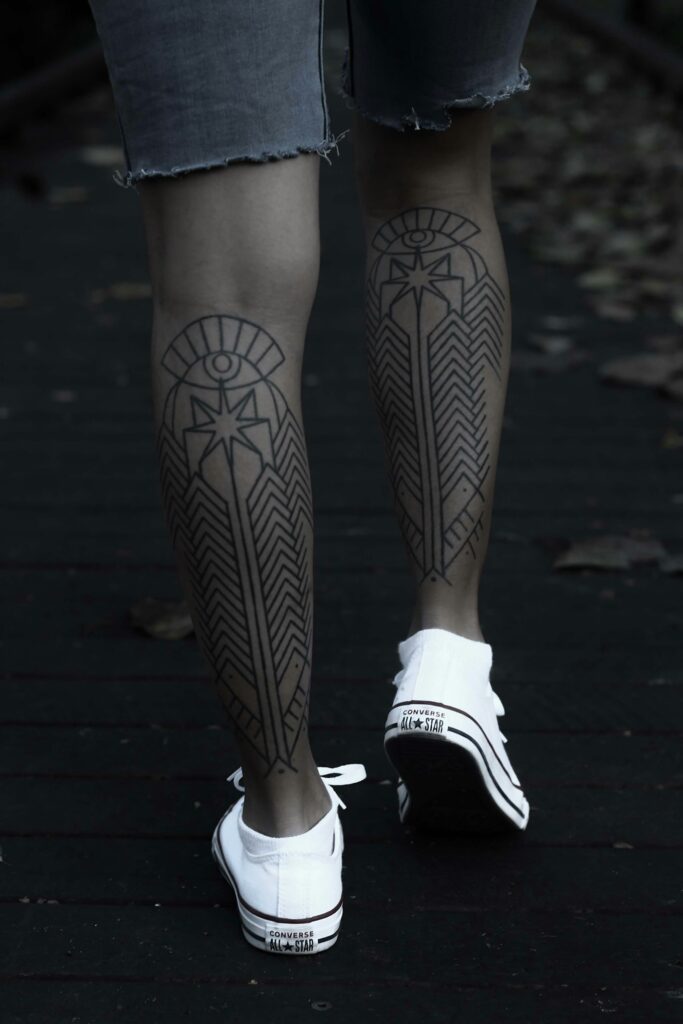
Mirrored geometric designs on both calves show how well blackwork follows the shape of the body. Straight lines and dotwork gradients run with the muscle, making the legs look long and balanced.
4. Bold Linework in Progress
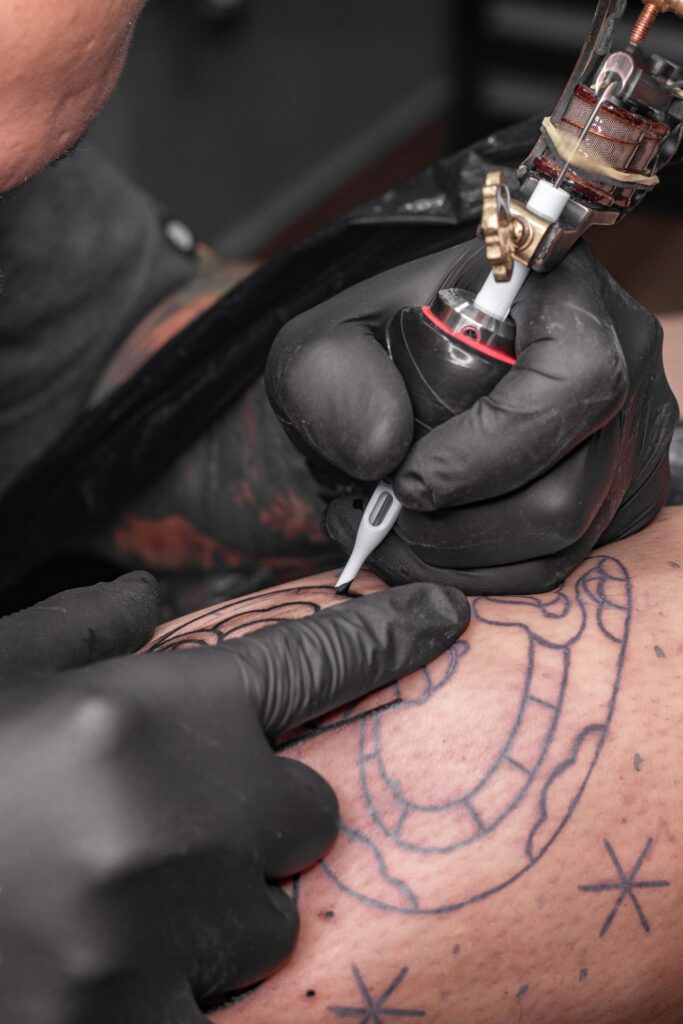
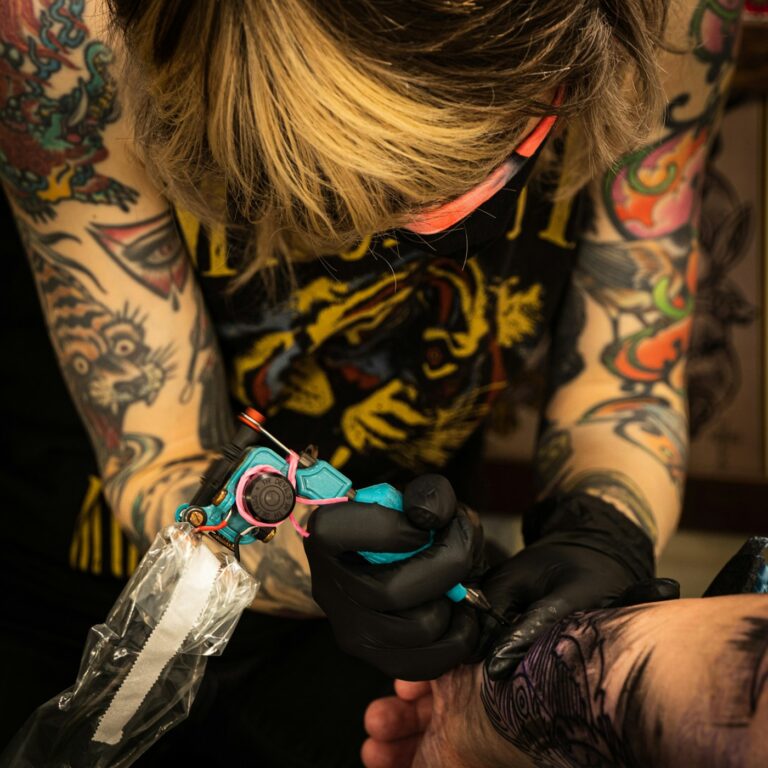
Blackwork often starts with thick, confident lines. Once the outline is in place, the artist fills areas with solid black, dot shading or patterns, which is why larger pieces are usually done over several sessions.
5. Symbol Sleeve in Progress
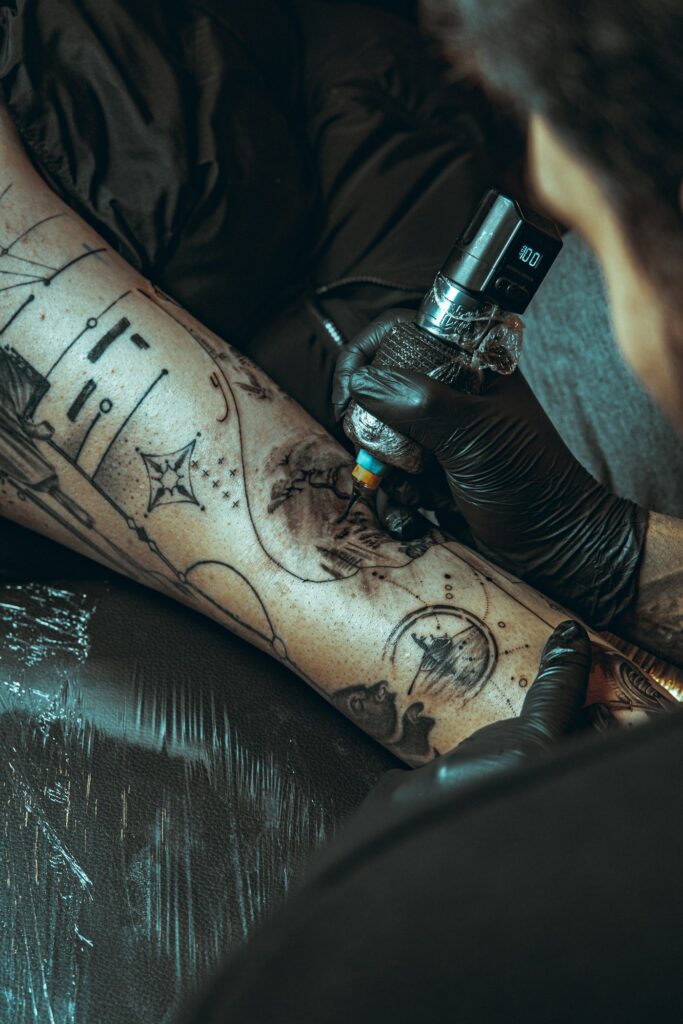
This sleeve mixes lines, symbols and graphic elements in pure black ink. Blackwork is ideal for sleeves because the high contrast ties many different images together without color.
6. Face and Neck Blackwork

At the most extreme end, blackwork can cover the face, head and neck. Pieces like this are a lifelong commitment and should only be done by very experienced artists after serious thought.
Best Placements for Blackwork
- Forearm and sleeve: the most popular spot for patterns that wrap the arm; see our sleeve tattoos for men.
- Calves and legs: geometric designs that follow the muscle.
- Back and spine: large mandalas and symmetrical ornamental pieces.
- Chest and sternum: ornamental and mandala designs that frame the body.
- Hands and fingers: bold black holds up better than fine detail here; see our hand tattoo guide.
Blackwork for Cover Ups
Blackwork is one of the most effective ways to hide an old tattoo. Solid black fills, dense patterns and dark ornamental shapes can cover almost any older ink. Blackout sleeves and bands are often used for cover ups that other styles cannot handle. If you want more design freedom, a few laser sessions can lighten the old tattoo first; see our tattoo removal cost guide.
How to Design a Great Blackwork Piece
- Use negative space: bare skin inside the design keeps it from becoming a heavy black blob.
- Balance solid and detail: mix bold fills with fine lines or dots for depth.
- Follow the body: patterns should flow with muscles and joints.
- Plan for expansion: blackwork connects easily, so leave room for more pieces.
- Choose a specialist: packing smooth, even black is a skill; look at healed work.
Does Blackwork Hurt More?
The pain depends on placement, but large solid black areas require many passes of the needle over the same skin, which can feel more intense and take longer than line work. Blackout sessions are known to be tough. Short, regular sessions help. Check your spot on our tattoo pain chart.
Blackwork Tattoo Cost
In the USA, most artists charge $100 to $250 per hour. A small patterned piece may cost $150 to $400, a forearm or calf piece $400 to $1,200, and a full blackwork or blackout sleeve $2,000 to $6,000 or more. See our tattoo cost guide.
Healing Heavy Black Ink
Dense black work can swell and weep more than line work in the first days and may form thicker flakes. Keep it clean, moisturize lightly and resist picking. Large blackout areas may need extra rest, and your artist may space sessions further apart. Our tattoo healing process and tattoo peeling guides explain what to expect, and the American Academy of Dermatology shares useful aftercare advice.
Blackwork Tattoo Ideas by Theme
- Animals: wolves, snakes, ravens and moths drawn like old engravings; see our snake tattoo meaning.
- Botanical: ferns, roses and wildflowers with solid black leaves and bare-skin petals.
- Sacred geometry: the flower of life, Metatron's cube, mandalas and sri yantra.
- Mythology: Medusa, dragons, Norse symbols and gods in bold black; see our Medusa tattoo meaning.
- Celestial: suns, moons, stars and planets in dotwork.
- Abstract: brush strokes, splashes and graphic shapes with no set subject.
- Bands: solid or patterned bands around the arm, wrist, leg or finger.
Combining Blackwork With Other Styles
A blackwork tattoo pairs well with many other techniques. Fine line details inside a bold frame add delicacy. A single color accent, such as red, can make one element stand out while the rest stays black. Blackwork backgrounds are also a popular way to tie together older tattoos of different styles into one sleeve. Just make sure the balance is intentional, so the design feels unified rather than crowded.
Blackwork on Every Skin Tone
Black ink shows clearly on all skin tones, and blackwork often looks especially striking on medium and deep skin because it does not rely on pale colors. The contrast between ink and skin is what defines the style, so the bare skin inside the design becomes part of the art. A good artist will adjust line thickness and spacing so the design stays readable on your skin.
Keeping a Blackwork Tattoo Sharp for Life
Even the most durable black ink needs protection from the sun. UV light slowly breaks down pigment and can blur fine dotwork. Use a broad spectrum sunscreen on healed tattoos, keep the skin moisturized and plan a touch up for areas that get heavy wear, such as hands and fingers. With good care, a well done blackwork tattoo can look bold for decades.
Frequently Asked Questions
What is the difference between blackwork and black and grey?
Blackwork uses solid black, patterns and dots with strong contrast. Black and grey uses diluted black ink to create smooth grey shading, often for realism.
Do blackwork tattoos fade?
All tattoos soften with time, but black ink is the most durable pigment, so blackwork holds up better than most styles.
Can blackwork be removed?
Black ink responds well to laser, but large solid areas need many sessions and can be expensive to remove.
Is blackwork good for a first tattoo?
Yes. A small geometric or ornamental piece is a great introduction. Read our first tattoo tips and explore more tattoo styles, including fine line tattoos.