Tattoo Stencil: 4 Easy Steps Artists Use and What You Should Check
Before the needle touches your skin, almost every tattoo starts as a purple outline: the tattoo stencil. It is the map your artist follows, and it is also your last chance to check the design, size and placement before anything becomes permanent. For ready made ideas, see our stencil tattoos for men. Looking for designs? Browse our butterfly tattoo stencil ideas.
This guide explains what a tattoo stencil is, how artists create and apply it, why it is purple, how long it lasts, what you should check before your artist starts, and when artists skip the stencil to draw freehand.
Table of Contents
What Is a Tattoo Stencil?
A tattoo stencil is a temporary transfer of your design onto the skin. It shows the main outlines and key details so the artist can place lines accurately and keep proportions correct. The stencil is not part of the final tattoo; it simply guides the first pass of the needle and then washes away.
Stencils also make it easy to test placement. Your artist can apply the design, let you look in the mirror, and redo it higher, lower, bigger or at a new angle until it fits your body perfectly.
Stencil Tattoo Meaning: What People Mean by It
The phrase stencil tattoo has two common meanings, and it helps to know which one someone is talking about:
- The transfer itself. In a tattoo shop, the stencil is the purple outline your artist presses onto clean skin before tattooing. It is a temporary guide, not part of the finished tattoo, and it washes away within a day or two.
- A stencil style design. Online, a stencil tattoo often means a clean line art drawing with no shading, like a design copied straight from a stencil sheet. These outline tattoos look minimal, heal fast and are popular for small symbols, script and stencil tattoos for men.
So if you read stencil in a tattoo meaning, it rarely carries a symbolic message by itself. It describes how the design was made or how it looks: crisp outlines, simple shapes and lots of open skin.
How Artists Make a Tattoo Stencil
1. Drawing the Line Art
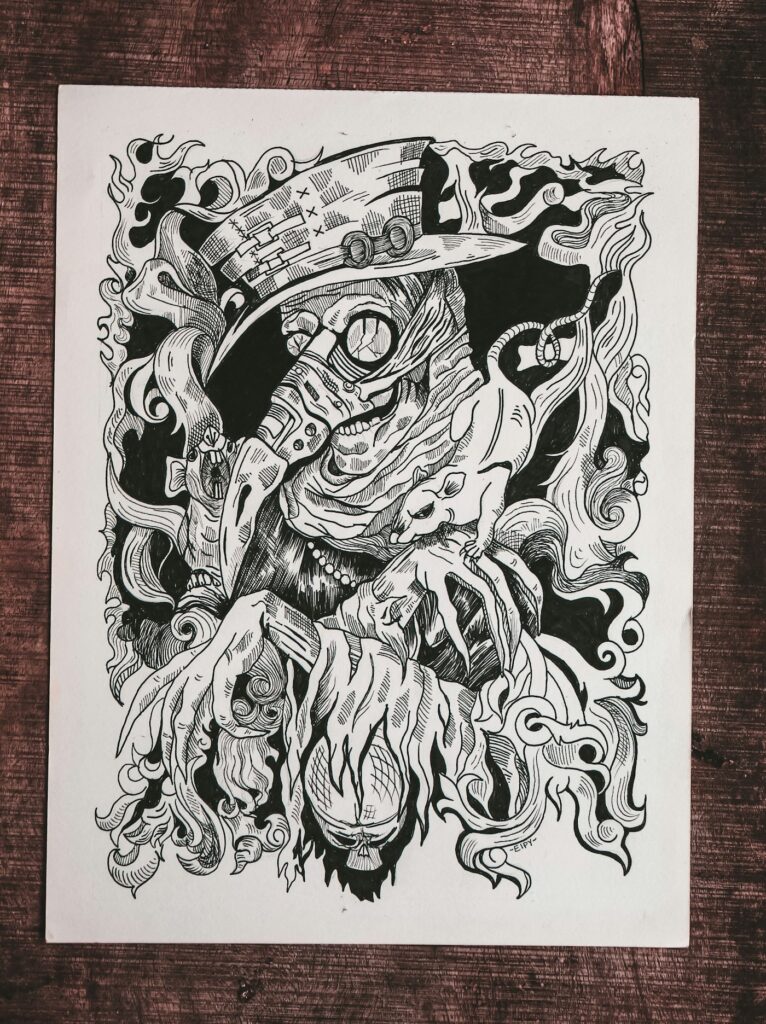
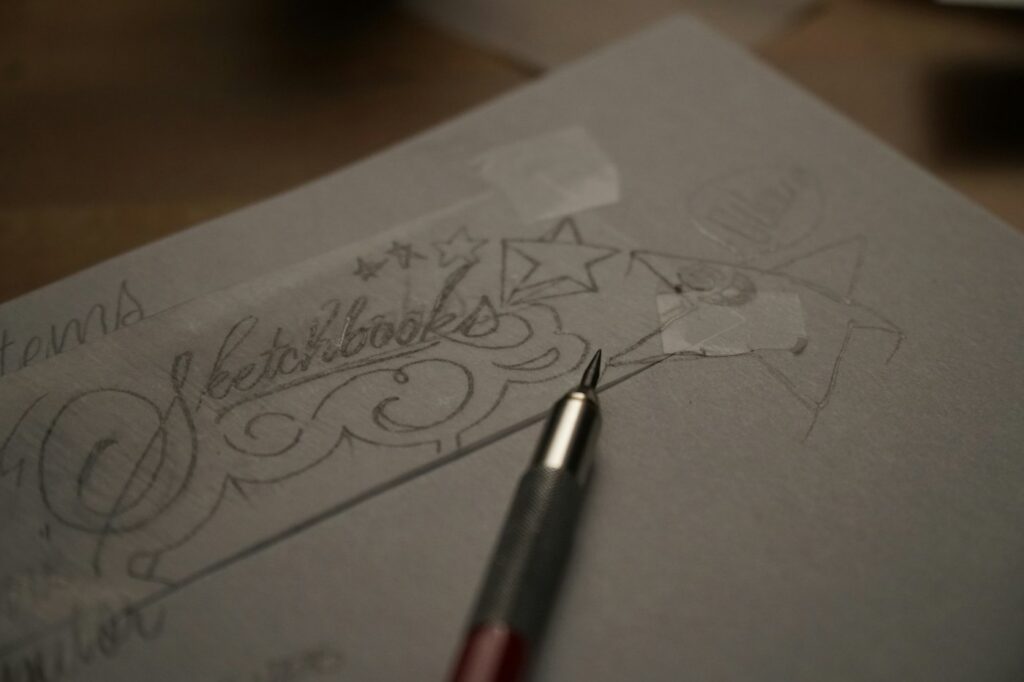
First the artist turns the design into clean line art, whether drawn by hand or on a tablet. Shading is usually left out or marked with a few guide lines, because too much detail makes the tattoo stencil confusing.
2. Printing or Tracing
Most studios use a thermal stencil printer: the line art is printed onto special thermal paper that has a layer of purple transfer ink. Some artists still trace designs by hand onto carbon style hectograph paper, which gives a more personal line.
3. Preparing the Skin
The artist cleans the area, shaves it with a new disposable razor, and cleans it again. Then a thin layer of stencil transfer solution is applied, which helps the purple ink grip the skin.
4. Applying the Tattoo Stencil
The paper is pressed ink side down onto the skin, smoothed gently and peeled away, leaving the purple outline behind. Most artists let it dry for 10 to 20 minutes before tattooing so it does not smear under gloves and ointment.
Why Is a Tattoo Stencil Purple?
The purple color comes from the dye used in hectograph and thermal stencil paper, historically related to gentian violet. It transfers clearly, shows up on most skin tones, and is easy to see against black and colored ink while tattooing. It also washes away with soap and water over the next few days.
What to Check Before Your Artist Starts
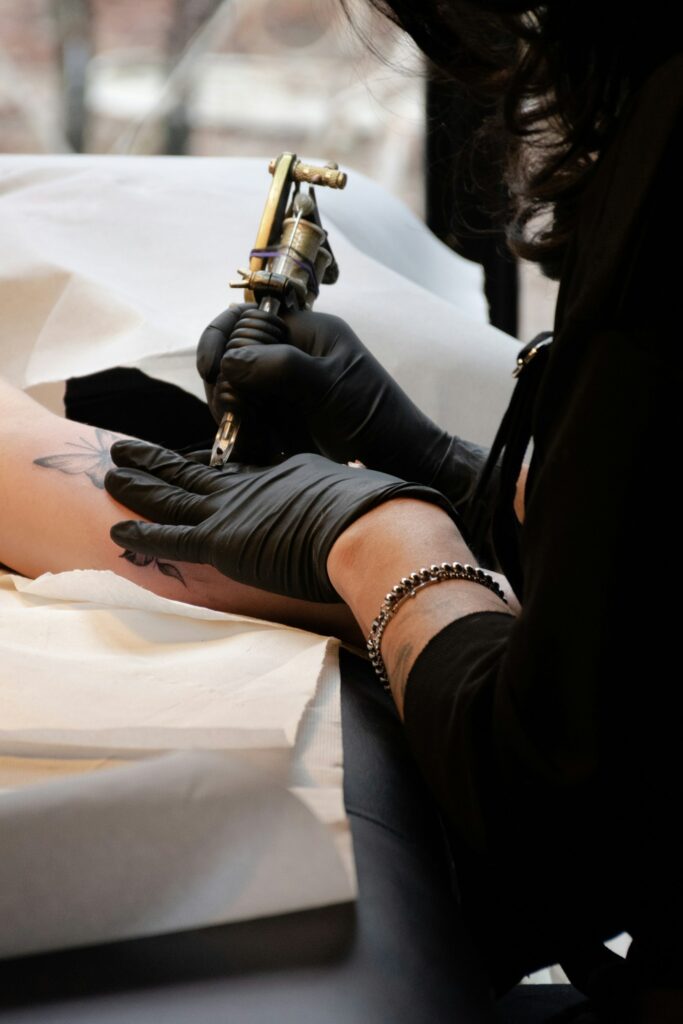
- Spelling: read every letter of any text slowly. This is the moment to catch mistakes. See our tattoo quotes guide for lettering tips.
- Size: does it look too small or too large for the area?
- Placement: view it in a mirror while standing naturally, not only while posing.
- Straightness: check that it lines up with your body, especially on arms, spine and collarbones.
- Symmetry: for matching pieces, compare both sides carefully.
Never feel rushed. A good artist is happy to reapply a tattoo stencil several times until you are completely sure. Our tattoo placement guide helps you think through the best spot.
How Long Does a Stencil Last?
During the session, the outline slowly fades as the artist wipes the skin, which is why artists tattoo the outline first. After the session, any leftover purple washes off within one to three days. It does not stain permanently and does not affect healing.
Freehand vs Tattoo Stencil
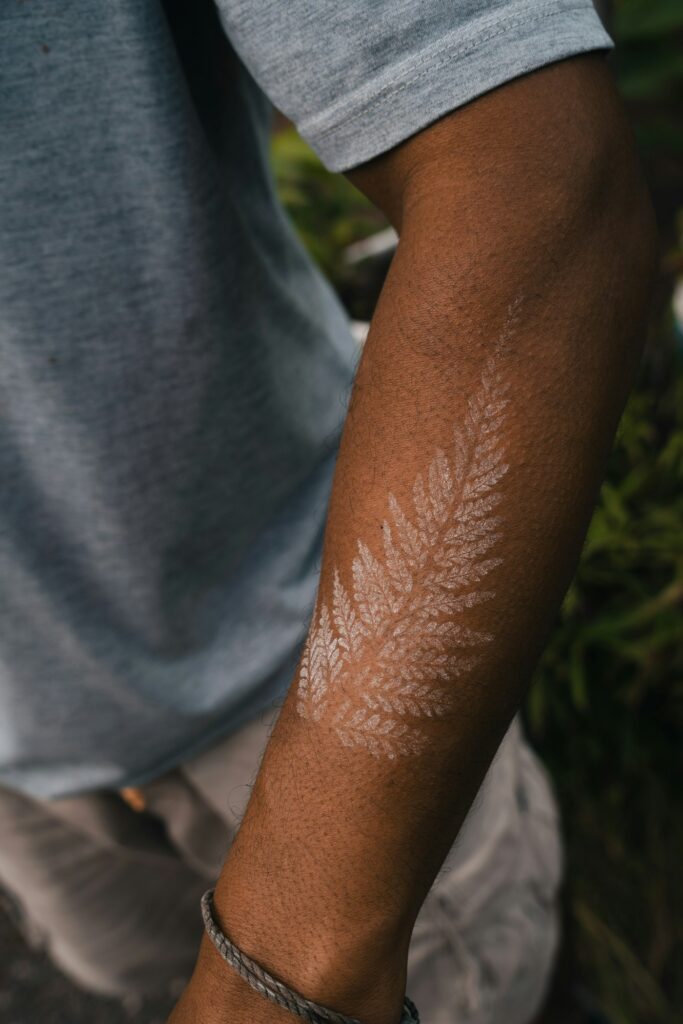
Some artists draw directly on the skin with surgical markers instead of using a printed tattoo stencil. Freehand work is common for large Japanese pieces, ornamental designs and flowing botanical tattoos that need to follow muscles and curves. It allows the design to wrap naturally around the body, but it requires a very experienced artist.
Many artists combine both: a stencil for the main subject and freehand marker lines for backgrounds, flowers or filler.
Can You Print Your Own Tattoo Stencil?
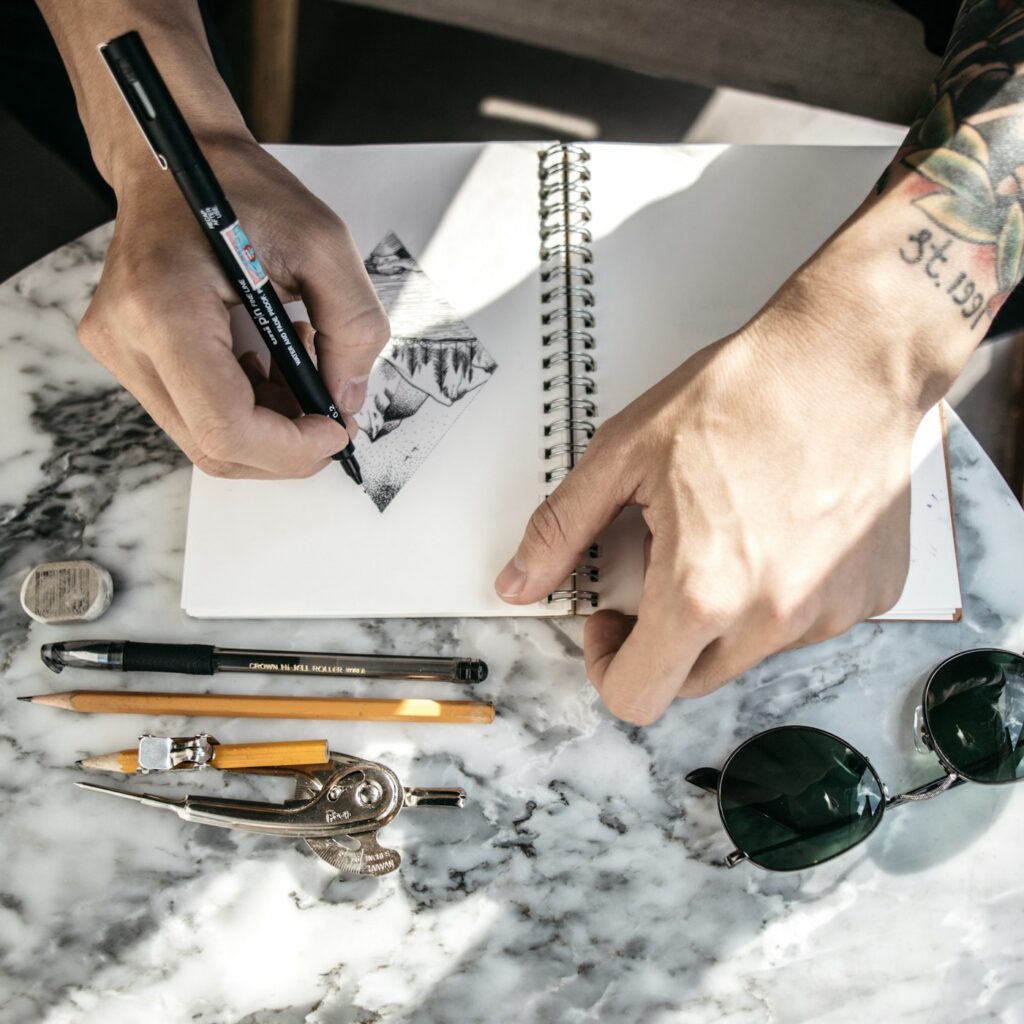
You can print a design on normal paper to bring to your consultation, but leave the actual stencil to your artist. They will adjust line weights and size for your skin and placement. If you are interested in making stencils professionally, that skill is taught during a tattoo apprenticeship.
For temporary body art, craft stencils are also used for airbrush and glitter tattoos. Those are different from professional tattoo stencils and should only be used with cosmetic grade products. If you want temporary art, our henna tattoo guide explains safe options.
Tips for Designing a Stencil Friendly Tattoo
- Clear outlines translate best; very soft sketches can be hard to stencil.
- Bring reference images, not a finished tattoo from someone else. See our traditional tattoo flash guide for the history of ready made designs.
- Ask to see the design at actual size before stencil day.
- Keep text large enough to read in the stencil; tiny words blur.
- Be open to your artist simplifying details that will not hold up on skin.
Stencils on Different Skin Types and Placements
Oily or very hairy skin can make a transfer fade quickly, so artists shave and degrease the area carefully. On deep skin tones the purple lines are still visible, although some artists use slightly heavier lines; our guide to tattoos on dark skin covers more tips.
Curved areas such as ribs, shoulders and ankles are the hardest. The paper wrinkles, and a design that looks straight on a flat sheet can bend on a round surface. Artists often stretch the skin gently, ask you to stand in a natural position, or split the design into two pieces to keep it accurate.
Common Stencil Problems
- Smudging: usually from tattooing before it dries or using too much ointment.
- Faint transfer: not enough solution, old paper or a printer set too light.
- Crooked placement: the client was twisting or sitting awkwardly when it was applied.
- Too much detail: crowded lines that are hard to follow; simpler is better.
None of these are a problem when caught early. That is why experienced artists take their time at this stage rather than rushing to start the machine.
Frequently Asked Questions
Does a tattoo stencil hurt?
No. Applying the stencil is painless; it feels like a damp piece of paper pressed on the skin.
Can the stencil ink stay in my skin?
No. It sits on the surface and washes off within a few days.
Why did my artist redo the stencil?
To improve placement, straightness or size. Reapplying is normal and shows care.
Is the tattoo exactly like the stencil?
The outline follows it closely, but shading and color are added freehand, so the finished tattoo has more depth.
Can I keep my tattoo stencil paper?
Many artists will give it to you as a keepsake once the session is done; just ask.
Image Credits
All photos from Unsplash: viktoriya shestakova, sander traa, Matt Bero, Kaizen Nguyen, Didhin Kurian, Jen Theodore and Thomas Despeyroux. For general tattoo safety guidance, see the FDA tattoo safety page.