Japanese Tattoo Ideas: 8 Bold Designs and Their Meanings
Japanese tattoo ideas draw on one of the richest tattoo traditions in the world. Known as irezumi, traditional Japanese tattooing combines bold outlines, rich color and powerful symbols such as dragons, koi, tigers and peonies, all set against flowing backgrounds of waves, wind and clouds. The style has inspired tattoo artists in the USA and worldwide for more than a century. See our wave tattoo meaning guide for 10 designs.
This guide covers the history of Japanese tattooing, the main motifs and what they mean, how a traditional piece is built, 8 bold designs on real skin and paper, and tips on placement, cost and respecting the tradition.
Table of Contents
A Short History of Japanese Tattooing
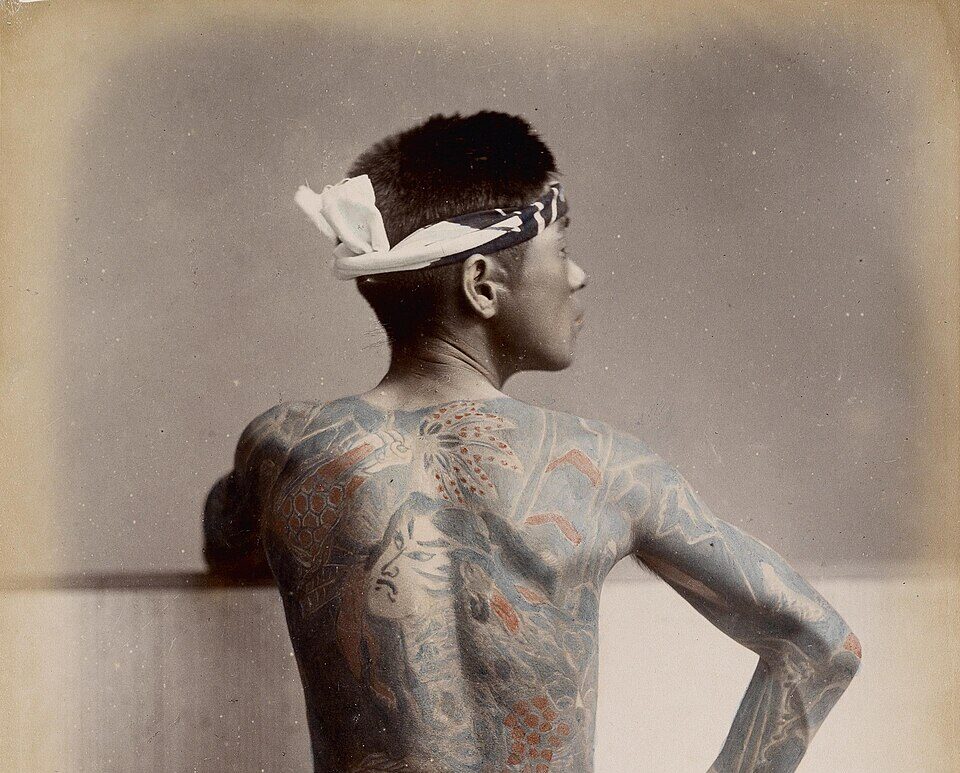
Tattooing in Japan goes back thousands of years, but the pictorial style we know today grew during the Edo period. In 1827, the artist Utagawa Kuniyoshi published popular woodblock prints of heroes from the Chinese novel Suikoden covered in dramatic tattoos. The prints were a sensation, and many firemen, laborers and craftsmen began wearing large, full-body designs inspired by them.
In 1872, the Meiji government banned tattooing as it tried to modernize Japan in the eyes of Western visitors. Ironically, foreigners were fascinated by Japanese tattoos, and photographers like Baron Raimund von Stillfried took studio portraits of tattooed men. The ban was lifted in 1948, but tattoos kept a strong link to outlaw culture in Japan, which is why many hot springs, pools and gyms there still restrict visible tattoos.
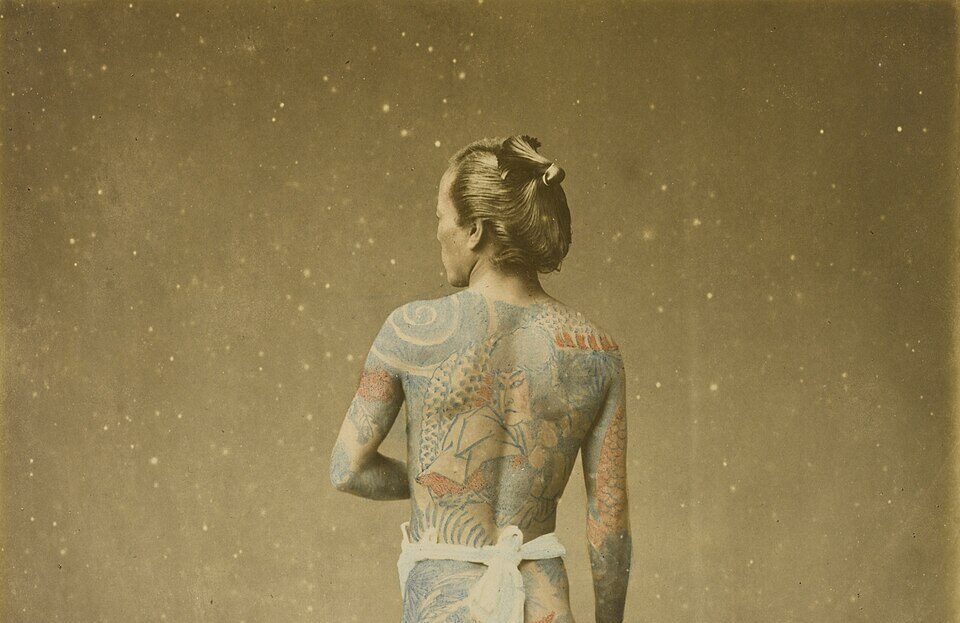
How a Traditional Japanese Tattoo Is Built
- Main subject: a dragon, koi, tiger, deity or hero that tells the story.
- Background: waves, wind bars, clouds or rocks that fill every space and connect the design, known in Japanese as gakubori.
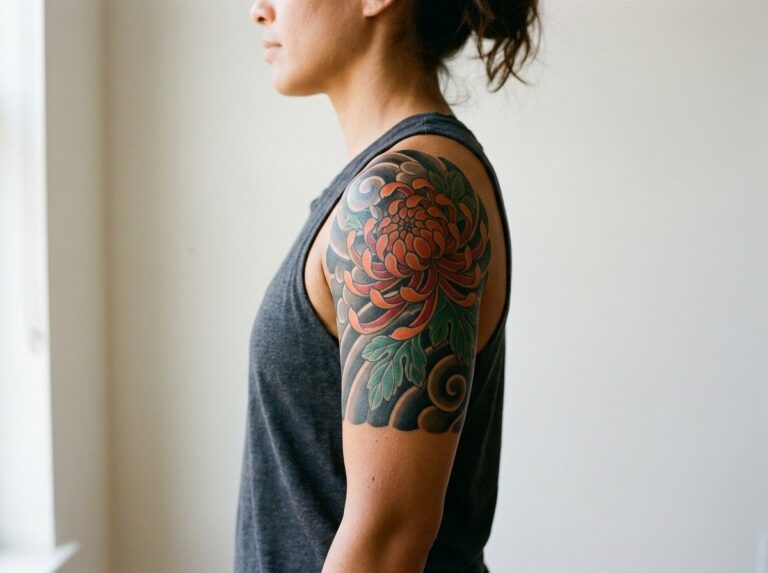
- Seasonal flowers: cherry blossoms for spring, peonies for summer, maple leaves for autumn, chrysanthemums for fall and longevity.
- Flow: the design follows the muscles and the natural lines of the body.
- Technique: some masters still tattoo by hand with a method called tebori.
Japanese Tattoo Motifs and Their Meanings
- Dragon (ryu): wisdom, strength and protection.
- Koi: perseverance and transformation.
- Tiger: courage and protection from evil.
- Phoenix (hoo): rebirth and good fortune; see our phoenix tattoo guide.
- Snake: protection, healing and change.
- Hannya mask: a jealous, vengeful spirit, often worn to ward off bad luck.
- Oni: a demon that can also act as a protector.
- Foo dogs (karajishi): guardian lions that protect homes and people.
- Kitsune: the clever fox spirit.
- Cherry blossom: the beauty and shortness of life.
- Peony: wealth and bravery.
- Lotus: purity and enlightenment; see our lotus tattoo meaning.
- Waves: strength, life and the flow of time.
8 Japanese Tattoo Designs
These designs include historical references and modern tattoos in the traditional style.
1. Classic Japanese Motifs on Paper
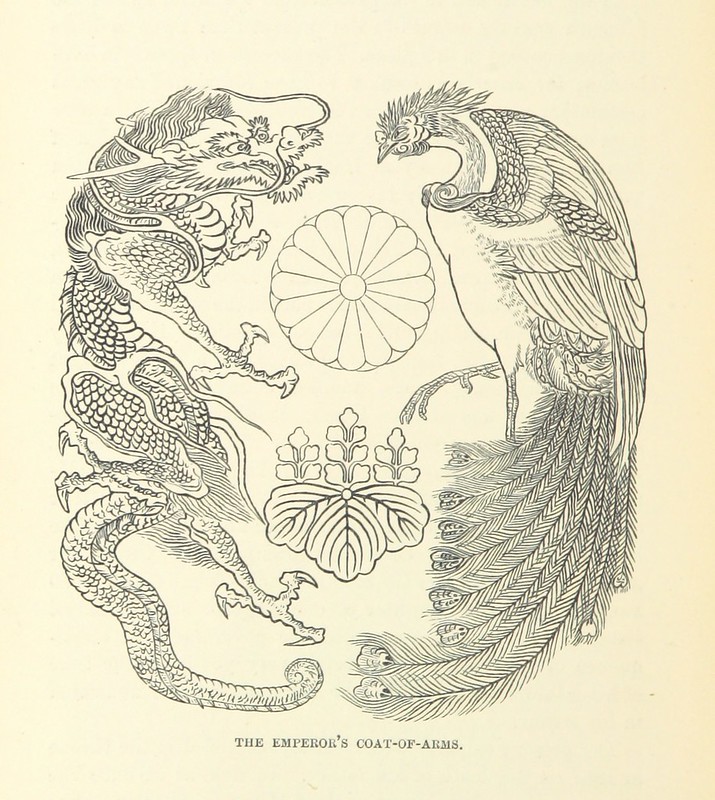
This 1880 illustration shows the kinds of dragons, waves and heroes that tattoo masters drew. Old prints and illustrations are still the best reference for authentic Japanese designs. See our Japanese dragon tattoo guide for more ideas.
2. Fudo Myoo on the Chest
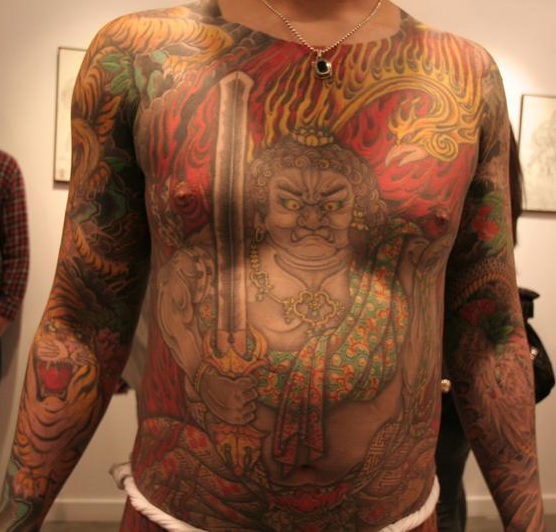
Fudo Myoo is a fierce Buddhist guardian who cuts through ignorance with his sword and protects believers. He is a powerful choice for a chest or back piece.
3. Kintaro and the Giant Carp
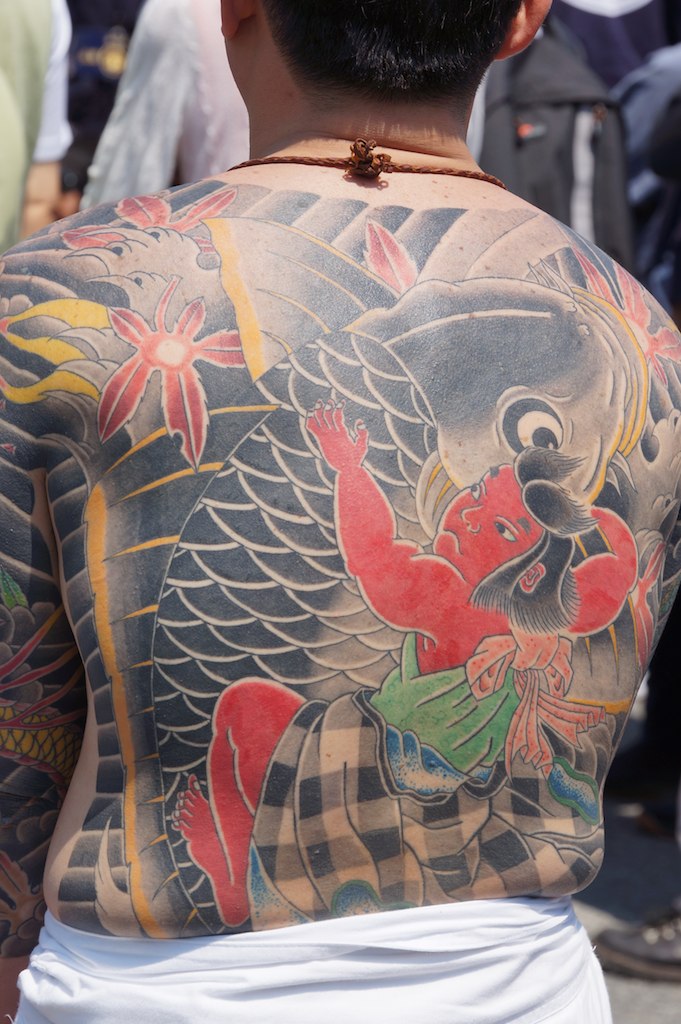
Kintaro is a folk hero known as a super-strong boy who wrestled animals. Paired with a giant carp, the design stands for strength, courage and determination; see our koi fish tattoo meaning.
4. Tiger and Dragon
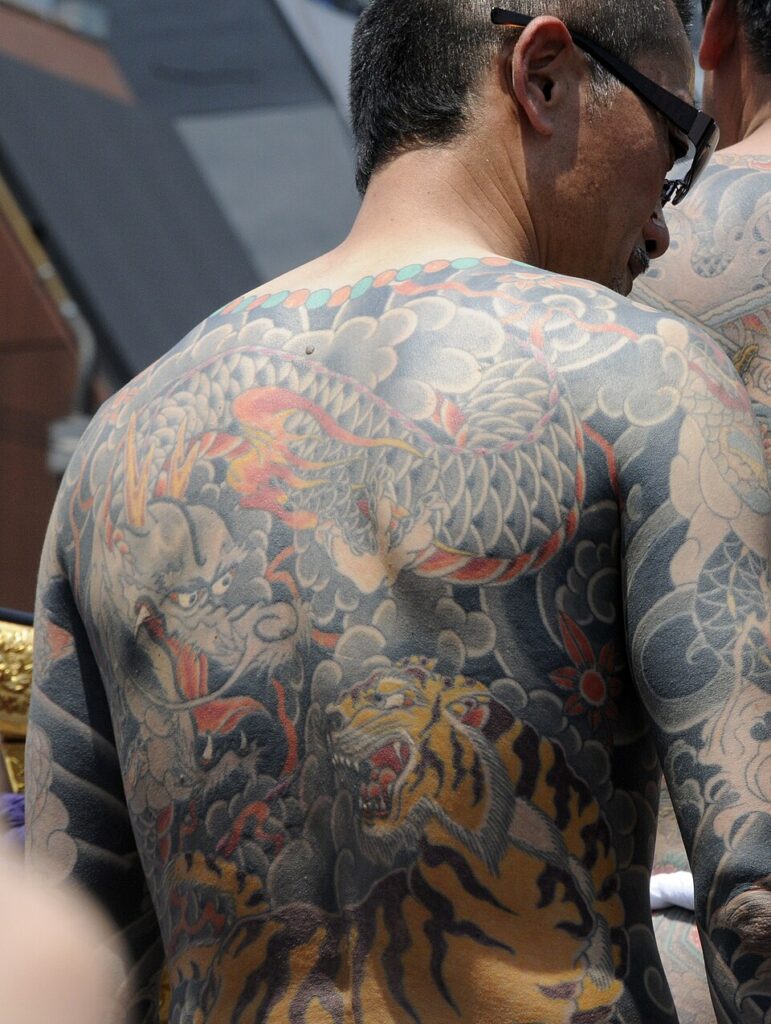
The tiger rules the earth and the dragon rules the sky. Together they represent balance between opposing forces; see our dragon tattoo meaning.
5. Deity With a Peony
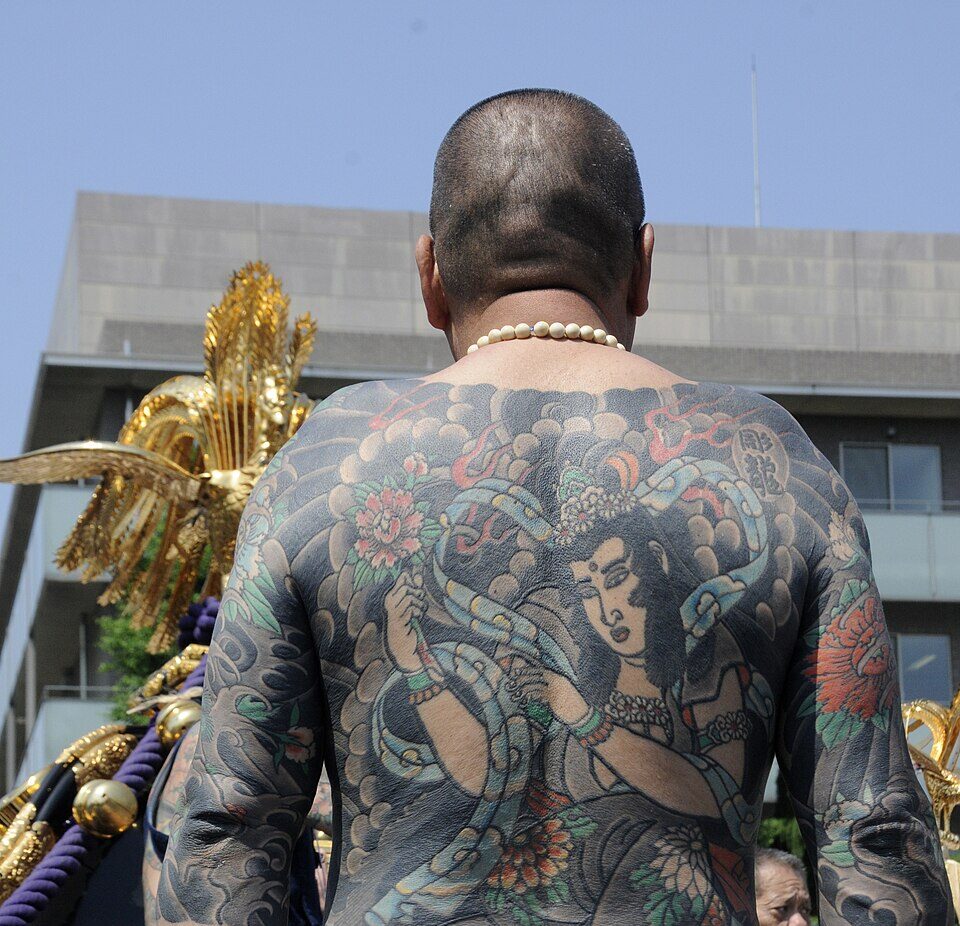
The peony, the king of flowers, stands for wealth, bravery and a life lived boldly. Deities and heroes are often framed by peonies in traditional work. The peony is the king of flowers in irezumi, as shown in our peony tattoo guide.
6. Bold Color Backpiece
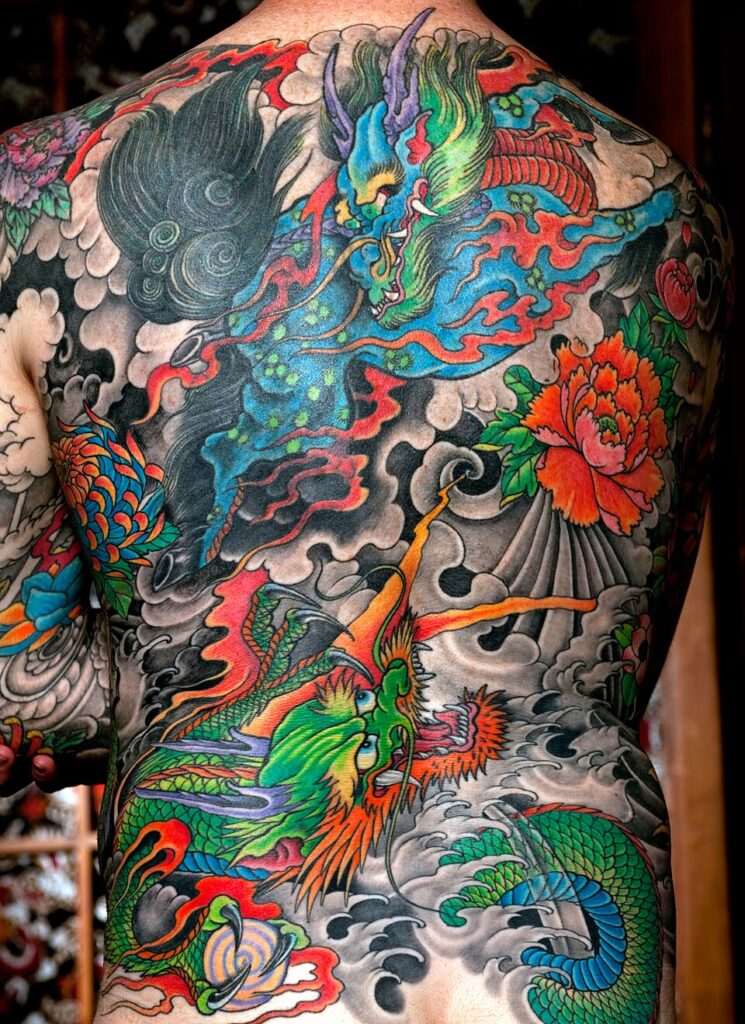
A modern backpiece in bold color shows how the tradition continues today, with a large main subject and a full background of water and wind.
7. Traditional Full Back
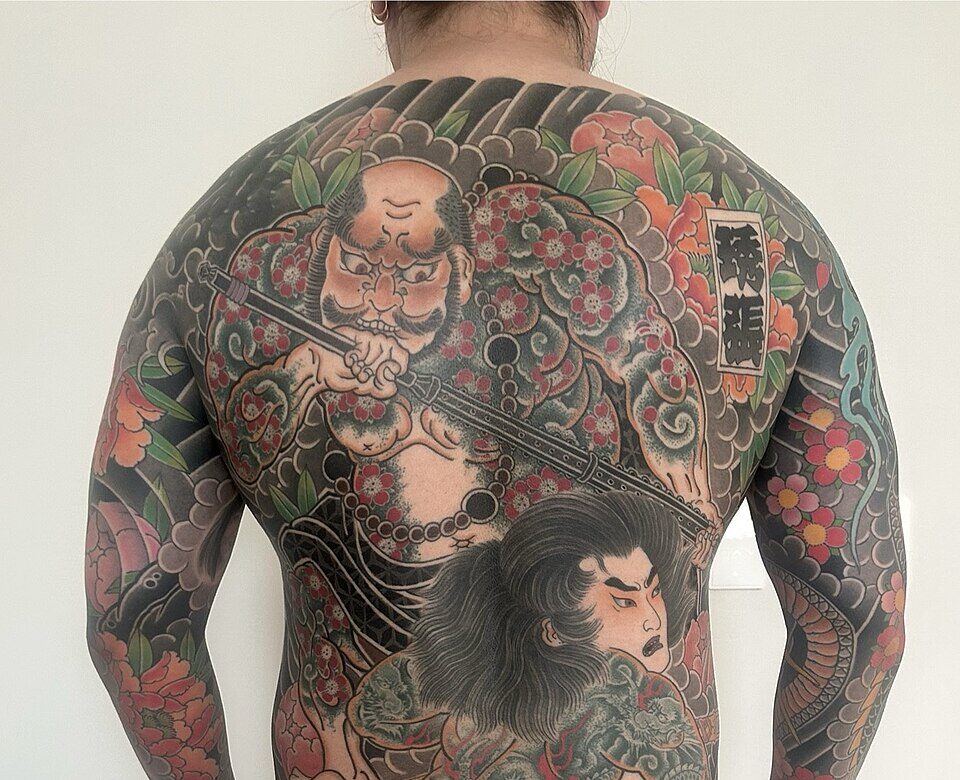
The full back, called a munewari body suit when combined with arms and legs, is the ultimate commitment in Japanese tattooing.
8. Full Body Suit
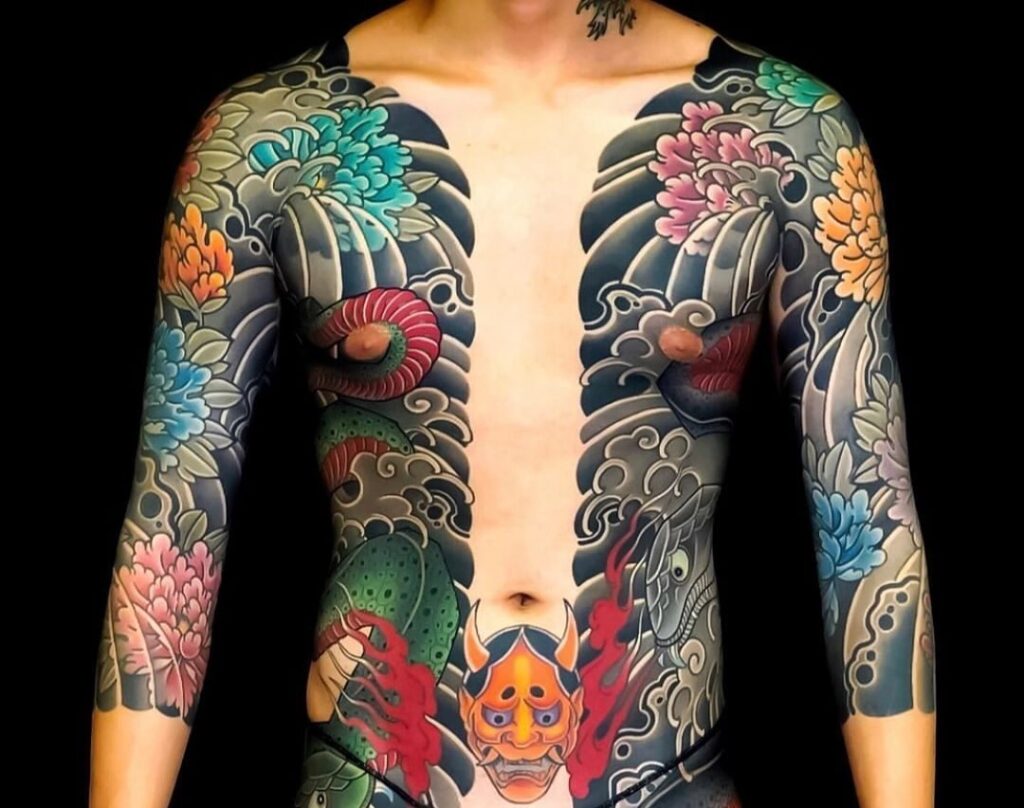
A full body suit connects the back, chest, arms and legs into one design, often leaving an open strip down the center of the chest. It can take years to complete.
Traditional Japanese Body Suit Layouts
- Munewari: a body suit with an open, untattooed strip down the center of the chest.
- Nagasode: full sleeves that run to the wrist.
- Shichibu: three-quarter sleeves that stop above the wrist.
- Gobu: half sleeves that stop above the elbow.
- Hikae: designs that extend from the back onto the chest.
You do not need a full body suit to enjoy Japanese work. A single sleeve, back piece or even one koi on the forearm can follow the same principles; see our sleeve tattoos for men and back tattoos for men.
Choosing a Japanese Tattoo Artist
Traditional Japanese work follows rules about motifs, seasons and composition. Look for an artist whose portfolio is full of healed Japanese sleeves and back pieces, not just single images. A good artist will ask about your story and suggest the right combination of subject, flowers and background. Large projects are usually planned over several consultations and completed in many sessions. See our chrysanthemum tattoo guide for more ideas.
Respecting the Tradition
Japanese tattooing carries deep cultural and religious symbolism. Learn what your motifs mean, avoid mixing symbols carelessly, and be careful with kanji, which should always be checked by a fluent speaker. If you travel to Japan, remember that many hot springs, pools and gyms still ask people with visible tattoos to cover them or stay out.
Cost and Time
In the USA, a single Japanese-style piece on the forearm usually costs $300 to $900. A full sleeve typically runs $3,000 to $8,000, and a full back piece $5,000 to $15,000 or more, often taking 50 to 100 hours or more for large projects. See our tattoo cost guide and tattoo healing process guides.
Smaller Japanese Tattoo Ideas
Not ready for a full sleeve? Many Japanese tattoo ideas work beautifully at a smaller size. A single koi swimming up the forearm, a hannya mask on the calf, a cherry blossom branch on the collarbone or a small wave on the ankle all carry the spirit of the style. Keep the outline bold and the design simple so it reads clearly and ages well. You can always add a background later to connect it to future pieces; see our small tattoo ideas for more inspiration. See our cherry blossom tattoo meaning guide for 10 designs.
Japanese Style vs. Neo Japanese
Traditional Japanese work follows old rules for motifs, colors and backgrounds. Neo Japanese keeps the classic subjects but adds modern touches, such as brighter color palettes, more detailed shading, realism or influences from anime and illustration. Both can look amazing; the key is choosing an artist whose portfolio matches the version you love.
Frequently Asked Questions
What are the most popular Japanese tattoo ideas?
Koi, dragons, tigers, hannya masks, phoenixes, snakes and cherry blossoms are among the most popular.
What is irezumi?
Irezumi is the traditional Japanese style of tattooing, known for large, full-body designs with bold color and flowing backgrounds.
Can I get a Japanese tattoo if I am not Japanese?
Yes. The style is practiced worldwide. Learn the meanings and choose an experienced artist who respects the tradition.
Are Japanese tattoos still banned in Japan?
No, tattooing is legal, but many public baths, pools and gyms restrict visible tattoos. Explore more styles in our tattoo styles category and read about irezumi on Wikipedia.
Image Credits
All images via Wikimedia Commons: Utagawa Kunisada, S. Ogawa and Baron Raimund von Stillfried (public domain); stekler (CC BY-SA 2.0); Ari Helminen and Dean Marchand (CC BY 2.0); Hori Kasiwa and a Commons contributor (CC0); Tattooenthusiast (CC BY-SA 3.0); Edward James Reed illustration (CC BY-SA 4.0).