Koi Fish Tattoo Meaning: 7 Powerful Designs and Color Symbolism
The koi fish tattoo meaning comes from an ancient legend about a fish that refused to give up. In Chinese and Japanese culture, the koi stands for courage, perseverance and the power to turn hardship into success. That story, along with the fish's bright colors and graceful shape, has made the koi one of the most loved tattoo designs in the USA.
This guide explains the legend behind the symbol, what each koi color means, why the direction the fish swims matters, the best combinations and placements, and 7 powerful designs on real skin and paper.
Table of Contents
What Does a Koi Fish Tattoo Mean?
- Perseverance: pushing forward against the current of life.
- Strength and courage: facing challenges without fear.
- Transformation: growing into something greater, like the koi that becomes a dragon.
- Good luck and prosperity: koi are symbols of fortune in East Asian culture.
- Love and friendship: especially when two koi appear together.
The Legend of the Dragon Gate
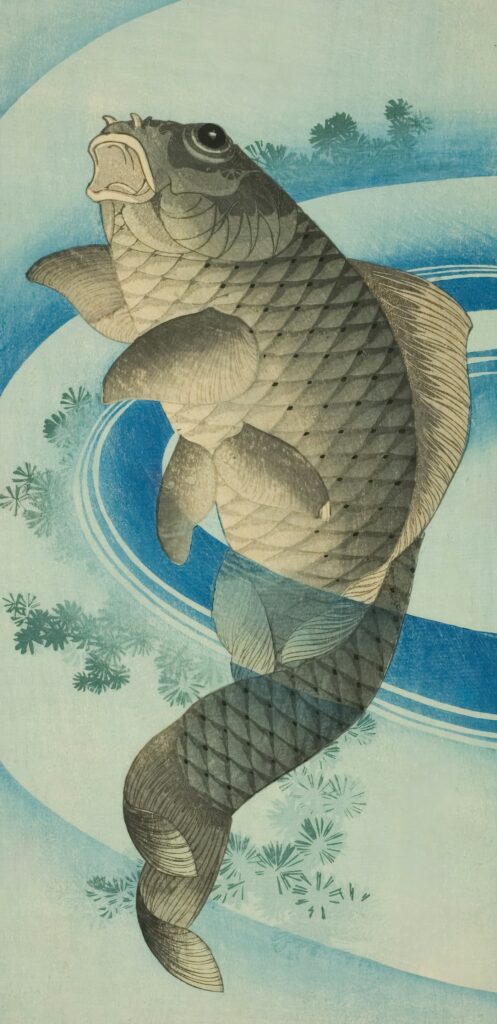
According to an old Chinese legend, a great school of golden carp once tried to swim up the Yellow River. Most turned back at a huge waterfall, but one carp kept leaping for a hundred years until it finally jumped over the top, a place later called the Dragon Gate. As a reward for its determination, the gods turned it into a golden dragon. The saying that a carp has leaped the Dragon Gate is still used for someone who succeeds through hard work. Two fish also form the zodiac symbol of Pisces, see our Pisces tattoo guide.
The story traveled to Japan, where the carp became a symbol of strength and success for children. On Children's Day in May, many Japanese families fly colorful carp-shaped windsocks called koinobori, hoping their children will grow up brave and determined. Japanese prints often show a carp fighting its way up a waterfall, the same image that inspires tattoos today.
Koi Fish Tattoo Meaning by Direction
In tattoo tradition, the direction of the fish tells its own story:
- Swimming upstream (head up): you are still fighting through a hard time and refusing to quit.
- Swimming downstream (head down): you have overcome a struggle and come out the other side.
- Koi turning into a dragon: transformation is complete and you have reached your goal.
- Two koi circling: balance, harmony and a strong partnership.
Koi Fish Tattoo Meaning by Color
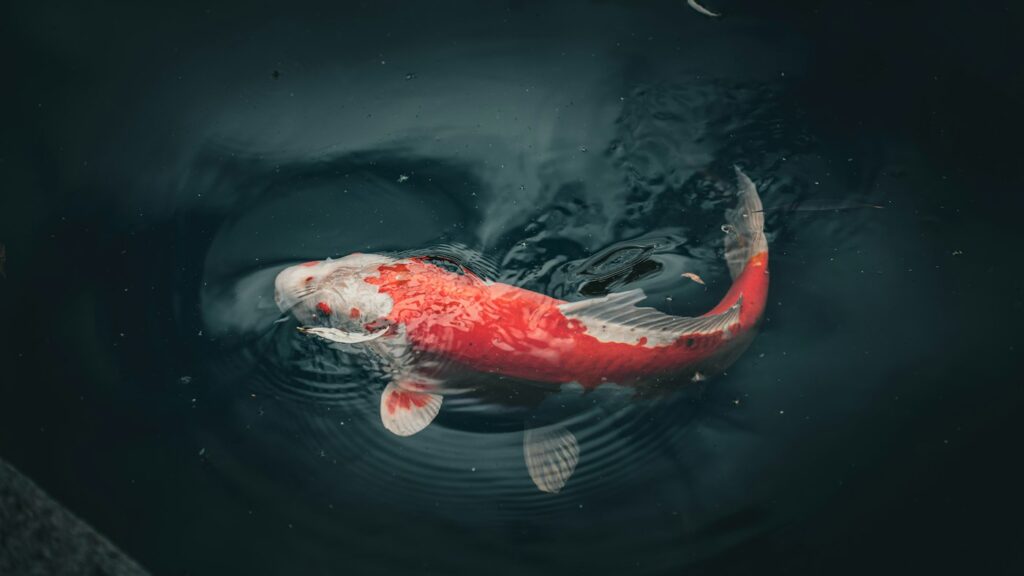
Real koi come in dozens of patterns, and tattoo culture has given the main colors their own meanings. Use them as a guide to add a personal layer to your design.
- Black koi: overcoming adversity and major life changes. It is also linked to fatherhood.
- Red koi: love, passion and strength. It is often linked to a mother or a powerful woman.
- Red and white (kohaku): one of the most famous koi patterns in Japan, associated with success, especially in your career.
- Gold and yellow koi: wealth, prosperity and good fortune.
- Orange koi: family, warmth and happiness.
- Blue koi: calm, peace and inner reflection.
- Black and grey ink: a timeless look that keeps the core meaning of perseverance.
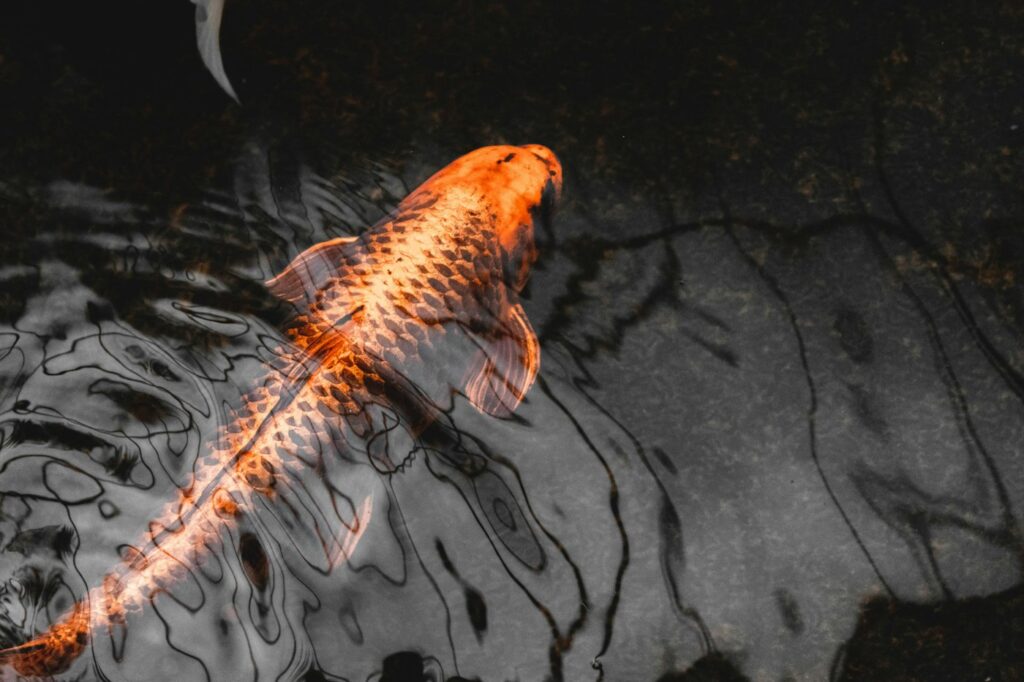
7 Koi Fish Tattoo Designs
From a small ankle piece to a full back in progress, these designs show how the koi adapts to any size and style. Two are drawings you can bring to your artist as a reference.
1. Small Koi on the Lower Leg
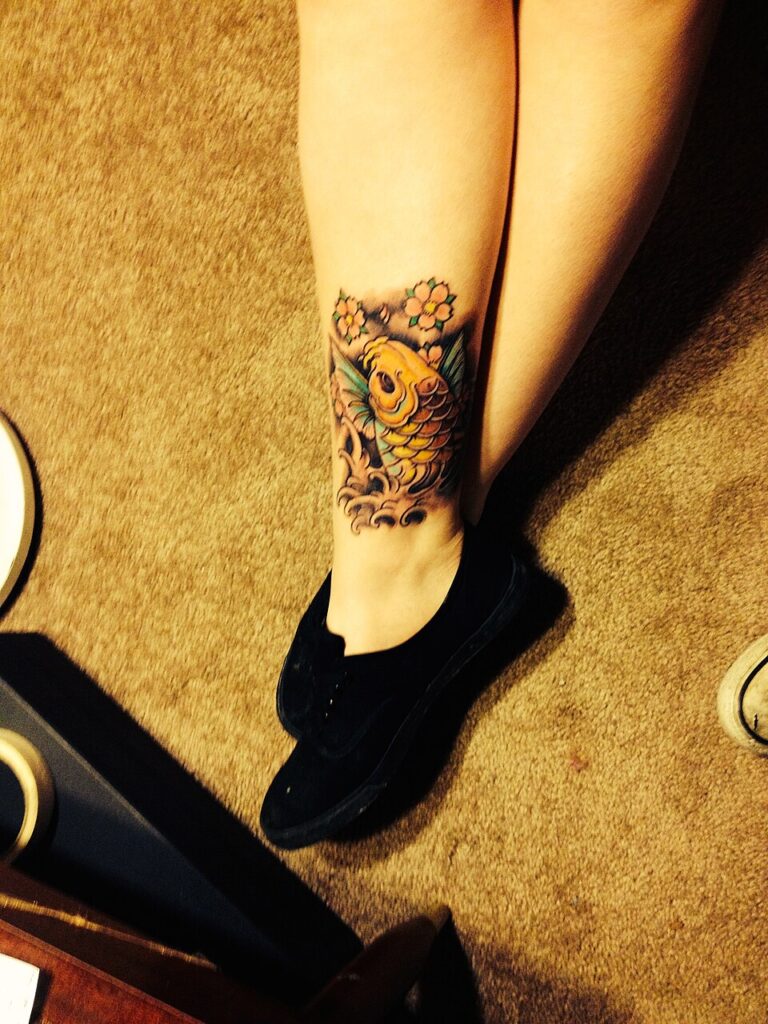
A single black and grey koi fish tattoo on the calf or ankle is a simple, personal way to wear the symbol. Placing the fish so it swims upward along the leg keeps the traditional meaning of pushing forward.
2. Yin and Yang Koi Pair
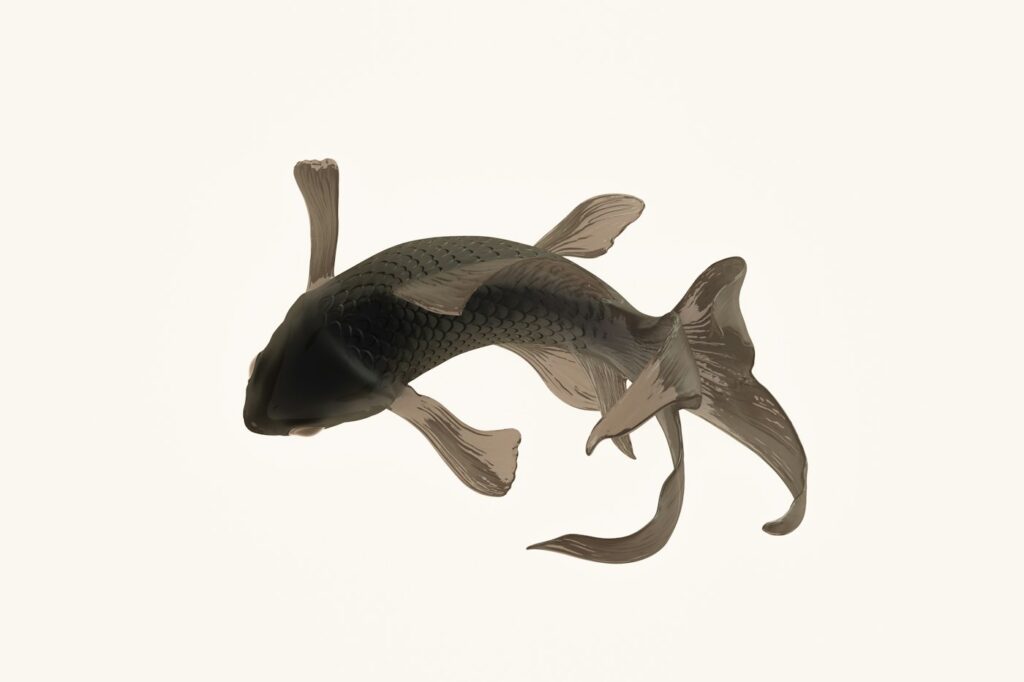
Two koi circling each other form a yin and yang shape, a symbol of balance and partnership. It is a popular idea for couples and a beautiful minimalist design in black ink. See more ideas for two people in our matching tattoo ideas.
3. Classic Japanese Koi Flash
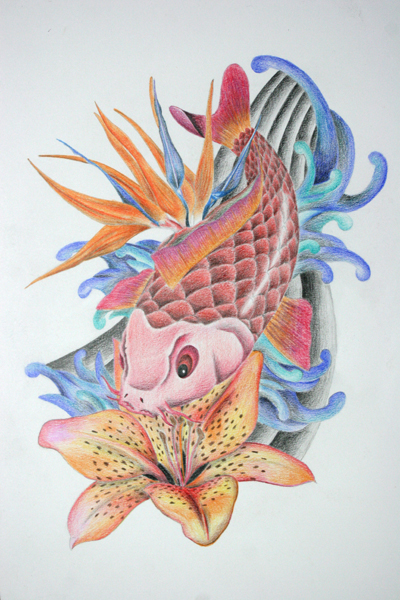
This colored flash drawing shows the classic Japanese look: a bright orange koi, curling waves and bold flowers. Flash designs like this are a great starting point to discuss color and composition with your artist.
4. Koi Outline on the Leg

Big Japanese koi fish tattoo pieces begin with a clean outline drawn around the natural shape of the limb. The scales, fins and water are shaded and colored in later sessions.
5. Koi Back Piece Outline

Here a large koi and its surrounding water are outlined across a man's back. The back is the traditional canvas for a big Japanese koi because the fish can swim diagonally across it with room for waves and flowers.
6. Full Back Koi in Progress
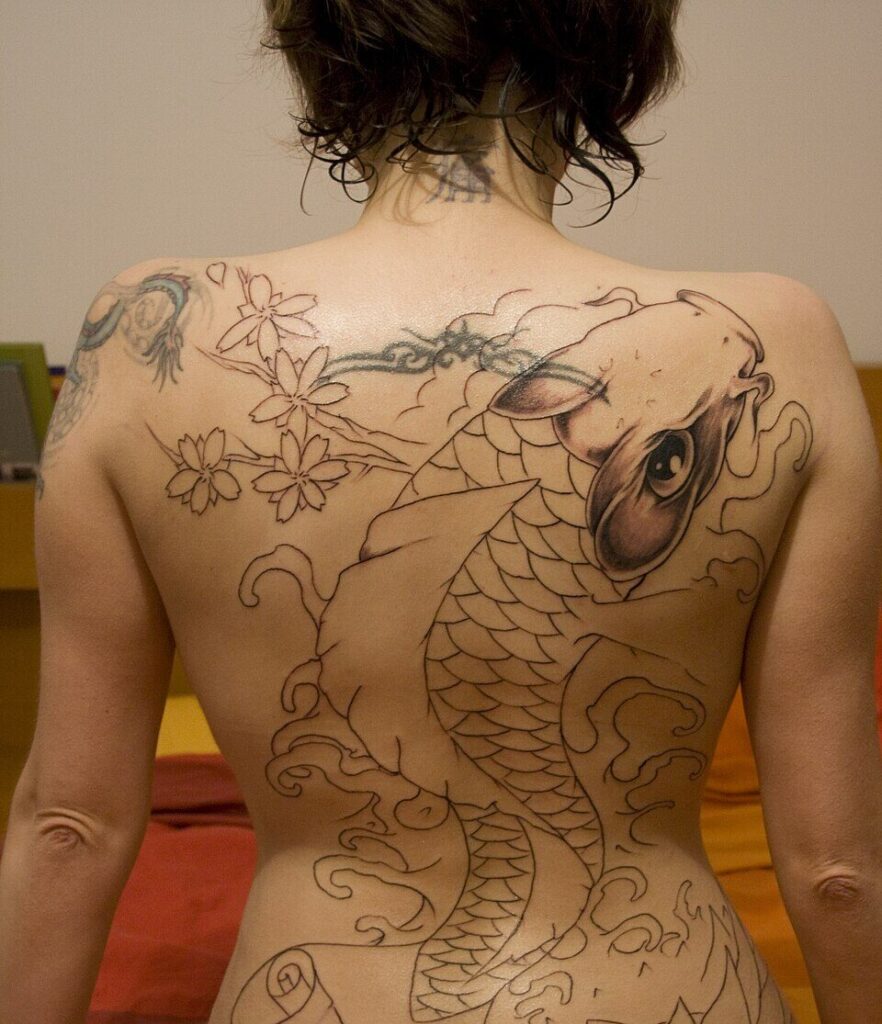
This full back outline shows how much planning goes into a large koi tattoo. The fish, water and background elements are mapped first so everything flows with the shape of the spine and shoulders.
7. Koi and Cherry Blossoms

A koi swimming beneath falling cherry blossoms pairs strength with the Japanese idea that beauty is short-lived and precious. Soft pinks against a darker fish create a striking, elegant contrast. See our cherry blossom tattoo meaning guide for 10 designs.
Popular Koi Tattoo Combinations
- Koi and lotus: the fish fights the current while the lotus rises above the mud, a double symbol of growth; see our lotus tattoo meaning.
- Koi and waves: the classic Japanese background that shows the struggle of the journey.
- Koi and cherry blossoms: strength paired with the fleeting beauty of life.
- Koi and dragon: the full Dragon Gate story, from carp to dragon.
- Koi and yin and yang: balance between two people or two sides of yourself.
- Koi with water lilies: calm, peace and good fortune.
The Koi in Japanese Tattooing
The koi is one of the most important subjects in traditional Japanese tattooing, known as irezumi. Traditional pieces place the fish inside a full background of water, wind bars and seasonal flowers that wrap the back, arm or leg. Artists pay close attention to seasons and symbolism, so a koi is often paired with flowers like peonies or cherry blossoms that complete its meaning. Some traditional artists still tattoo by hand with a technique called tebori.
Best Placements for a Koi Fish Tattoo
- Back: the classic placement for large Japanese koi with waves.
- Sleeve or half sleeve: the fish can wrap around the arm; see our arm tattoos for men.
- Thigh and hip: great space for color work; see our thigh tattoos for women.
- Calf: a vertical fish swimming up the leg.
- Ribs and side: the curved body of the koi follows the ribcage.
- Forearm, wrist and ankle: smaller, simpler koi in fine line or black ink.
Choosing a Style
Traditional Japanese style with bold outlines and rich color is the most authentic choice for a koi. Neo traditional adds more detail and a modern palette, while watercolor brings soft splashes of orange and red; see our watercolor tattoo guide. Black and grey realism works well for detailed scales, and fine line or minimalist outlines suit small koi on the wrist or ankle; see our fine line tattoos.
Koi Tattoo Cost, Pain and Care
In the USA, a small koi tattoo usually costs $100 to $300, a medium forearm or calf piece $300 to $900, and a full Japanese back piece can cost $3,000 to $10,000 or more across many sessions. Pain depends on placement: the upper arm and calf are fairly comfortable, while the ribs and spine are more intense; check our tattoo pain chart. Bright orange and red ink need good aftercare and sun protection to stay vivid, so follow our tattoo healing process guide.
Koi Fish Tattoo Meaning for Women and Men
The core koi fish tattoo meaning is the same for everyone, but people often shape it around their own story. Many women choose a red or pink koi fish tattoo to honor a mother, celebrate recovery after a hard season or mark their independence. Men often pick a black koi or a koi turning into a dragon to show resilience, ambition or the role of a father. Couples and siblings choose two koi to show a bond that stays strong in rough water.
How to Personalize Your Koi Fish Tattoo
- Pick the direction: upstream for a fight you are still in, downstream for a battle you have won.
- Choose colors with intention: combine meanings, such as gold for prosperity and black for overcoming adversity.
- Add a number of fish: one koi for your own journey, two for a partnership, or one fish for each family member.
- Frame it with symbols: a lotus, waves, a moon or cherry blossoms change the story around the fish.
- Add a date or kanji: ask a native speaker to check any Japanese or Chinese characters before you get them.
A thoughtful koi fish tattoo can tell your whole story in one image. Take time with your artist to plan how each detail fits together.
Common Koi Fish Tattoo Mistakes
- Too small for the detail: tiny scales and fins blur over time. Keep small koi simple.
- No background: a big koi floating on bare skin can look unfinished. Waves or flowers tie it together.
- Random kanji: incorrect characters are a common and permanent mistake.
- Wrong artist: for a traditional piece, choose someone with healed Japanese work in their portfolio.
Frequently Asked Questions
What does a koi fish tattoo mean?
It stands for perseverance, courage, transformation and good fortune, based on the legend of the carp that swam up a waterfall and became a dragon.
Which way should my koi swim?
Upstream if you are still facing a challenge, and downstream if you have already overcome it.
What do two koi fish mean?
Two koi, especially in a yin and yang shape, represent balance, harmony and love between two people.
Is a koi tattoo only for men?
No. Koi tattoos are popular with everyone, and red, pink and pastel koi are especially loved by women. Explore more symbols in our tattoo meanings category.
Image Credits
Tattoo photos and flash via Wikimedia Commons: amfdesigner (CC BY-SA 2.0), Marine from France (CC BY-SA 2.0), Mr.Bert Tree (CC BY 2.0), TattooTemple (CC BY-SA 3.0), Franfur (CC BY-SA 4.0) and Rithistoryclassfall (CC BY-SA 3.0). Other photos and the carp print from Unsplash.