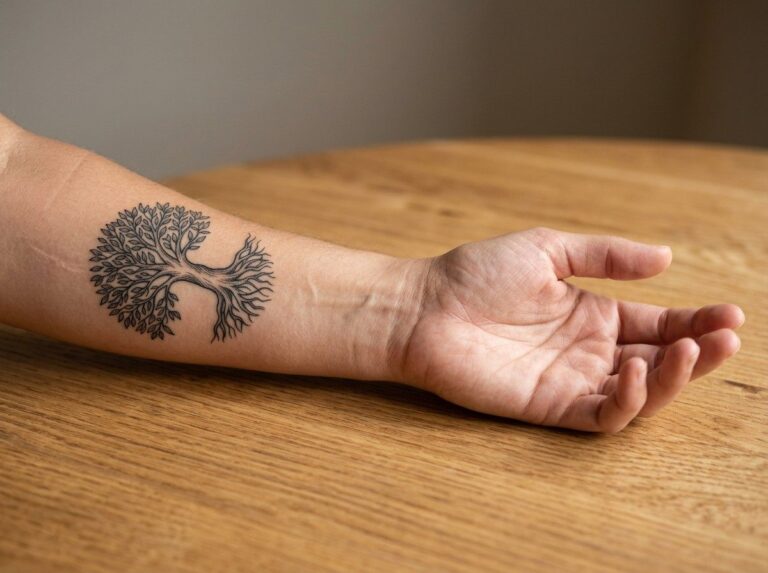
Watercolor Tattoo: 6 Beautiful Designs and How They Really Age
A watercolor tattoo looks like it was painted onto the skin with a brush. Instead of heavy black outlines and solid fills, the style uses soft gradients, splashes, drips and colors that bleed into each other, just like a watercolor painting on paper. It is one of the most artistic tattoo styles in the USA, loved by people who want their ink to feel light, free and one of a kind.
This guide covers where the style came from, how artists create the painted effect, whether watercolor tattoos fade, 6 beautiful designs on real skin, the best placements and practical tips on cost, pain and aftercare so your tattoo stays bright.
Table of Contents
What Is a Watercolor Tattoo?
Watercolor tattooing borrows the look of fine art painting. Artists blend inks with lighter pressure and diluted color to create soft edges, fades and splashes. Some designs have no outline at all, while others use a thin black skeleton to hold the image together. The style took off in the early 2010s, when tattoo artists with fine art backgrounds began sharing painterly, abstract work that looked nothing like traditional flash.
How the Painted Effect Is Created
- Gradients: colors shade smoothly from dark to light, often fading out into bare skin.
- Splashes and splatter: small dots and drips mimic paint flicked from a brush.
- Color bleeds: two or more colors overlap and blend at the edges.
- Negative space: bare skin is left inside the design to act like white paper.
- Black skeleton: a light line or shading structure that keeps the image recognizable.
Do Watercolor Tattoos Fade?
This is the most common question about the style, and the honest answer is that it depends. All tattoos soften over time as the body slowly breaks down ink and the skin ages. Very light, pale colors with no black structure can blur and fade faster than bold work, especially in spots that get a lot of sun or friction. That is why many experienced artists now combine soft color with at least some black or dark line work.
You can help a watercolor tattoo last by choosing a skilled artist, going with saturated colors, adding a black outline or dark accents, placing it where the skin gets less sun and rubbing, and wearing sunscreen once it has healed. Plan on a color touch up every few years if you want it to stay vivid.
6 Watercolor Tattoo Designs on Real Skin
These examples show the style at different sizes, from a single small flower to a full back piece.
1. Small Watercolor Flower
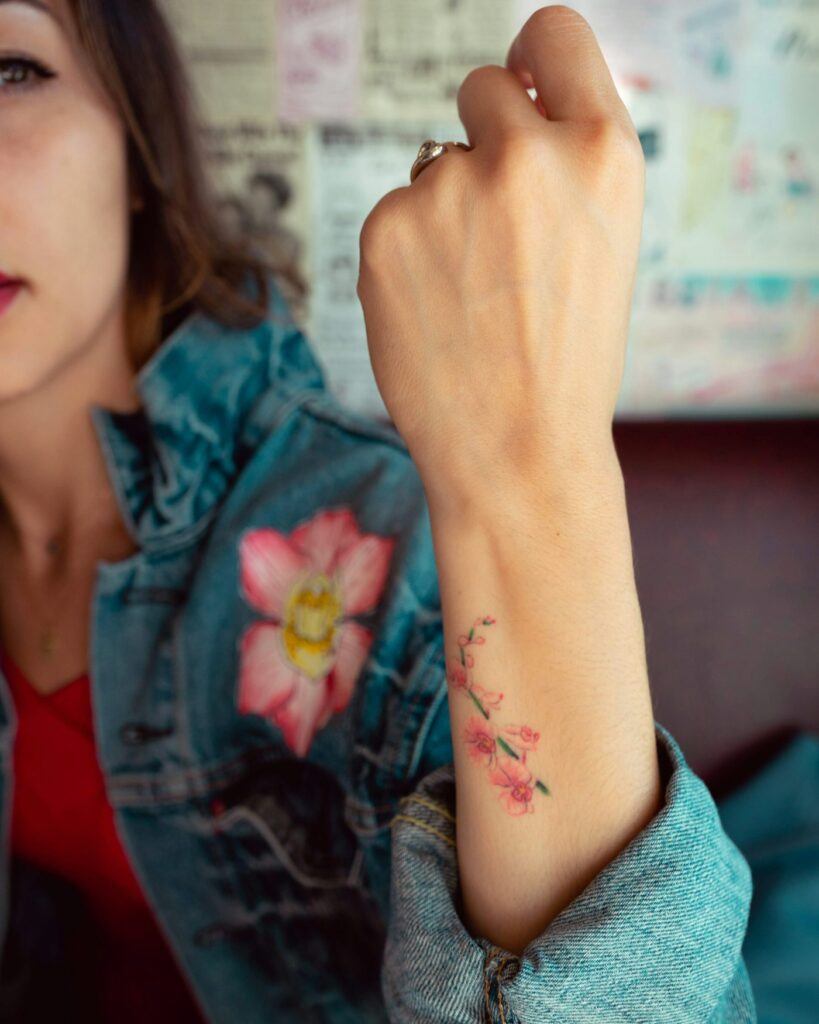
A small bloom with a soft wash of pink and green is the easiest way to try the style. Small watercolor pieces heal quickly and look delicate on the forearm, wrist or ankle.
2. Floral Forearm With Geometric Accents
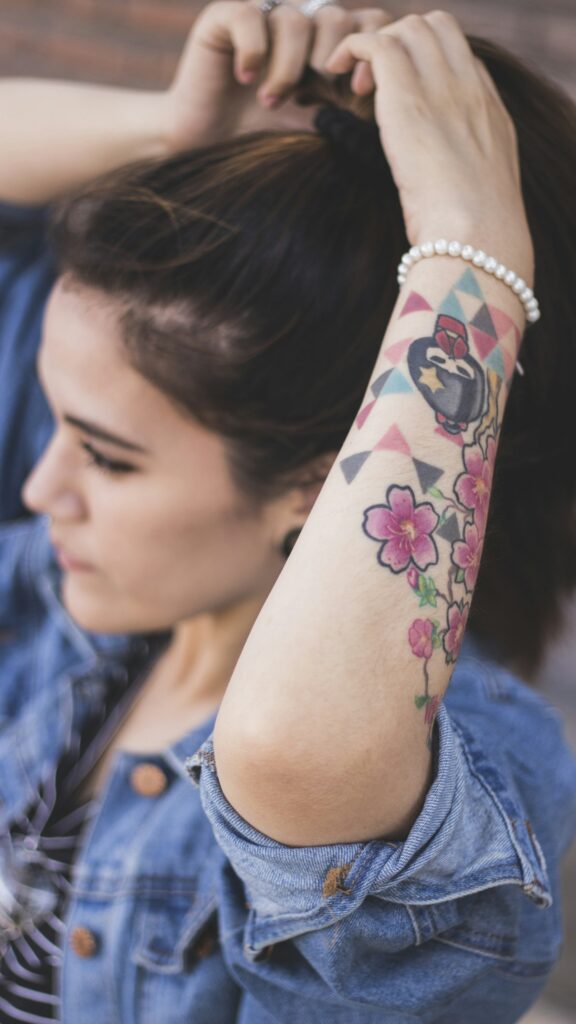
Flowers in soft color are paired here with small triangles and clean shapes. Mixing crisp geometry with loose color gives the tattoo structure, which helps it keep its shape for years.
3. Pastel Arm Piece in Progress
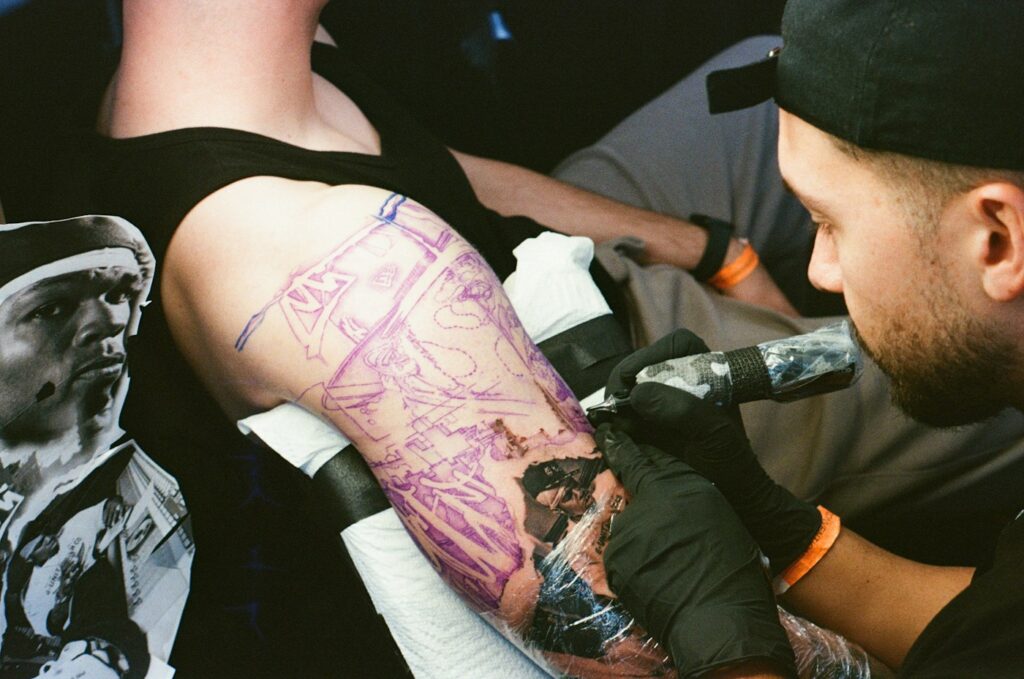
This photo shows the purple stencil and the first pastel washes going in. Watercolor artists build color in thin layers, often shading from light to dark, so large pieces can take several sessions.
4. Purple and Blue Wash
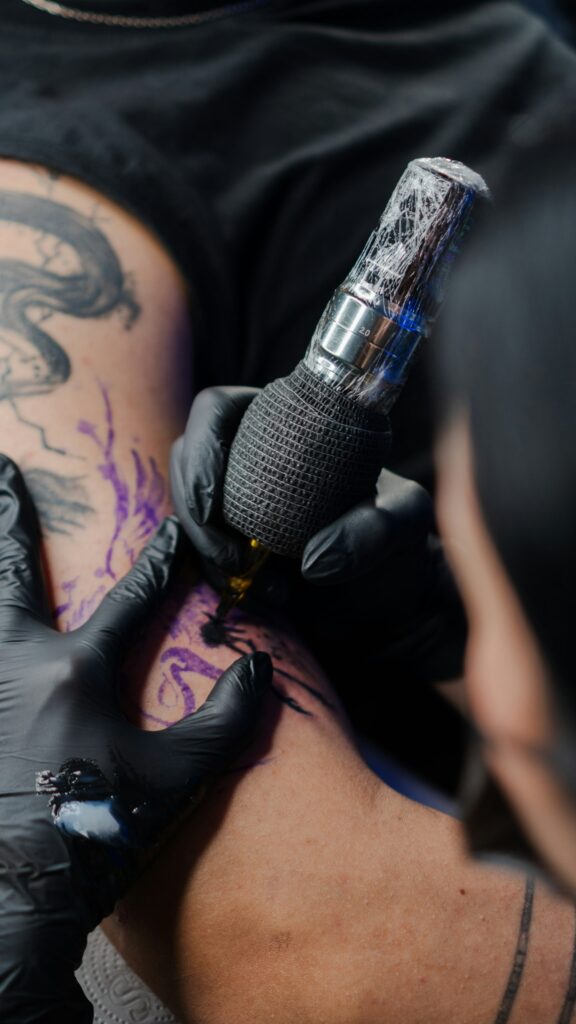
Blue and purple washes behind black line work create a dreamy, painted background. This technique, sometimes called a color splash, is a great way to add softness to a bold black design.
5. Soft Color Floral Sleeve
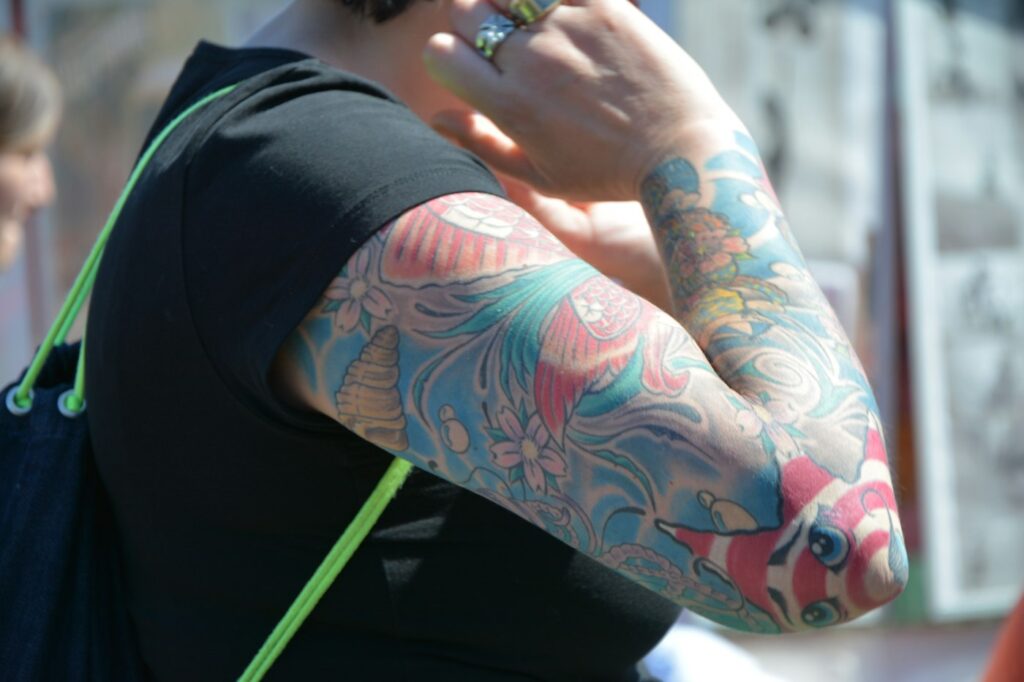
A full sleeve in soft, blended color shows how the watercolor look can scale up. Notice how the darker areas and outlines keep the design readable while the colors flow into each other.
6. Colorful Back Piece
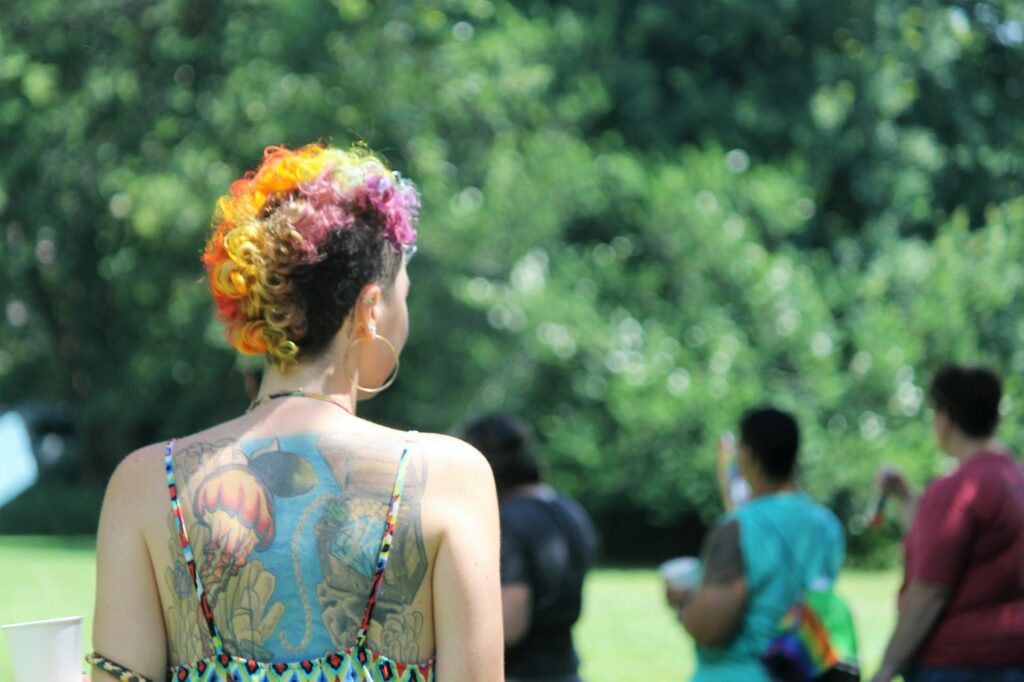
The back is one of the best canvases for large watercolor art because it is flat and gets little sun. Bright blues and greens across the shoulder blades make a bold, artistic statement.
Popular Watercolor Tattoo Ideas
- Hummingbirds and small birds: joy, energy and freedom, with color trails behind the wings.
- Feathers: lightness and spirit, fading into a splash of color.
- Flowers: roses, peonies, lotuses and wildflowers with soft petals; see our lotus tattoo meaning.
- Butterflies: transformation, often with wings that drip into color; see our butterfly tattoo guide.
- Animals: foxes, wolves, elephants and whales with color bursting from the outline.
- Galaxies and moons: deep blues and purples with tiny white stars.
- Abstract art: pure color and brush strokes with no set image.
- Words with a splash: short script framed by a wash of color.
What Do Watercolor Tattoo Colors Mean?
- Blue: calm, trust and the ocean.
- Purple: creativity, spirituality and mystery.
- Pink: love, tenderness and femininity.
- Red and orange: passion, energy and warmth.
- Yellow: happiness and optimism.
- Green: growth, balance and nature.
- Rainbow blends: diversity, pride and joy.
Best Placements for a Watercolor Tattoo
Because soft color is more sensitive to sun and friction, placement matters more than in most styles.
- Upper arm and shoulder: good space and easy to cover from the sun.
- Back and shoulder blade: flat, protected and ideal for large pieces; see our back tattoos for women.
- Thigh: plenty of room and little sun; see our thigh tattoos for women.
- Ribs and side: protected, but more painful.
- Forearm: popular and visible, but protect it with sunscreen.
- Avoid: hands, fingers and feet, where soft color fades fastest.
Watercolor Tattoos on Different Skin Tones
Watercolor tattoos can look beautiful on every skin tone. Ink sits under the top layer of skin, so the natural skin color shows through the design. On deeper skin tones, very pale pastels may appear softer, while richer tones like deep blue, purple, red and emerald tend to show more clearly. A skilled artist will look at your skin and suggest a palette that will heal bright on you.
How to Choose a Watercolor Tattoo Artist
This style is hard to do well, so the artist is everything. Ask to see healed watercolor work that is at least a year old, not only fresh photos, because fresh color always looks brighter than it will once healed. Look for smooth gradients without patchy spots, clean edges where color fades into skin and a smart use of black structure. A good artist will be honest about which colors and placements will last on your skin.
Watercolor Tattoo Cost and Pain
Color work takes more time than black line work, so it usually costs more. In the USA, a small watercolor tattoo often costs $100 to $300, a medium piece $300 to $800, and a large back or sleeve piece $1,000 to $4,000 or more across several sessions. Pain depends on placement rather than style; see our tattoo pain chart and tattoo cost guide.
Aftercare for Bright Color
Follow the same careful routine as any new tattoo: wash gently, pat dry, moisturize lightly and keep it out of the sun, pools and tight clothing. Color can look patchy or cloudy during peeling, which is normal. Learn what to expect in our tattoo healing process guide and our tattoo aftercare guide. After healing, a broad spectrum sunscreen is the best way to keep a watercolor tattoo vivid, as the American Academy of Dermatology also advises.
How It Compares to Other Color Styles
- American traditional: thick black outlines and a few solid colors. Very durable, but bold rather than soft.
- Neo traditional: strong outlines with richer, more varied color and detail. A good middle ground if you want color that lasts.
- New school: cartoon shapes, exaggerated proportions and very bright, saturated color.
- Illustrative: looks like a drawing or print, often with fine shading and limited color.
- Painterly: the closest cousin, using brush-like texture but usually with more saturation and structure.
Styles That Pair Well With Watercolor
Some of the best results come from blending soft color with another technique. A fine line animal or flower with a splash of color behind it keeps the outline crisp while adding movement. Geometric shapes such as triangles and circles give structure to loose washes, as you can see in design 2 above. Blackwork and dotwork add contrast that helps the color stand out, and short script framed by a color wash makes a simple quote feel artistic. See our fine line tattoos guide for more on crisp line work.
Planning Your Design Step by Step
- Collect references: save paintings, illustrations and healed tattoos you love. Real paintings are great inspiration for palettes and brush strokes.
- Pick a main subject: an animal, flower or symbol gives the color something to grow from.
- Choose a palette: two to four colors that work together usually look cleaner than a full rainbow.
- Decide on structure: outline, dark accents or no outline at all. Ask your artist what will last on your skin.
- Size it generously: gradients need room to fade. A slightly larger design ages much better.
- Think about the future: leave space if you may add more pieces or build a sleeve later.
Take your time with this process. A well planned design looks intentional and balanced, while a rushed one can look like a random splash of color.
Frequently Asked Questions
Are watercolor tattoos a good idea?
Yes, if you choose an experienced artist, a smart placement and a design with some structure. They are unique, artistic and can last for many years with good care.
How long do watercolor tattoos last?
They last a lifetime like any tattoo, but light colors may soften within five to ten years. Touch ups can refresh them.
Do watercolor tattoos need an outline?
Not always, but a light black outline or dark accents help the design stay sharp as it ages.
Can a watercolor tattoo cover an old tattoo?
Light watercolor alone is not good at hiding dark ink. It works best as part of a cover up that uses darker colors, or after laser lightening. Explore more styles in our tattoo styles category, including fine line tattoos and American traditional.