Tattoo Ink: 5 Essential Safety Facts About What Goes Into Your Skin
Most people spend weeks choosing a design and an artist, but very few ask what is actually going into their skin. Tattoo ink is the part of your tattoo that stays with you for life, so it is worth understanding what it is made of, how different colors behave, and how to make sure the ink used on you is safe. Ink is delivered into the skin by a tattoo gun, also called a tattoo machine.
This guide explains the ingredients in tattoo ink, how black and color pigments differ, allergies and reactions, vegan and UV inks, how inks are regulated in the United States, and the questions to ask your artist.
Table of Contents
What Is Tattoo Ink Made Of?
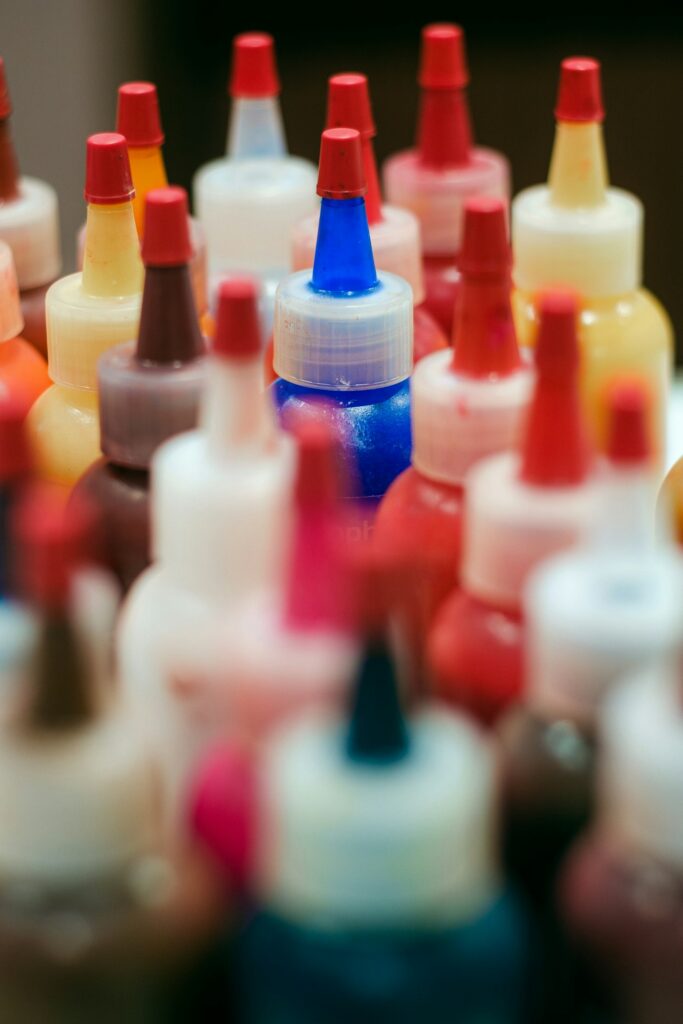
Every ink has two main parts: pigments, which give the color, and a carrier, the liquid that keeps the pigment evenly mixed and helps it flow into the skin.
- Pigments: tiny particles of color. Black is usually made from carbon. White often comes from titanium dioxide. Many bright colors use organic pigments, while earthy tones may use iron oxides.
- Carriers: commonly purified water, glycerin, witch hazel or alcohol.
- Additives: thickeners, binders and preservatives that keep the formula stable in the bottle.

How Tattoo Ink Stays in Your Skin
The needle deposits ink in the dermis, the layer under the surface. Your immune system sends cells called macrophages to absorb the pigment particles, but many of the particles are too large to remove, so they stay in place and form the permanent image. Over the years some particles are slowly cleared, which is one reason tattoos soften and fade.
Black vs Color Tattoo Ink
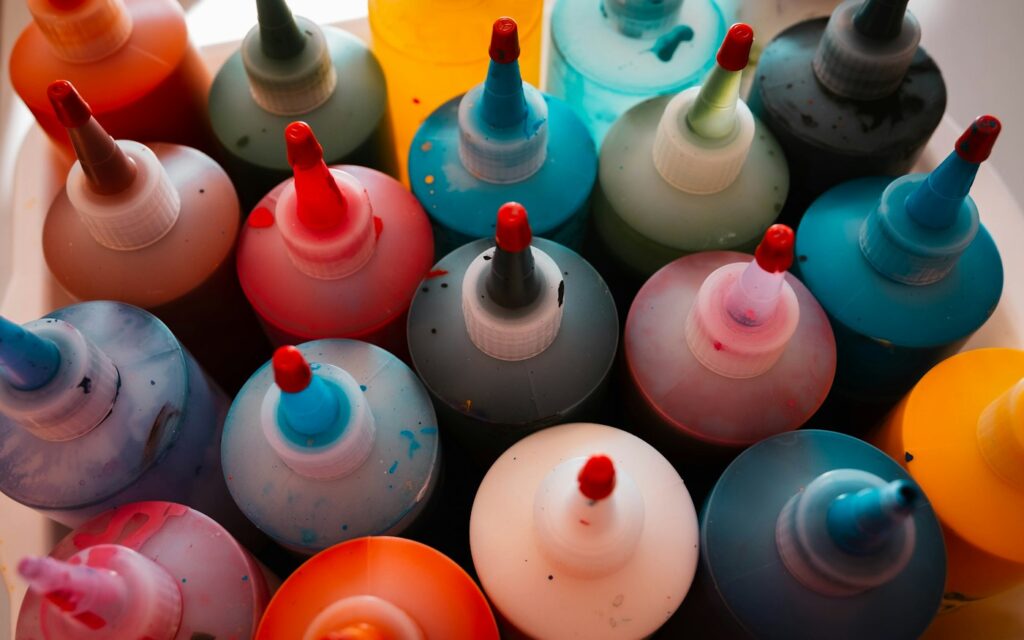
Black is the most stable and the least likely to cause reactions. It holds up well in the sun and ages slowly. Grey wash is simply black ink diluted with a carrier.
Colored inks use a wide range of pigments. Some colors, especially reds, yellows and light shades, are more likely to fade in UV light or cause sensitivity. Bright color also needs more passes of the needle to pack solidly. Our sunscreen for tattoos guide explains how to keep colors bright.
Allergic Reactions to Tattoo Ink
Most people never have a problem, but reactions can happen, sometimes months or years later. Red ink is the color most often linked to allergies. Signs include a raised, itchy or bumpy rash limited to one color, swelling, or scaly patches. Sunlight can trigger reactions in yellow or red areas.
If you notice a reaction, see a dermatologist. Do not confuse it with normal healing itch; read our tattoo itching guide to learn the difference, and check tattoo infection signs if you have heat, pus or fever.
Is Tattoo Ink Safe?
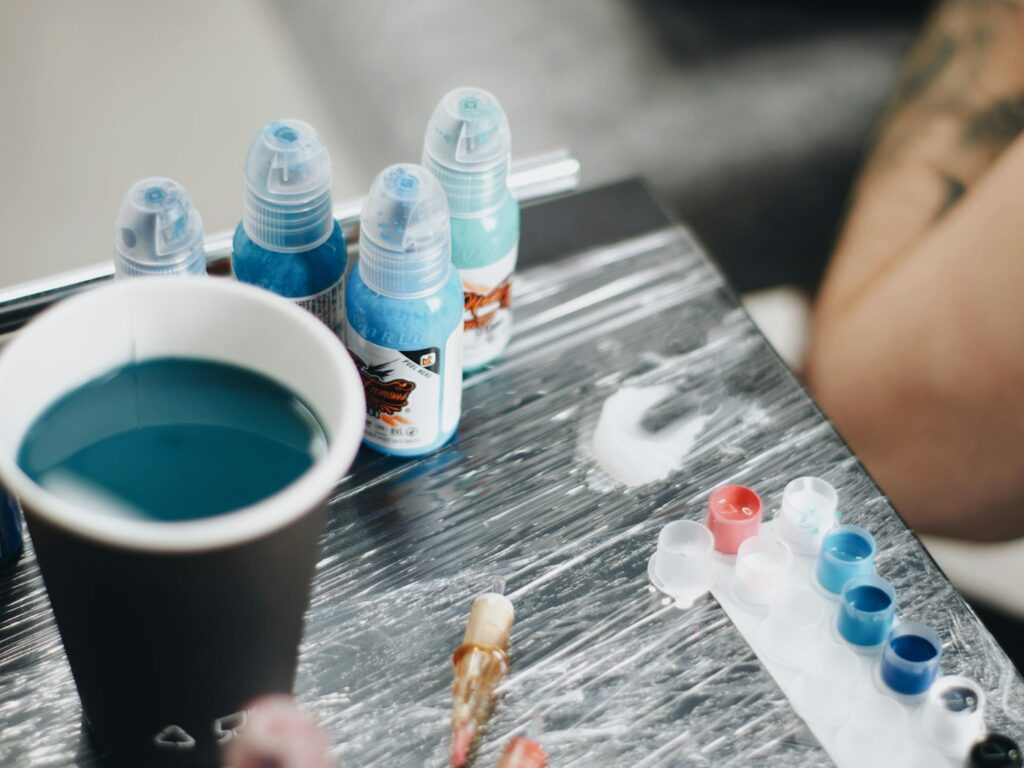
In the United States, these inks are regulated as cosmetics by the FDA. The FDA tattoo safety page explains that contaminated inks have caused infections and that the agency has issued warnings and recalls for some products. Unopened bottles can still be contaminated, which is why professional brands with sterile manufacturing matter.
In the European Union, rules introduced in 2022 restrict many chemicals and some pigments, which pushed manufacturers to reformulate. Reputable brands now publish ingredient information and safety data.
5 Essential Safety Facts
- Professional products only. Inks made for skin are produced under controlled conditions; craft, pen and printer inks are not.
- Sealed and in date. Contamination can happen after opening, so bottles should be sealed, labeled and within their expiration date.
- Single use caps. Pouring into fresh caps for each client prevents cross contamination between people.
- Reactions are possible but uncommon. Red and bright shades cause most allergies; a patch test is an option if you are sensitive.
- Report problems. In the US, you can report adverse reactions to the FDA through its MedWatch program, which helps identify unsafe products.
Following these points, together with a licensed studio and good aftercare, keeps the risks very low for most people.
Questions to Ask Your Artist About Ink
- Which brand do you use, and is it made for tattooing?
- Is it sealed and within its expiration date?
- Do you pour ink into new single use caps for each client?
- Do you have a vegan option if I need one?
- Which colors do you recommend for my skin tone? See our guide to tattoos on dark skin.
Vegan Tattoo Ink
Some traditional inks contain animal derived ingredients such as bone char in black pigment, glycerin from animal fat, or shellac. Many modern brands are fully vegan and cruelty free. If this matters to you, ask your artist in advance, and remember that aftercare products may also contain animal ingredients.
UV and Glow in the Dark Ink
UV ink glows under blacklight and is nearly invisible in daylight. It is popular for hidden designs, but its long term safety is not well studied, and it can heal with a faint scar like outline. True glow in the dark inks containing phosphorescent materials are not recommended for skin.
White Tattoo Ink
White ink uses titanium dioxide. It is used for highlights and small accents, but full white tattoos often fade to a cream or light yellow tone and can look like a scar. They work best as details inside a darker design.
Tattoo Ink and MRI Scans
Rarely, some iron based pigments can cause warmth, tingling or mild burning during an MRI. It is not a reason to avoid tattoos or scans, but always tell the radiology team about large tattoos so they can take simple precautions.
How Colors Age Over Time
Different pigments age at different speeds. Blacks and dark greys usually stay strong for decades. Deep reds, blues and greens hold up reasonably well when they are packed solidly. Yellows, oranges, pastels and whites tend to soften first, especially on areas that see a lot of sun such as hands, feet and forearms.
Placement, skin type and aftercare all play a role. A color piece that is protected from the sun and moisturized regularly can look vibrant for many years, while the same design on a sun exposed spot may need a refresh sooner. A quick tattoo touch up is an easy way to bring faded areas back to life.
Tattoo Ink Removal

Lasers break pigment into smaller particles your body can clear. Black is the easiest color to remove, while green, yellow and white are the most stubborn. Read our tattoo removal cost guide for details.
Frequently Asked Questions
What is tattoo ink made of?
Tattoo ink is made of pigments for color and a carrier liquid such as water, glycerin or witch hazel, plus small amounts of additives.
Which tattoo ink color is most likely to cause a reaction?
Red is the color most often linked to allergic reactions, followed by some yellows and other bright shades.
Can I use pen or craft ink for a tattoo?
No. Only professional products made for the skin should be used. Pen and craft inks can cause infections and reactions. See our stick and poke tattoo guide.
Does tattoo ink expire?
Yes. Bottles have expiration dates, and professional artists replace inks that are out of date or have been open too long.
Is black tattoo ink safer than color?
It generally causes fewer reactions and fades less, but any professional ink can be safe when used correctly.
Image Credits
All photos from Unsplash: Leo Okuyama, Ruth Bourke, Tristan Sosteric, Alex Ugolkov, Max Tokarev, Luis Quintero and Illia Plakhuta.