Sunscreen for Tattoos: 6 Essential Tips to Keep Your Ink Bright and Beautiful
The sun is the biggest enemy of a tattoo. Years of UV exposure can turn crisp black lines grey and blurry and make bright colors look washed out long before their time. The good news is that sunscreen for tattoos is simple, cheap and incredibly effective when you use it the right way.
This guide explains how sunlight fades ink, when you can start using sunscreen on a new tattoo, which SPF and ingredients to choose, how to apply and reapply it, and which colors need extra protection. Follow it and your tattoos will look sharp for decades.
Table of Contents
Why Tattoos Need Sun Protection
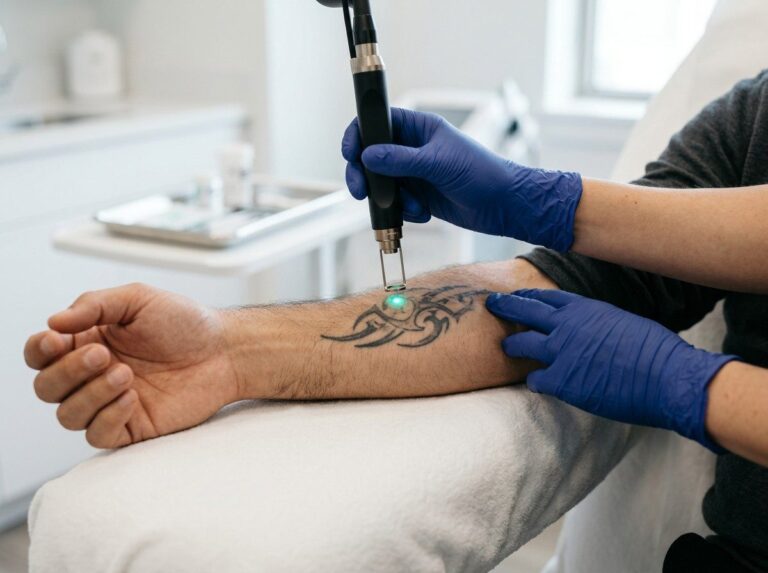
Tattoo ink sits in the dermis, the second layer of skin. Ultraviolet light, especially UVA, reaches that layer and slowly breaks pigment particles into smaller fragments. Your immune system then clears those fragments away, just as it does after laser removal. Over time the tattoo fades and lines spread.
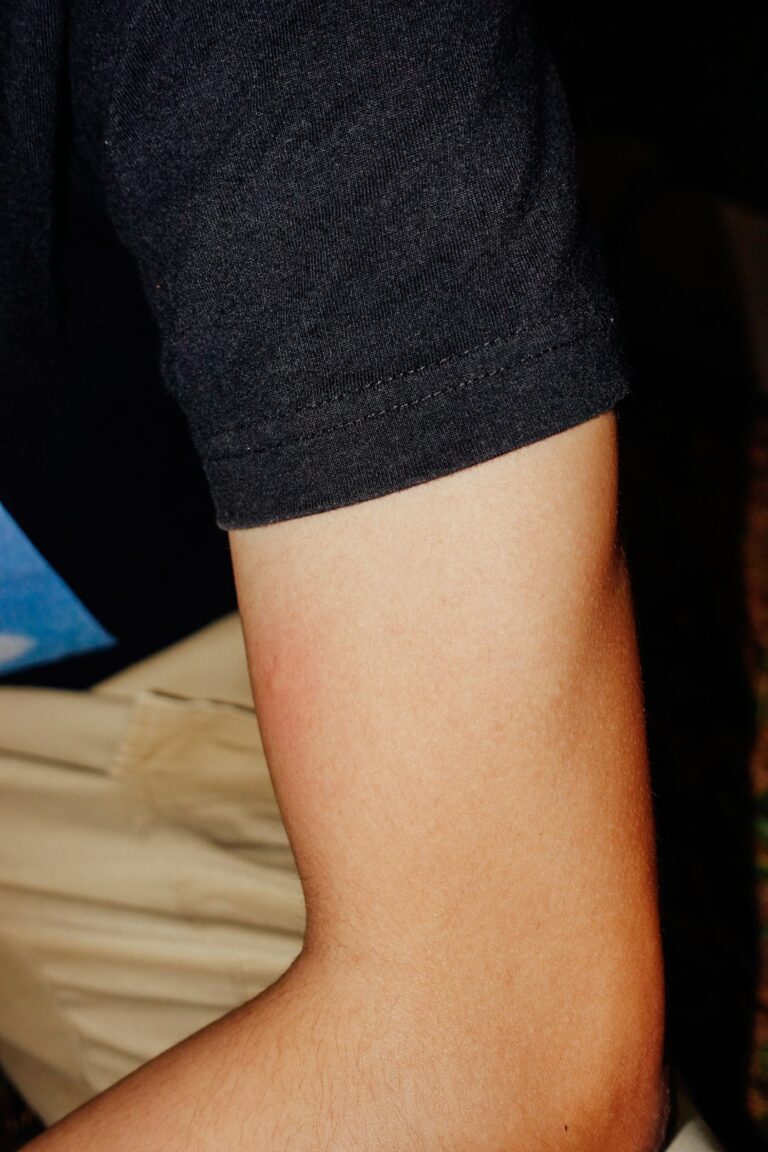
UVB causes sunburn, and a burn on a tattoo damages the skin around the ink and can cause blistering, peeling and patchy fading. Using sunscreen for tattoos protects against both, while also lowering your risk of skin cancer, which is the most important reason of all.

When Can You Put Sunscreen on a New Tattoo?
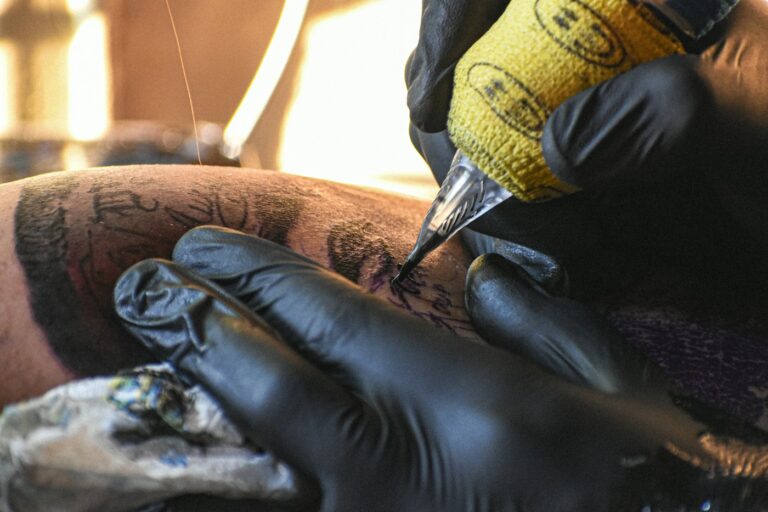
Not right away. A fresh tattoo is an open wound, and sunscreen can irritate it, clog it or trap bacteria. Wait until the tattoo is fully healed on the surface, usually two to four weeks, when all scabbing and peeling has stopped and the skin looks smooth.
Until then, keep the tattoo out of direct sun completely. Cover it with loose, breathable clothing, stay in the shade and avoid tanning. Our tattoo healing process guide shows when the surface is closed.
Choosing the Best Sunscreen for Tattoos
- Broad spectrum: protects against both UVA and UVB. This is essential, because UVA is the main cause of fading.
- SPF 30 or higher: the American Academy of Dermatology recommends at least SPF 30 for daily use. SPF 50 is a good choice for long days outdoors.
- Water resistant: important for swimming or sweating, labeled 40 or 80 minutes.
- Fragrance free: less likely to irritate tattooed skin.
Mineral vs Chemical Sunscreen
Mineral sunscreens use zinc oxide or titanium dioxide to reflect UV light. They are gentle on sensitive skin and start working immediately, although some leave a white cast. Chemical sunscreens absorb UV light, rub in clear and feel lighter, which many people prefer for large tattoos. Both work well as sunscreen for tattoos if they are broad spectrum and applied generously.
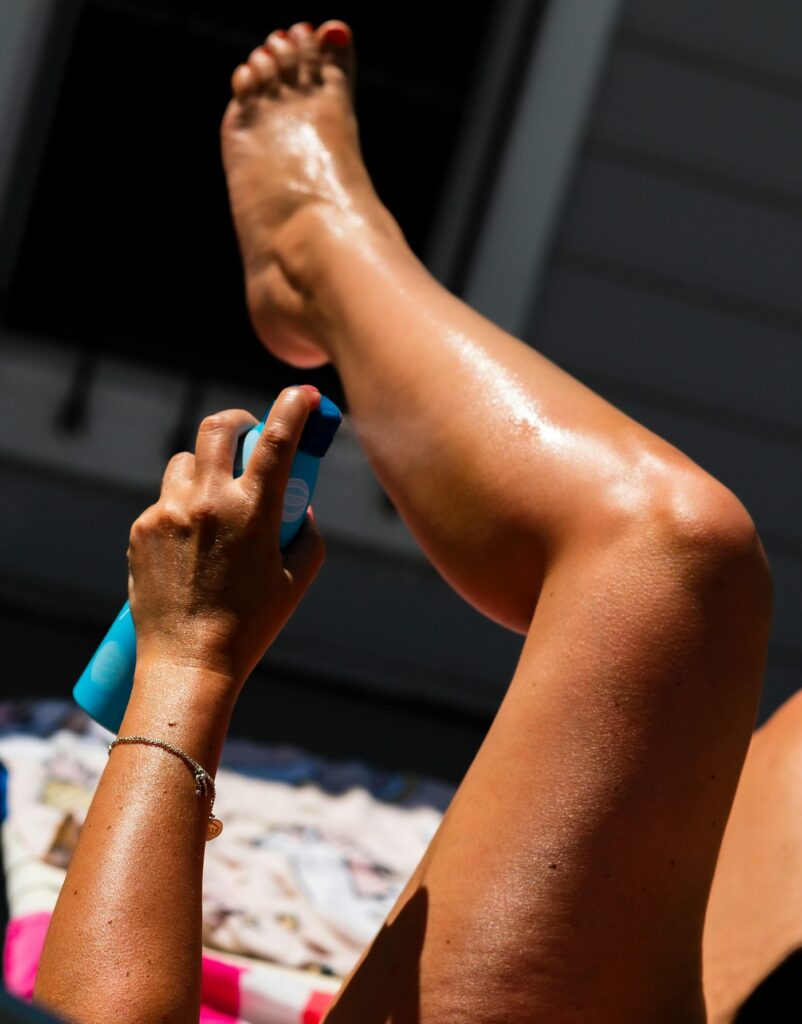
Sticks are handy for small tattoos and touch ups on the go, sprays are fast for large areas like the back, and lotions give the most even coverage.
How to Apply Sunscreen for Tattoos
- Apply 15 minutes before going outside so it can settle on the skin.
- Use enough: about a shot glass full for the whole body, or a generous layer over each tattoo.
- Rub it in evenly, paying attention to edges and fine lines.
- Reapply at least every two hours.
- Reapply right after swimming, sweating or towel drying.
- Do not forget tattoos on feet, ankles, hands and the back of the neck, which get the most sun.
6 Essential Tips for Using Sunscreen for Tattoos
- Make it daily. UVA passes through clouds and car windows, so sunscreen for tattoos is not only for beach days.
- Keep a stick in your bag. A small stick makes reapplying on hands, wrists and ankles easy.
- Use more than you think. Most people apply half the amount needed, which cuts protection dramatically.
- Reapply after water. Even water resistant sunscreen for tattoos wears off after swimming or heavy sweating. See our guide to swimming after a tattoo.
- Check the expiration date. Old sunscreen loses strength; replace it every year.
- Pair it with shade and clothing. Sunscreen works best as one layer of protection, not the only one.
Sun Protection by Season and Situation
Summer and vacations: this is when most fading happens. Plan new tattoos for autumn or winter so they heal away from strong sun, and pack a high SPF, water resistant sunscreen for tattoos in your carry on.
Winter and snow: snow reflects up to 80 percent of UV light, so skiers and snowboarders with exposed tattoos on the neck or hands still need protection.
Outdoor workers and athletes: if you spend hours outside, choose sweat resistant formulas and wear UPF sleeves over arm tattoos. Reapply during breaks.
Darker skin tones: melanin offers some natural protection, but tattoo ink still fades in UV light. The same daily routine applies to every skin tone.
Which Tattoo Colors Fade Fastest?
Not all inks react to the sun the same way. Light and bright pigments break down fastest, while dark pigments hold up longest.
- Fastest to fade: white, yellow, pastel colors and light watercolor tattoos.
- Medium: red, orange, light green and purple.
- Most durable: black, dark grey and dark blue.
If you love color, sunscreen for tattoos matters even more. Fine line work is also vulnerable, because thin lines have less ink to lose. See our guide to fine line tattoos.
Other Ways to Protect Tattoos From the Sun
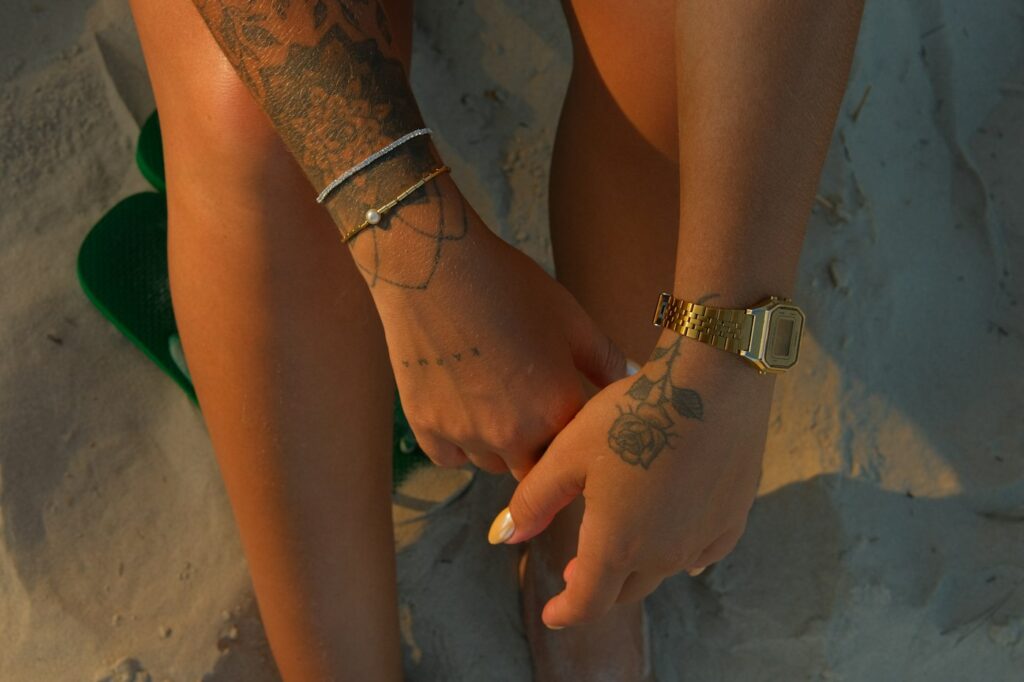
- Wear UPF clothing, long sleeves or rash guards on long days outside.
- Stay in the shade between 10 a.m. and 4 p.m., when UV is strongest.
- Avoid tanning beds, which fade tattoos just like the sun.
- Moisturize daily; hydrated skin keeps tattoos looking brighter.
- Check the UV index on your weather app before going out.
What to Do If Your Tattoo Gets Sunburned
If a healed tattoo gets burned, get out of the sun and cool the area with a clean, damp cloth or a cool shower. Apply a gentle, fragrance free moisturizer or pure aloe gel, drink plenty of water and leave any blisters alone. Do not pick at peeling skin, because it can take ink with it.
A burn on a tattoo that is still healing is more serious. Watch for spreading redness, heat, pus or fever, which can signal infection, and read our tattoo infection signs guide. Once everything has calmed down, check the tattoo for faded patches; your artist can usually fix them with a quick touch up.
Can Sunscreen Save a Faded Tattoo?
Sunscreen cannot bring back lost ink, but it stops further fading. If a tattoo already looks dull, an artist can refresh it with a touch up, and daily protection afterward keeps the new ink bright. Our cover up tattoo ideas guide helps if the piece needs a bigger change.

Frequently Asked Questions
Do you really need sunscreen for tattoos?
Yes. Daily sun exposure is the leading cause of tattoo fading and blurring, and sunscreen also protects your skin from damage and cancer.
What SPF is best for tattoos?
Use a broad spectrum SPF 30 or higher every day, and SPF 50 for long periods outdoors.
Can I use regular sunscreen on tattoos?
Yes. Special tattoo sunscreens are not required. Any broad spectrum, SPF 30 or higher, water resistant sunscreen works.
How soon can I put sunscreen on a new tattoo?
Wait until the tattoo is fully healed, usually two to four weeks. Keep it covered and out of the sun until then.
Does sunscreen fade tattoos?
No. Sunscreen protects tattoos. Only harsh exfoliants or products that irritate the skin may cause problems.
Image Credits
All photos from Unsplash: Asal Davletyarovaasss, Philippe Murray-Pietsch, Martin Baron, Zulfugar Karimov and Caroline Badran.