Tattoo Removal: Ultimate Guide to Laser, Cost, Pain and 6 Stages of Fading
Tattoo removal is more common than ever. Around one in three American adults has a tattoo, and many of them later want one faded, changed or gone. The good news is that modern laser tattoo removal can lighten or remove most tattoos safely when it is done by a trained professional. The less exciting news is that it takes time, several sessions and a real budget.
This complete guide explains how tattoo removal works, the main methods, how many sessions you will need, how much it hurts and costs, the risks to watch for and how to care for your skin. You will also see what a tattoo looks like at 6 stages of fading, from the first session to the final result.
Table of Contents
How Does Tattoo Removal Work?
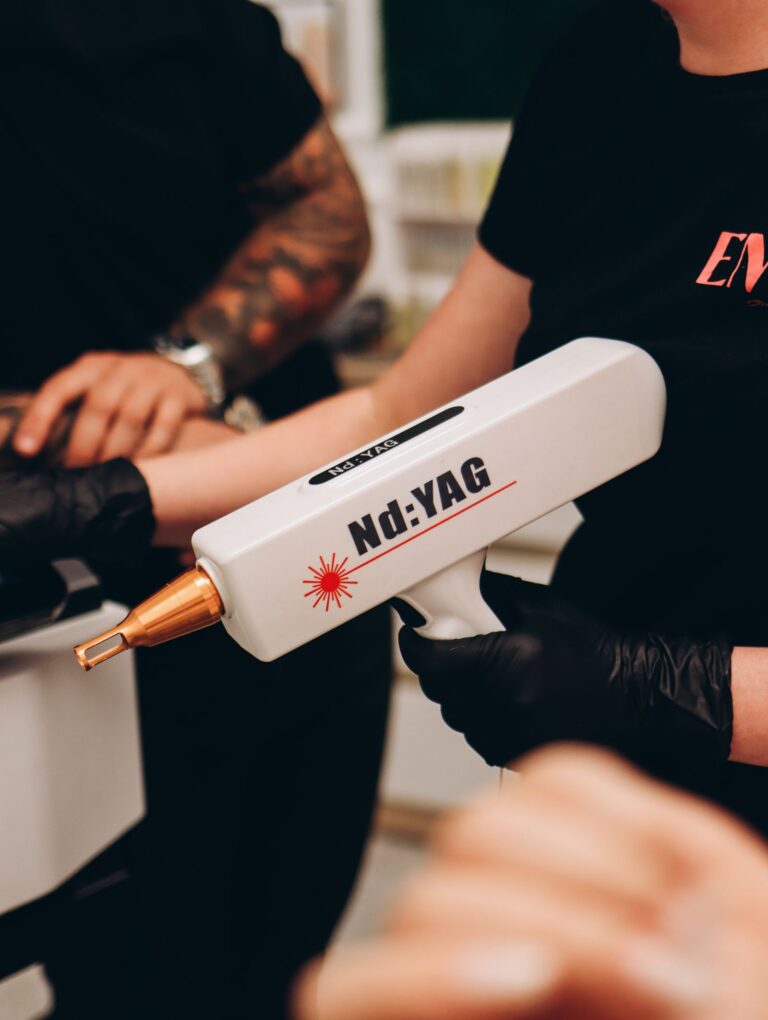
A tattoo stays in your skin because the ink particles are too big for your immune system to carry away. Laser removal changes that. The laser sends very short pulses of light into the skin. The ink absorbs the light, heats up in a tiny fraction of a second and shatters into much smaller fragments.
Over the following weeks, white blood cells called macrophages pick up those fragments and carry them away through the lymphatic system. That is why a tattoo keeps fading for weeks after each visit, and why you need to wait between sessions. The laser does the breaking, and your body does the cleaning.
Tattoo Removal Methods Compared
Laser treatment is the standard method today, but it is not the only option. Here is how the main methods compare:
- Q-switched laser: the most widely used laser. It fires pulses in nanoseconds and works well on black and dark blue ink.
- Picosecond laser: a newer laser that fires pulses in trillionths of a second. It can break ink into smaller pieces and may need fewer sessions for some colors. See our pico laser vs Q-switch guide.
- Surgical excision: a doctor cuts out the tattooed skin and stitches the edges. It removes small tattoos in one visit but always leaves a scar.
- Dermabrasion: the top layers of skin are sanded away. It is rarely used now because results are uneven and the risk of scarring is high.
- Removal creams: creams sold online do not reach the ink in the dermis, and the FDA has not approved any of them for tattoo removal. Some cause burns and rashes.
- Saline and acid treatments: these damage the skin to push ink out. They carry a real risk of scars and infection and are best avoided.
Laser Tattoo Removal Step by Step
- Consultation: the provider looks at the size, colors, age and location of the tattoo and your skin type, then estimates the number of sessions.
- Test spot: many clinics treat a small area first to see how your skin reacts.
- Protection: you and the provider wear safety glasses made for the laser wavelength.
- Cooling and numbing: a cold air device, ice or numbing cream makes the session more comfortable.
- Treatment: the provider moves the handpiece over the tattoo. A small tattoo takes only a few minutes.
- Dressing: the area is covered with a thin layer of ointment and a sterile bandage.
How Many Sessions Does Tattoo Removal Take?
Most professional tattoos need 6 to 12 sessions, and some need more. Sessions are usually spaced 6 to 8 weeks apart so the skin can heal and the body can clear the broken ink. That means the whole process often takes one to two years. Amateur tattoos and older tattoos often need fewer sessions because they hold less ink.
Many providers use the Kirby-Desai scale to estimate the number of sessions. It gives points for six factors:
- Skin type: lighter skin usually clears faster and with fewer side effects.
- Location: tattoos closer to the heart, such as the chest and upper arm, fade faster than tattoos on the hands, ankles and feet, where circulation is weaker.
- Colors: black is the easiest color to remove. Blue and green are harder, and yellow, orange and white are the hardest.
- Amount of ink: dense, solid or layered work takes longer than fine line work.
- Scarring: scar tissue from the original tattoo slows down removal.
- Layering: a cover up sitting on top of an older tattoo takes much longer.
Does Tattoo Removal Hurt?
Yes, but it is short. Most people compare laser pulses to a rubber band snapping against the skin or drops of hot oil. It usually feels sharper than getting the tattoo, but each session lasts only minutes instead of hours. Cold air cooling and numbing cream help a lot, and doctors can also inject a local anesthetic. Bony areas and thin skin, such as the ankle, ribs and top of the foot, are the most sensitive. Our tattoo pain chart shows which spots are the most sensitive.
How Much Does Tattoo Removal Cost?
In the United States, one laser session usually costs $200 to $500 for a small to medium tattoo. Large pieces can cost more per visit. Because you will need several sessions, the total often reaches $1,500 to $5,000 or more. Cosmetic removal is almost never covered by health insurance. Many clinics sell session packages that lower the price per visit. For a full price breakdown and ways to save, see our tattoo removal cost guide.
Side Effects and Risks
Laser removal is considered safe when it is done properly, but it is still a medical procedure. These are the most common side effects:
- Redness, swelling and tenderness: normal for a few days.
- Blisters and scabs: common in the first week. Do not pop or pick them.
- Lighter skin (hypopigmentation): the treated area can turn lighter than the skin around it.
- Darker skin (hyperpigmentation): more common in medium and dark skin tones, and it usually fades over months.
- Texture change and scarring: rare with a skilled provider, but more likely if the skin is overtreated or picked. See our tattoo removal scars guide.
- Ink darkening: white, pink, peach and some cosmetic inks can turn grey or black after a laser pulse, which is why a test spot matters.
- Allergic reactions: breaking up some inks, especially red, can trigger a reaction in rare cases.
The US Food and Drug Administration warns against removal creams and do it yourself methods, and recommends seeing a dermatologist about laser removal.
Tattoo Removal on Darker Skin
People with medium and dark skin can get great results, but the laser has to be chosen carefully. Darker skin has more natural pigment that can also absorb laser light, which raises the risk of lighter or darker patches. Providers usually use the 1064 nm wavelength, which passes the skin pigment more safely, along with lower energy and more sessions. Always ask for a test spot and ask how many patients with your skin tone the provider has treated. Read our tattoos on dark skin guide for more.
Who Should Wait Before Starting?
A good provider will ask about your health before the first session. Treatment is often delayed or avoided in these cases:
- Pregnancy and breastfeeding: most clinics wait until after.
- Recent acne medication: isotretinoin can slow healing, so many providers wait several months after the last dose.
- Active skin problems: infection, a rash or a fresh sunburn in the area.
- A recent tan: tanned skin is more likely to change color.
- Keloid scars: people who form raised scars easily need extra care.
- Some medicines and health conditions: drugs that make the skin sensitive to light, or past gold therapy, can cause problems. Tell your provider about everything you take.
How to Choose a Tattoo Removal Provider
- Look for medical oversight: the rules on who can use a laser vary from state to state. A board certified dermatologist, or a clinic supervised by one, is the safest choice.
- Ask about the laser: one laser cannot treat every color. Ask which wavelengths they have.
- Check experience with your skin tone: ask to see before and after photos of similar skin.
- Ask for a test spot: especially for colored or cosmetic tattoos.
- Get a written estimate: number of sessions, price per session and package deals.
- Avoid big promises: no honest provider can promise complete removal in a set number of visits.
The American Society for Dermatologic Surgery has more advice on what to expect from a dermatologic surgeon.
Aftercare After Laser Tattoo Removal
- Keep it covered: leave the bandage on for the time your provider says, usually one to three days.
- Keep it clean: wash gently with mild soap and water and pat dry.
- Use a thin layer of ointment: only what your provider recommends.
- Do not pop blisters or pick scabs: this is the main cause of scars.
- Skip soaking: avoid pools, hot tubs and long baths until the skin is healed.
- Stay out of the sun: cover the area, and use sunscreen once it has healed.
- Watch for infection: call your provider if you see spreading redness, pus, heat or fever.
Many of the same habits that help a new tattoo heal also help after removal. See our tattoo aftercare and tattoo healing process guides.
Fading for a Cover Up
You do not always need full removal. If you want a new design over an old one, two to four laser sessions can lighten the old tattoo enough to give your artist more freedom. Fading also lets you choose a lighter, more delicate cover up instead of a large dark one. Browse our cover up tattoo ideas for inspiration.
Tattoo Removal Before and After: 6 Stages of Fading
The images below are illustrations, not real patient photos. They show how a black tattoo usually changes during laser treatment, so you know what to expect at each stage. Every tattoo and every body responds differently.
1. Before Treatment
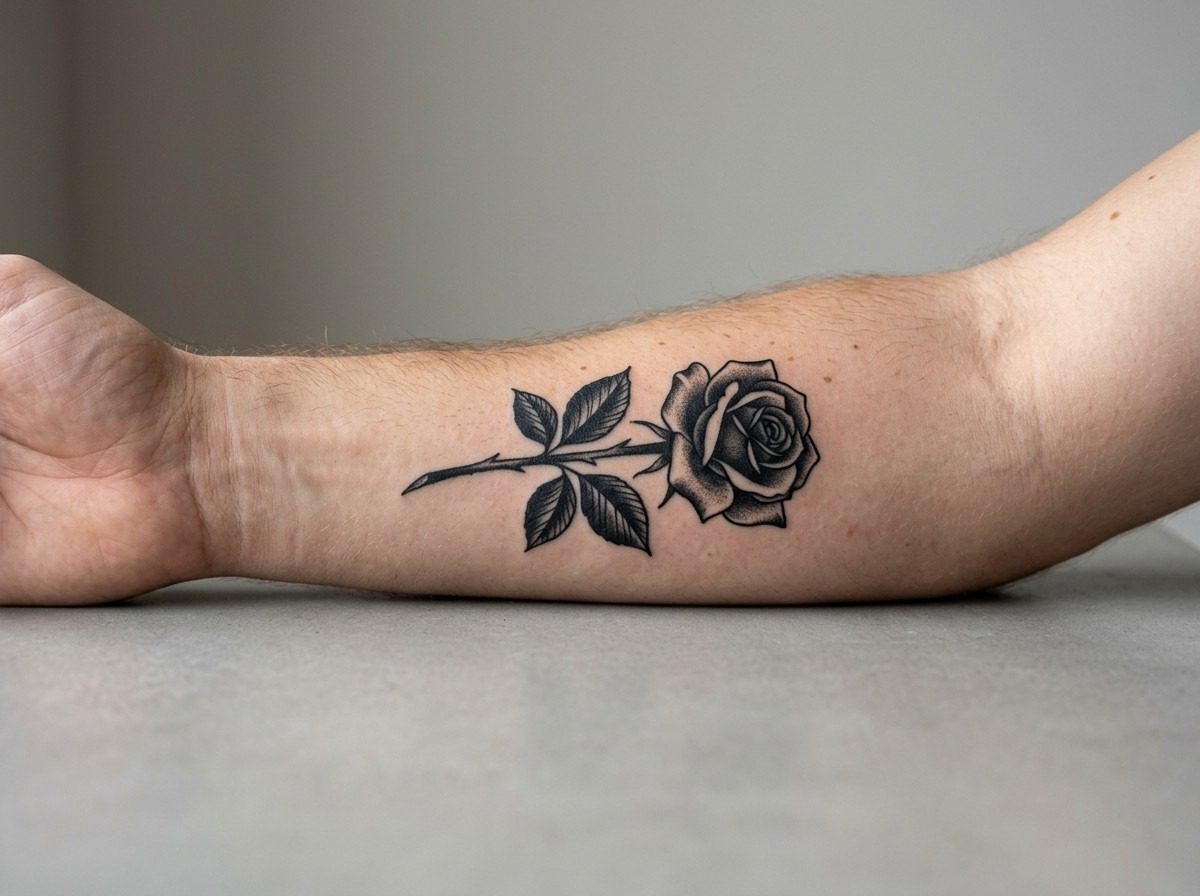
This is the starting point: a professional black tattoo, several years old and fully healed. Black ink on lighter skin is the easiest kind to remove. Shown here on the outer forearm.
2. Right After a Session
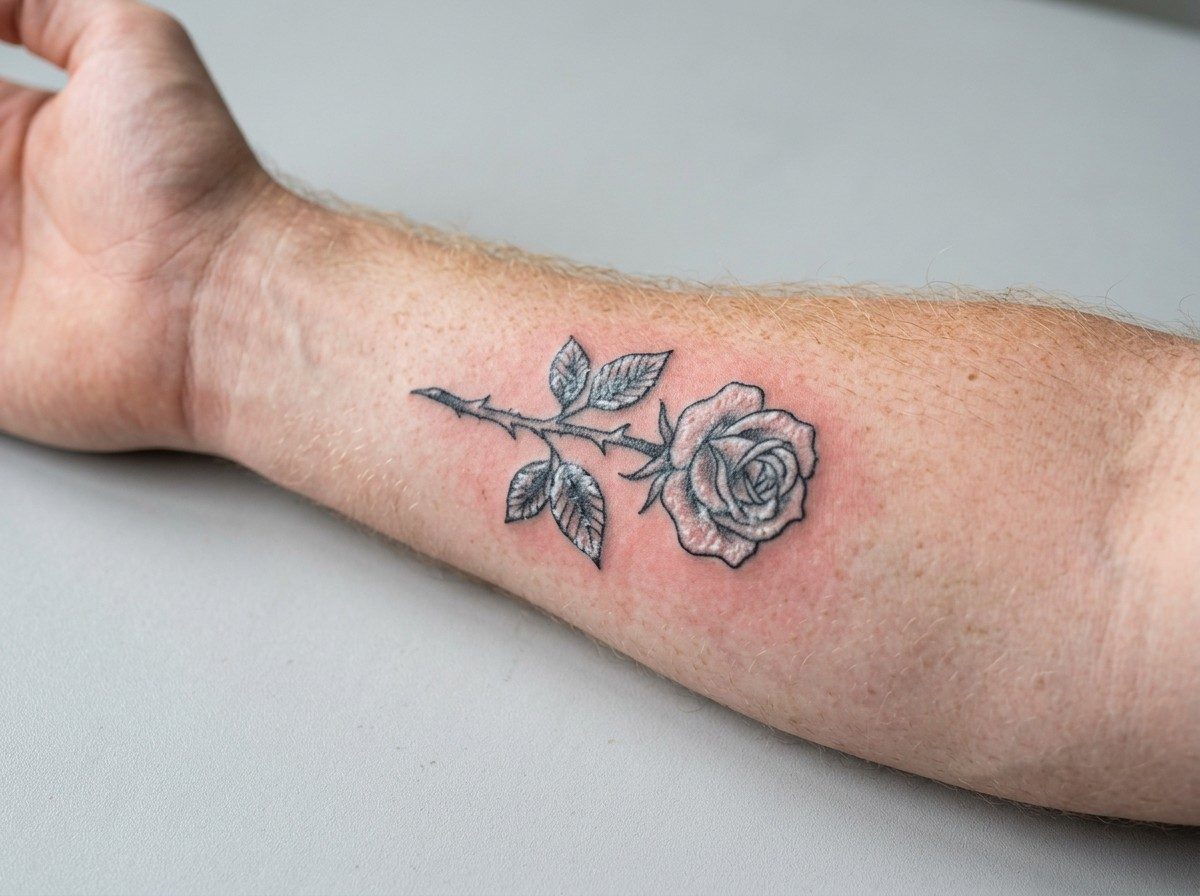
Right after the laser passes over the skin, the tattoo turns white for 10 to 20 minutes. This frosting is gas released from the skin, not a burn, and it fades on its own. Shown here on the outer forearm.
3. One Week Later
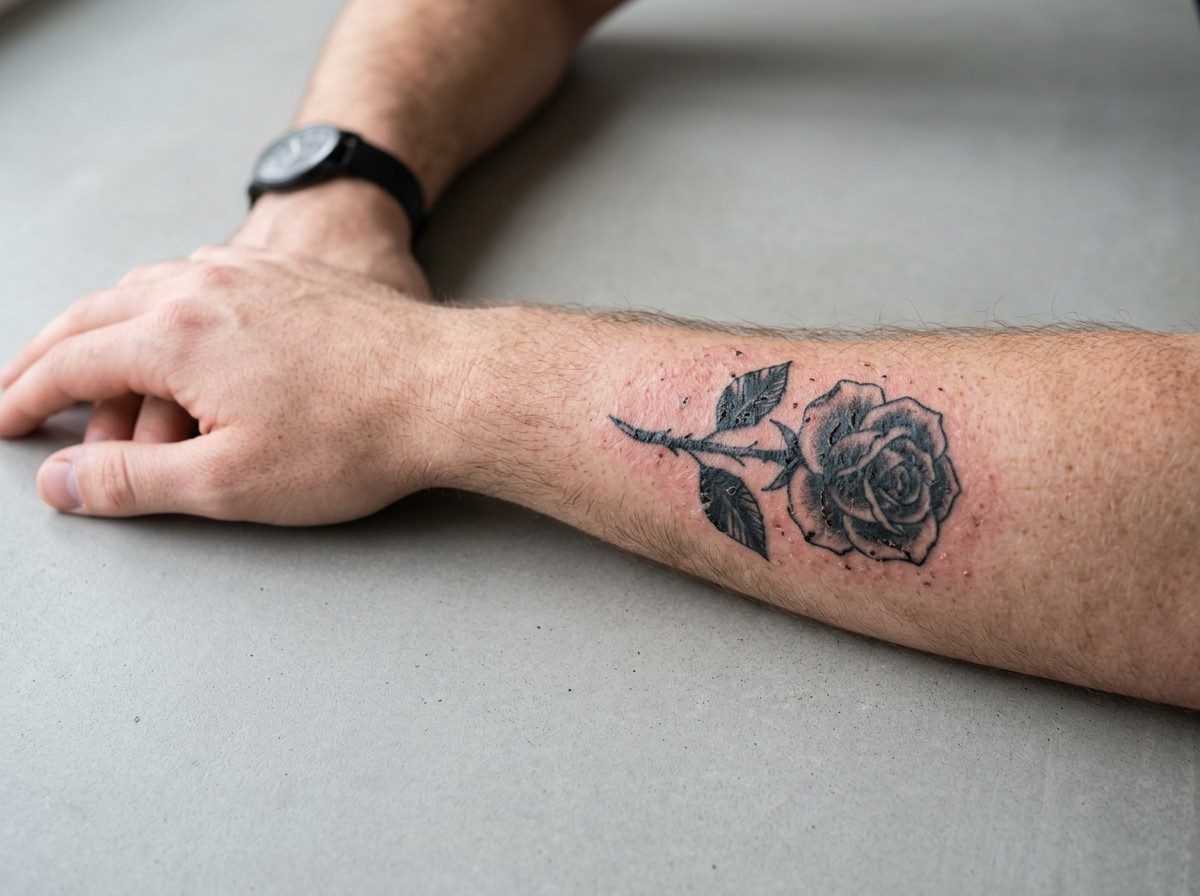
During the first week the area may swell, blister or form thin scabs. Leave them alone, keep the skin clean and let it heal before the next session. Shown here on the outer forearm.
4. After Three Sessions
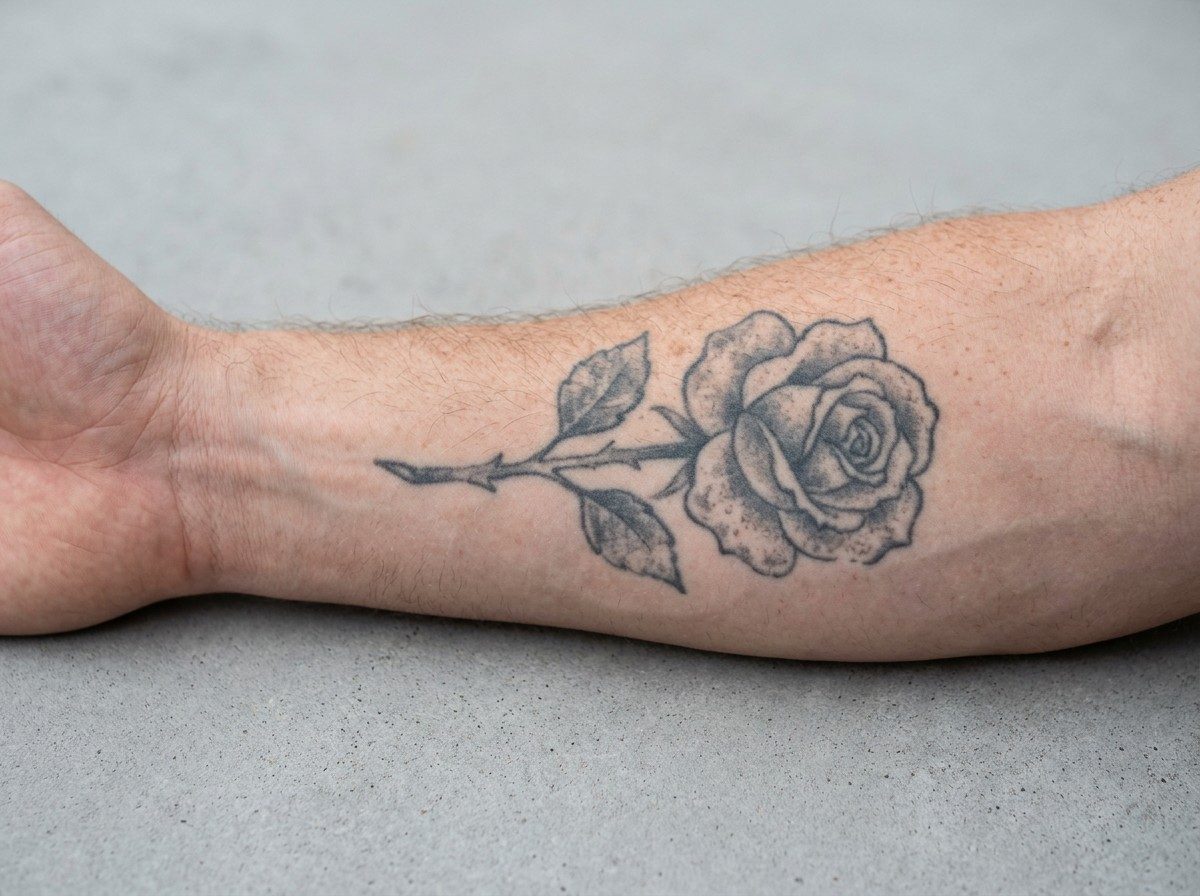
After three sessions most black tattoos are clearly lighter. The body is still clearing broken ink between visits, so fading continues for weeks after each session. Shown here on the outer forearm.
5. After Six Sessions
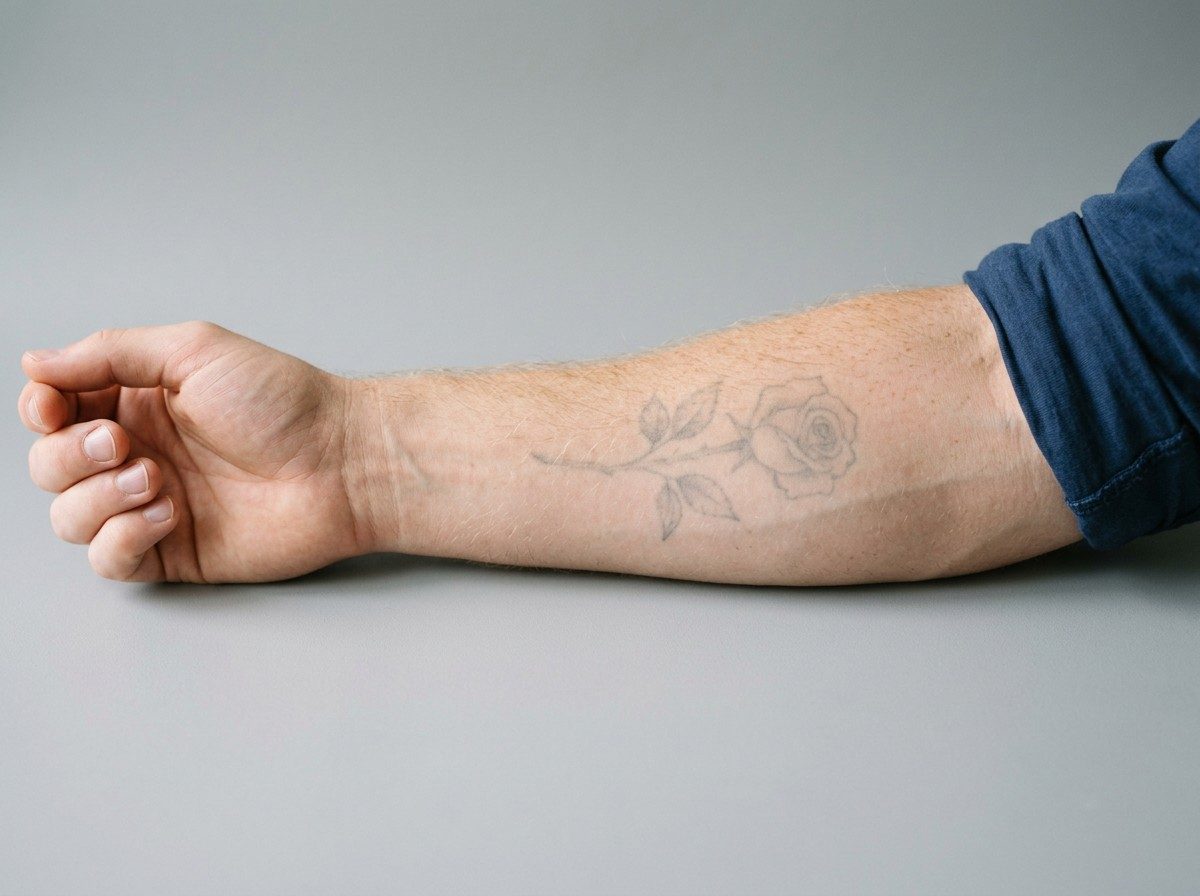
By the sixth session many tattoos are faint enough to cover with a new design, and some are close to gone. Shown here on the outer forearm.
6. Final Result
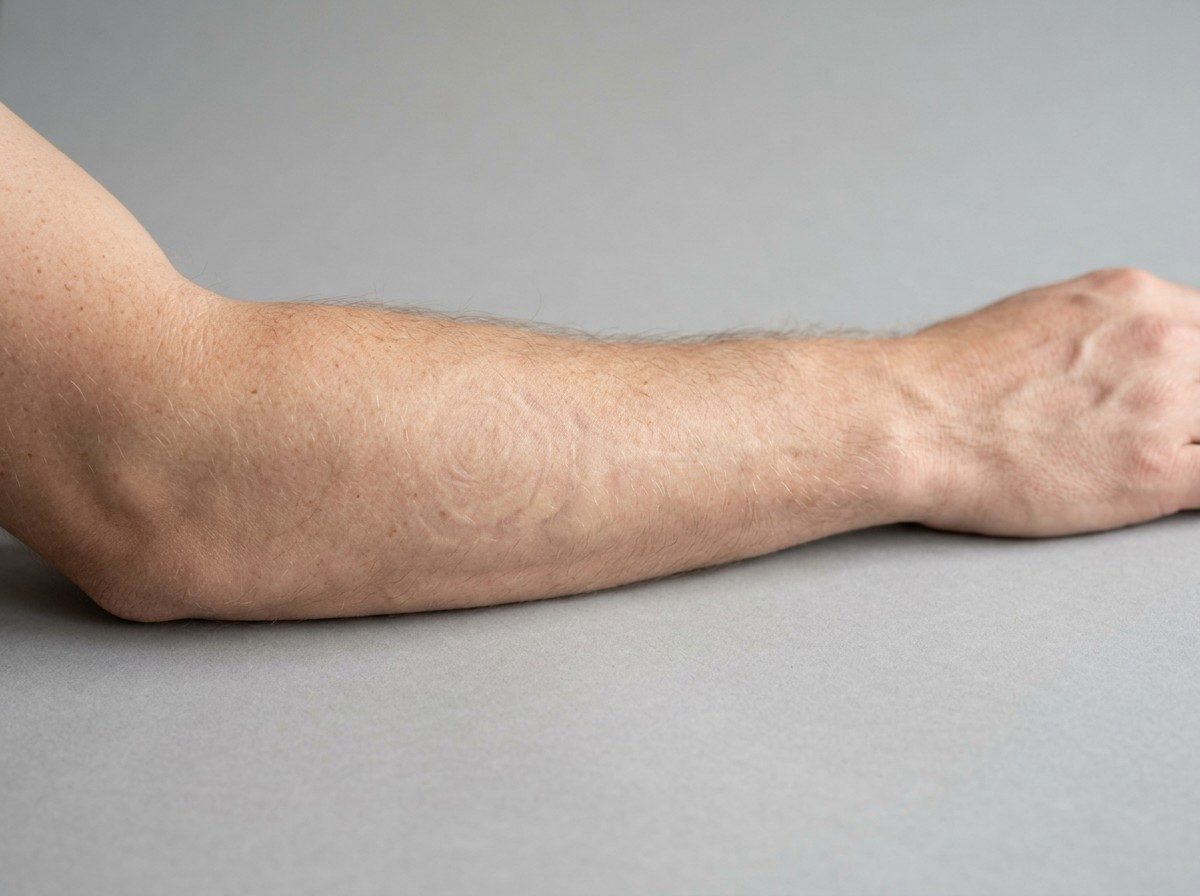
With enough sessions and good aftercare, many black tattoos fade until they are hard to see. A faint ghost or slight change in skin tone can remain. Shown here on the outer forearm.
Frequently Asked Questions
Is tattoo removal permanent?
Yes. Once ink fragments are cleared by the body they do not come back. A faint ghost or a slight change in skin tone can remain.
How long does tattoo removal take?
Most tattoos need 6 to 12 sessions spaced 6 to 8 weeks apart, so the full process often takes one to two years.
Can every tattoo be fully removed?
Not always. Black ink responds best. Some colors, very dense work and some skin types may only fade, not disappear.
Is tattoo removal more painful than getting a tattoo?
Each pulse often feels sharper, but a session is much shorter. Cooling and numbing make it easier to handle.
How soon can I get a new tattoo after removal?
Wait until the skin is fully healed, usually at least 6 to 8 weeks after your last session. Ask your provider and your artist first.
Do tattoo removal creams work?
No. Creams cannot reach the ink in the deeper layer of skin, and none are approved by the FDA for tattoo removal.
About These Images
The images in this guide are digitally created illustrations, not photos of real patients. They show the typical stages of laser treatment so you know what to expect. Real results depend on the tattoo, your skin and your provider. This guide is general information, not medical advice. Talk to a board certified dermatologist before you start any treatment.