Tattoo Scabbing: 7 Essential Care Steps for Perfect Healing
A few days after getting inked, many people look down and see a crust forming over their new artwork. It can look alarming, especially on a tattoo you paid a lot for. In most cases, tattoo scabbing is a normal part of healing, and handling it correctly is the single biggest thing you can do to keep your lines sharp and your colors bright.
This guide explains why tattoo scabbing happens, what normal and abnormal scabs look like, a day by day timeline, and exactly what to do and avoid. It also covers heavy scabbing, picking accidents and when to talk to a doctor.
Table of Contents
Why Does Tattoo Scabbing Happen?
A tattoo is a controlled wound. The needle punctures the skin thousands of times per minute, and your body responds the same way it does to any scrape: it sends plasma, blood cells and lymph fluid to the surface. As that fluid dries, it forms a protective crust over the damaged skin while new cells grow underneath.
Light tattoo scabbing is therefore a sign that your body is doing its job. The goal is not to stop scabs from forming but to keep them thin, soft and undisturbed until they fall away on their own.
Tattoo Scabbing Timeline
- Days 1 to 3: the tattoo oozes clear or ink tinted plasma and feels warm and tender. Gently wash away the fluid so it does not dry into thick crusts.
- Days 3 to 7: thin, flaky scabs start to form, usually over the darkest lines and solid color areas. The tattoo may look dull.
- Days 7 to 14: scabs loosen and flake off together with peeling skin. Itching is at its peak.
- Weeks 2 to 4: the surface is closed and scabs should be gone. The tattoo may still look milky while deeper layers heal.
Everyone heals at a different speed. Large pieces, heavy color packing and areas that bend a lot, such as elbows and knees, often take longer. Read our full tattoo healing process guide for every stage.
Normal vs Abnormal Tattoo Scabbing
Normal scabs are thin, flat and the same color as the ink below them. They cover small areas, feel slightly tight and do not hurt much.
Heavy scabbing is thick, raised and hard, sometimes cracking when you move. It often comes from over wiping, letting plasma dry on the skin, too much sun, or an overworked tattoo. Heavy tattoo scabbing is not dangerous by itself, but it carries a higher risk of pulling ink out when the scabs fall off.
Warning signs are scabs with yellow or green pus, spreading redness, heat, swelling that gets worse after day three, red streaks or a fever. These point to infection, not normal healing. See our tattoo infection signs guide and contact a doctor promptly.
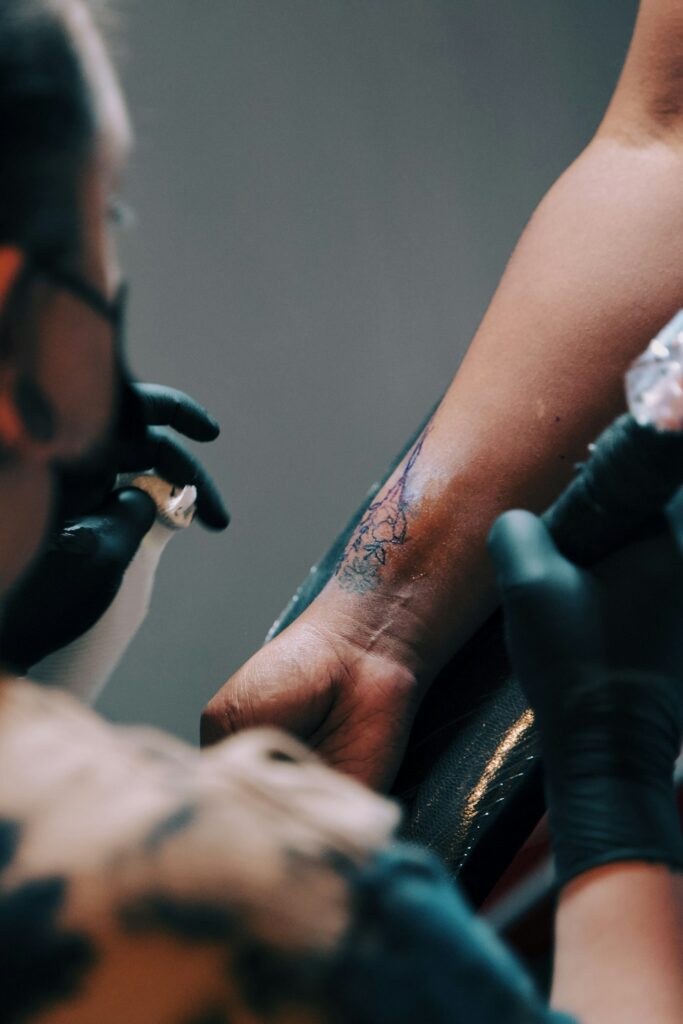
How to Care for Tattoo Scabbing
- Wash gently twice a day with lukewarm water and fragrance free soap, using clean fingertips only.
- Pat dry with a clean paper towel. Never rub.
- Moisturize lightly. Apply a very thin layer of unscented lotion or tattoo balm two to three times a day. The skin should look satin, not shiny or greasy.
- Let scabs fall off on their own. Do not pick, scratch or peel them.
- Wear loose, clean clothing so fabric does not stick to scabs and rip them off.
- Stay out of water. No baths, pools, hot tubs or the sea until the scabs are completely gone.
- Keep it out of the sun and skip sunscreen until the skin is fully closed.
Too much ointment is a common mistake. Thick layers trap moisture, soften scabs until they turn gummy, and can clog pores. Less is more. Our tattoo aftercare guide lists the products tattoo artists recommend.
What If You Picked a Scab?
It happens, often in your sleep. If a scab comes off early, do not panic. Wash the area gently, pat it dry and apply a thin layer of balm. Keep it clean and let it heal. Some ink may be lost in that spot, leaving a lighter patch.
Once the tattoo has fully healed after about four to six weeks, check for patchy areas. Most artists offer a free touch up within a few months, and small gaps are easy to fill.
Tattoo Scabbing vs Peeling
Scabbing and peeling often happen at the same time, but they are different. Scabs are dried fluid and blood that sit over the wound. Peeling is the top layer of dead skin flaking away like a sunburn, often with flecks of ink color. Both are normal. For more on the second one, read our tattoo peeling guide.
How to Reduce Tattoo Scabbing
- Arrive sober, well rested and hydrated for your session. See our first tattoo tips.
- Follow your artist's wrap instructions, including second skin films if they use them.
- Wash off plasma in the first 48 hours so it cannot dry into thick crusts.
- Avoid heavy workouts that stretch the area during the first week.
- Choose an experienced artist who does not overwork the skin.
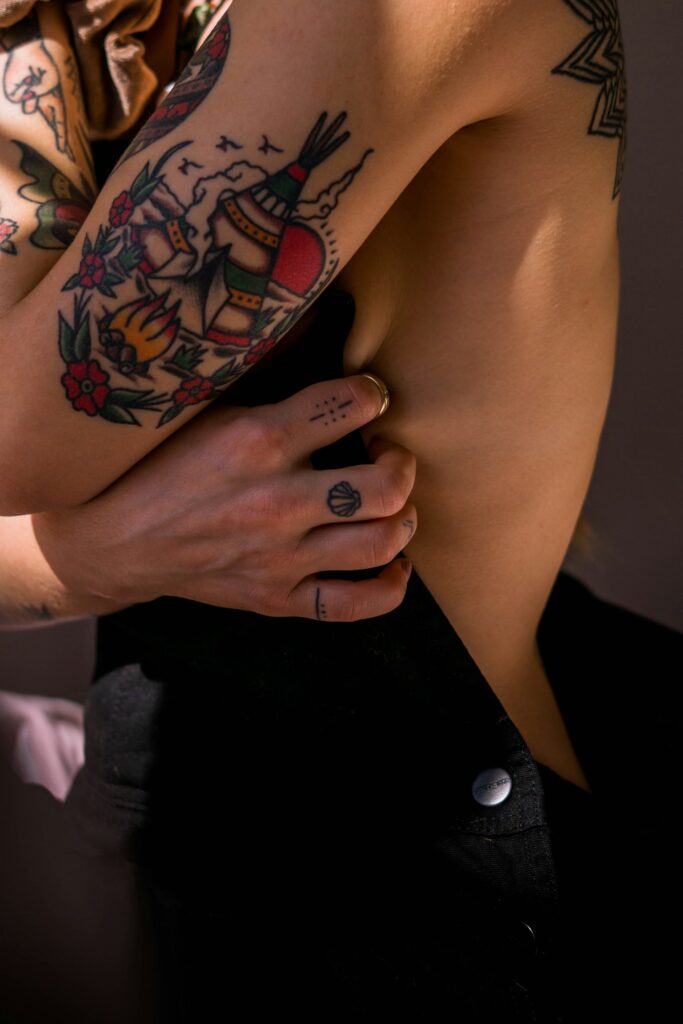
With good care, tattoo scabbing passes quickly and leaves behind a crisp, bright tattoo like the one above. The American Academy of Dermatology also offers general advice on caring for new tattoos.
Scabbing by Tattoo Type and Placement
Not every tattoo scabs the same way. The amount of ink, the needle groupings and the location all change how your skin reacts.
Fine line and small tattoos usually form very light flakes that are gone in a week. Bold outlines and solid black fill tend to crust more, because the skin received more passes of the needle. Color packing, especially whites and yellows, can leave thicker, lighter colored scabs that look worrying but are normal.
Placement matters too. Hands, feet, elbows and knees bend all day, so scabs there crack more easily and take longer. Ribs and the stomach rub against clothing. Our tattoo placement guide explains which areas heal fastest, and our tattoo pain chart shows which ones hurt most.
Common Myths About Tattoo Scabs
Myth: no scabs means a bad tattoo. Some people barely scab at all, especially with modern healing films. A tattoo can heal perfectly with only light peeling.
Myth: you should keep scabs dry to make them fall off faster. Scabs that dry out completely crack and tear. A thin layer of moisturizer keeps them flexible so they release gently.
Myth: petroleum jelly is best. Thick petroleum products can suffocate the skin and trap bacteria. Most artists now prefer light, fragrance free lotions or dedicated tattoo balms.
Myth: itching means infection. Itching is normal during healing and usually peaks in the second week. Tap or gently slap the area instead of scratching, and it will pass.
Frequently Asked Questions
Is tattoo scabbing normal?
Yes. Light scabbing between days three and fourteen is a normal part of healing.
How long does tattoo scabbing last?
Most scabs fall off within one to two weeks. Large or heavily colored tattoos may take up to three weeks.
Should I moisturize tattoo scabs?
Yes, lightly. A thin layer keeps scabs flexible so they do not crack, but too much makes them soggy.
Can I shower with tattoo scabs?
Yes. Short, lukewarm showers are fine. Avoid soaking and direct high pressure water on the tattoo.
Why is my tattoo scab raised and hard?
Thick, raised scabs usually form when plasma dries on the skin. Keep washing gently and moisturizing lightly, and they will soften and lift over time.
Image Credits
All photos from Unsplash: felirbe, Apothecary 87, Nathalie Stimpfl, Jonathan Cooper and Samuel Charris.