Tattoo Gun: 3 Types of Tattoo Machines and the Best Uses for Each
Most people call it a tattoo gun, but ask any artist and they will tell you it is a tattoo machine. Whatever you call it, this small device is the heart of every modern tattoo. Understanding how it works helps you appreciate the craft, ask smarter questions at a consultation, and know what to look for in a safe, professional studio.
This guide explains how a tattoo gun works, the three main types of machines, needle groupings, power supplies, a short history of the invention, and why cheap online kits are a bad idea for beginners.
Table of Contents
What Is a Tattoo Gun?
A tattoo gun is a handheld electric machine that moves one or more needles up and down very quickly, usually between 50 and 150 times per second. Each stroke deposits a tiny amount of ink into the dermis, the second layer of skin. The artist controls depth, angle and speed by hand to create lines, shading and color.
Artists often dislike the word gun because it sounds violent and inaccurate. Nothing is fired or shot; the needle simply moves in a controlled up and down motion. In this guide we use both terms, since tattoo gun is what most people search for.
What Is a Tattoo Gun Called?
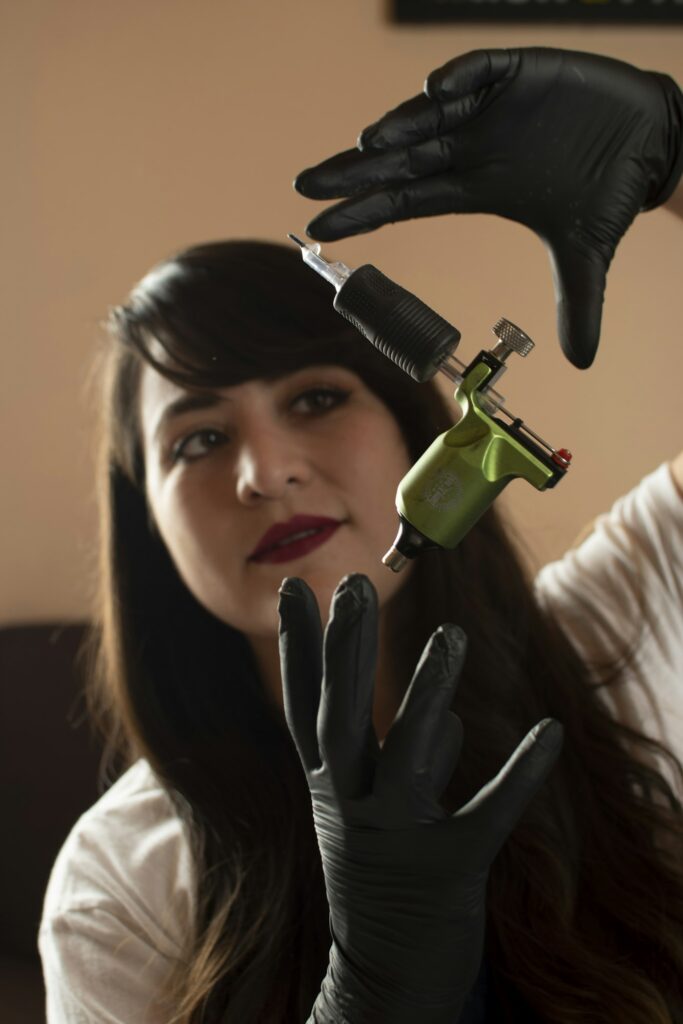
The professional name for a tattoo gun is a tattoo machine. Most artists avoid the word gun because the device is a precise tool, not a weapon: it drives a needle grouping in and out of the skin about 50 to 150 times per second at a depth of roughly 1 to 2 millimeters. If you ask what a tattoo machine is called in a shop, you will also hear the names coil machine, rotary machine, pen machine and iron, which is old slang for a coil machine.
So when you search for what a tattoo gun is called, the short answer is simple: tattoo machine. Everything else is a nickname for one of the three main designs below.
What Does a Tattoo Gun Look Like?
A tattoo gun is usually small enough to hold like a thick pen, about 4 to 6 inches long. What it looks like depends on the type:
- Coil machine: a metal frame shaped a little like a capital letter C or a small pistol, with two copper wire coils on top, a spring bar and a tube that holds the needle. It buzzes loudly and is the classic image most people picture.
- Rotary machine: a compact metal or aluminum body with a small electric motor inside, a grip and a needle cartridge at the tip. It is quieter and smoother than a coil machine.
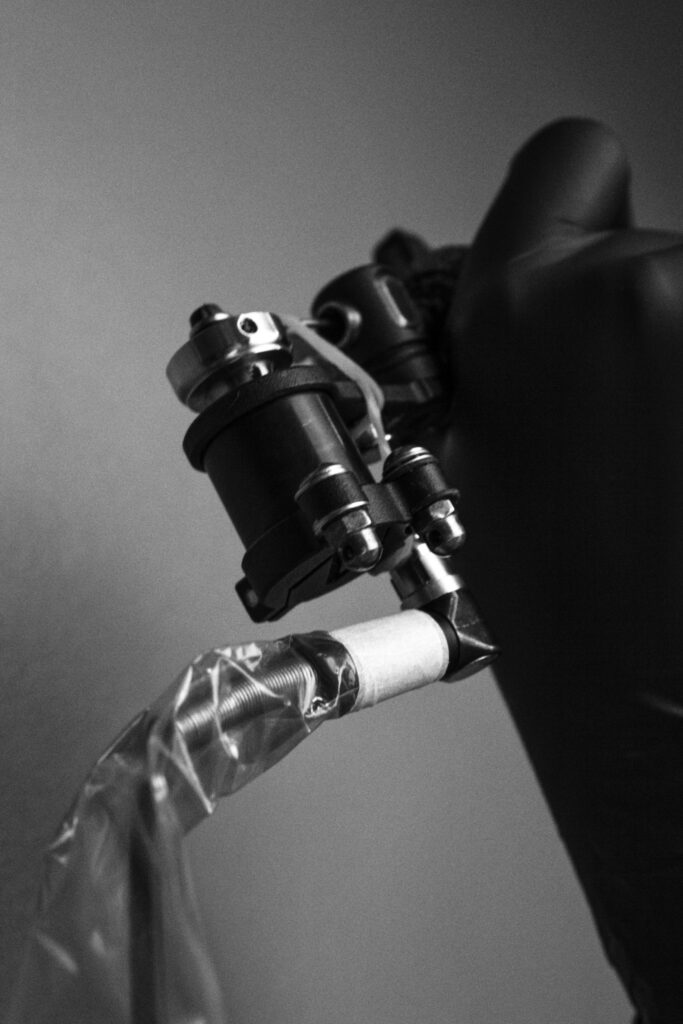
- Pen machine: looks almost exactly like a fat marker or vape pen. It has a round grip, a motor in the body and a disposable cartridge needle that clicks into the front. Many pen machines are wireless with a built in battery.
All three connect to a power supply or battery, and all use a single use needle cartridge or needle bar with a disposable grip. If you see a cheap plastic machine sold online with loose needles and no sterile packaging, that is not what a professional tattoo gun looks like, and it is not safe to use.
How Does a Tattoo Gun Work?
Every tattoo gun has the same basic parts: a frame, a motor or electromagnetic coils that create movement, a grip where the artist holds it, a tube or cartridge that guides the needle, and a power source. The power supply lets the artist adjust voltage, which changes speed and hitting force.
Ink is held in the needle grouping by capillary action when the artist dips it into a small ink cap. As the needle moves, it pierces the skin and leaves pigment behind. All needles and cartridges must be sterile and single use.
Types of Tattoo Guns
Coil Machines
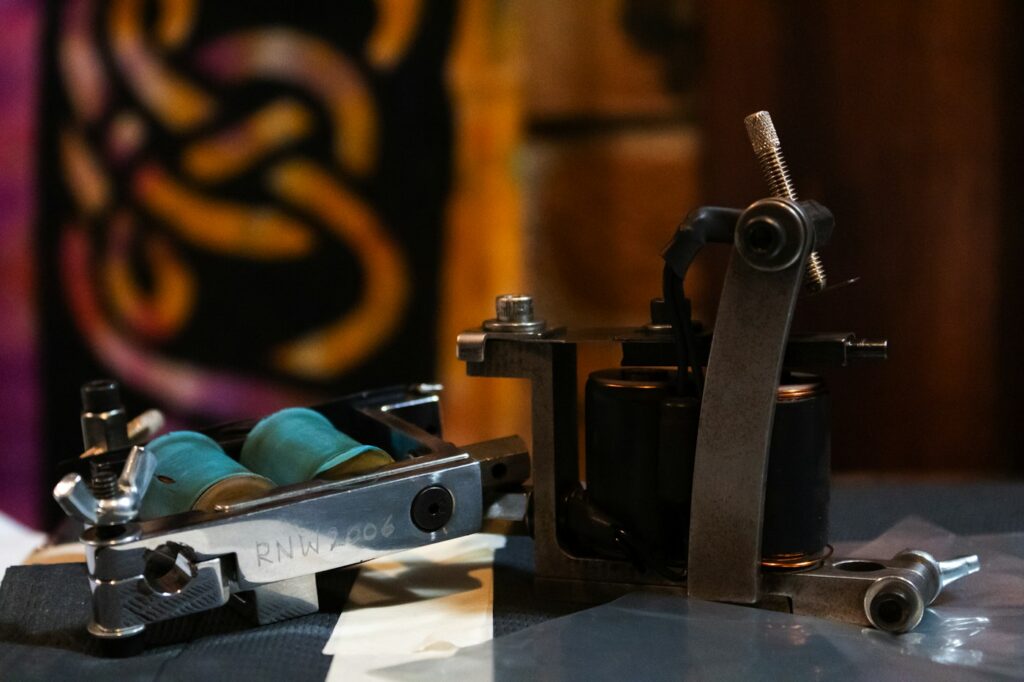
Coil machines use two electromagnetic coils that pull a metal armature bar down, then a spring pushes it back up, creating the classic buzzing sound. Artists usually tune separate coil machines for lining and shading. They are loved for their punchy, traditional feel, especially in bold American traditional work, but they are heavier and need regular tuning.
Rotary Machines
Rotary machines use a small electric motor that turns a cam to drive the needle. They are quieter, lighter and more consistent, and one machine can often handle both lining and shading. Many realism and fine line artists prefer them for smooth gradients.
Pen Style Machines
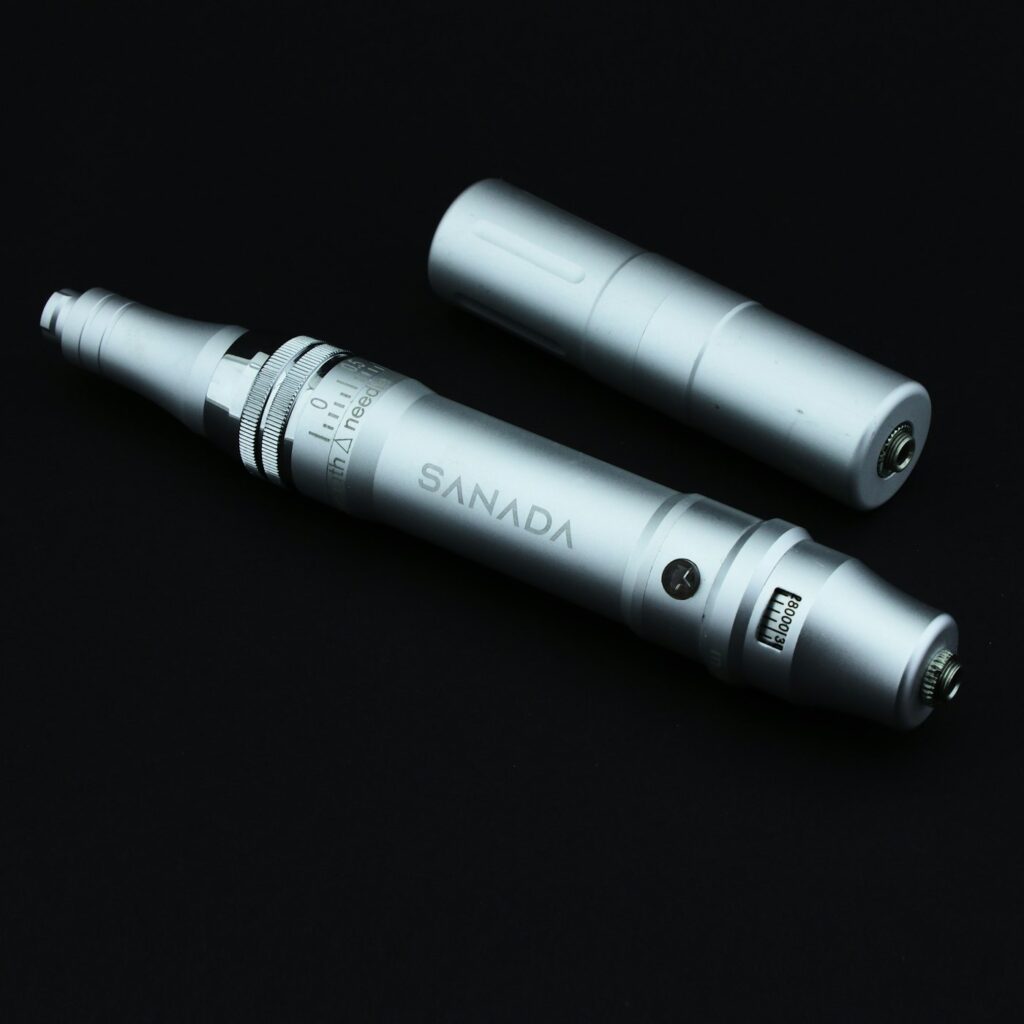
Pen machines are rotary machines built into a slim, pen shaped body. They use disposable needle cartridges that click in and out, which makes needle changes fast and hygienic. Many modern pens are wireless, with rechargeable battery packs. Their comfortable grip makes long sessions easier on the artist's hand.
Tattoo Needle Groupings
The tattoo gun is only half of the story; the needle configuration shapes every line.
- Round liners (RL): needles grouped tightly in a circle for clean outlines.
- Round shaders (RS): a looser circle for small areas of shading and color.
- Magnums (M1 and M2): flat rows of needles for filling large areas.
- Curved or soft edge magnums (RM): rounded edges for smooth, blended shading.
- Flats (F): a straight row for sharp geometric shapes.
Power Supplies and Voltage
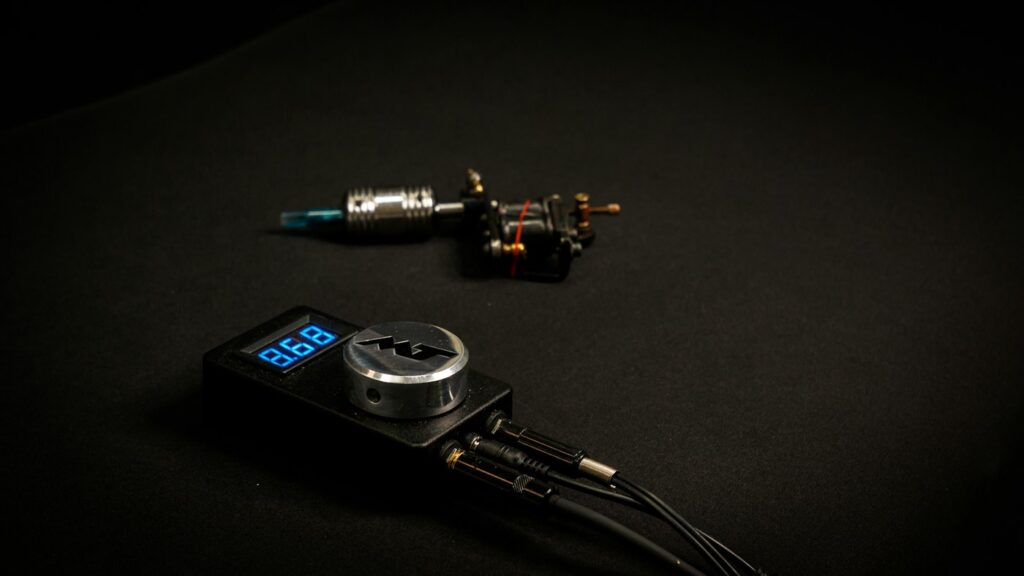
A power supply converts wall power into the steady voltage the machine needs, and a foot pedal lets the artist start and stop hands free. Lower voltage suits soft shading, while higher settings give firmer lines. Every machine and needle combination behaves differently, which is why tuning takes years of experience.
A Short History of the Tattoo Gun
Before electricity, every tattoo was done by hand, as described in our stick and poke tattoo guide. In 1891, New York tattoo artist Samuel O'Reilly patented the first electric tattoo machine, inspired by Thomas Edison's electric pen for copying documents. Coil machines followed soon after and shaped the look of tattoos for a century. Rotary and pen machines became popular in the 2000s and 2010s. You can read about Edison's original invention at the Smithsonian Institution.
Corded vs Wireless Machines
Traditional machines connect to a power supply with a clip cord or RCA cable. Corded setups deliver steady, reliable power and never run out mid session, which is why many artists still keep one on their station.
Wireless pens carry a rechargeable battery on the back or in the grip. Without a cable pulling on the hand, the artist can move freely around the client, which helps on awkward placements such as ribs or backs. Most artists who use wireless models keep a spare charged battery ready so a long session is never interrupted.
How Artists Keep Machines Clean
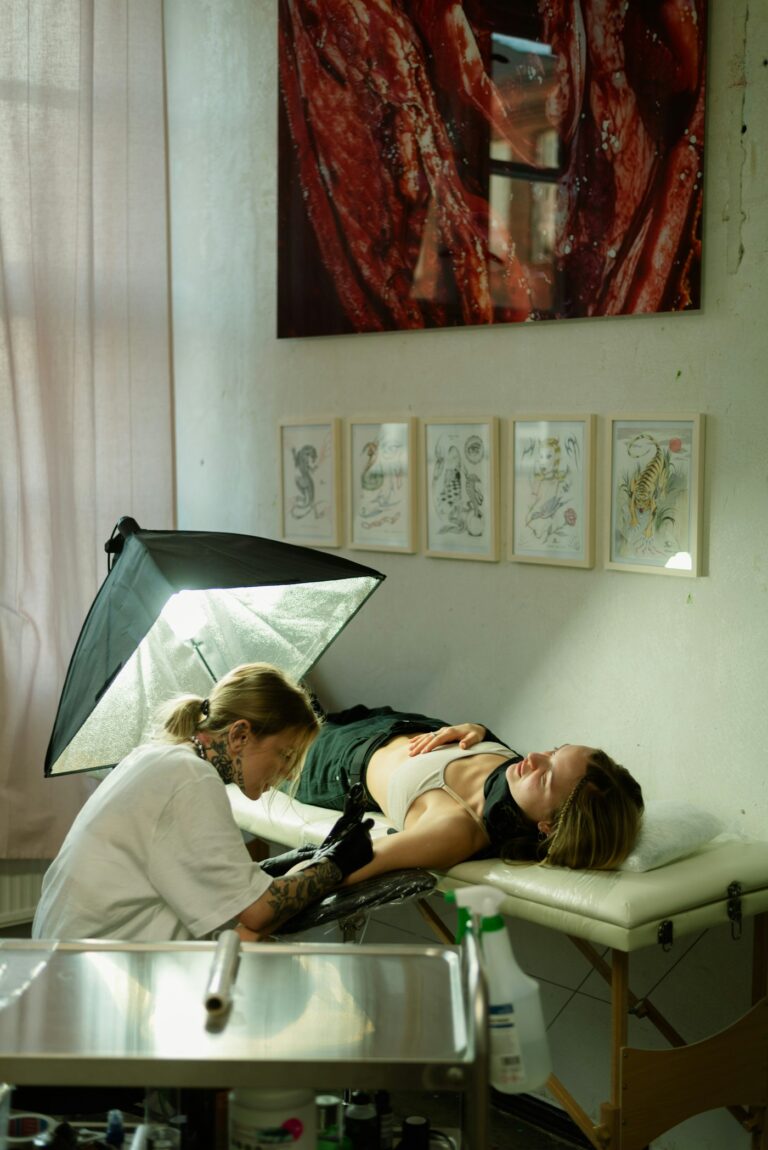
Because the machine itself cannot go into an autoclave, professional artists protect it with disposable plastic barriers before every client. Grips and tubes are either single use or sterilized between appointments, and modern cartridges include a membrane that stops ink and fluids from flowing back into the machine.
After each session the barrier is removed and thrown away, and the machine is wiped with a hospital grade disinfectant. This routine, together with proper aftercare at home, is what keeps clients safe from infection.
Should You Buy a Tattoo Gun Kit?
Cheap tattoo gun kits are sold everywhere online, but using one on yourself or friends without training is risky. Without proper sterilization, bloodborne pathogen training and technique, you can cause infections, scarring and blowouts. Many states also require a license to tattoo others.
If you want to become an artist, start with drawing and a proper tattoo apprenticeship. Your mentor will teach you which machines to buy, how to set them up and, most importantly, how to work safely.
What to Look for at the Studio
- The artist opens new, sealed needles or cartridges in front of you.
- Machines and cords are covered with plastic barriers.
- Gloves are changed whenever the artist touches anything outside the work area.
- Ink is poured into single use caps, never used straight from the bottle.
- The studio has a visible license and a clean, organized workspace.
Good hygiene matters far more than which brand of tattoo gun an artist uses. Read our first tattoo tips to prepare for your appointment.
Frequently Asked Questions
Why do artists call it a tattoo machine instead of a tattoo gun?
Because nothing is fired. The word machine describes how it actually works and shows respect for the craft.
Which tattoo gun hurts less?
Rotary and pen machines often feel smoother, but pain depends more on placement and the artist's technique. See our tattoo pain chart.
How fast does a tattoo gun move?
Most machines move the needle roughly 50 to 150 times per second, depending on voltage and setup.
Is a coil or rotary machine better?
Neither is better overall. Coils suit bold traditional work, while rotaries and pens suit smooth shading and realism. Many artists use both.
Can I tattoo myself with a kit?
It is not recommended. Without training, the risk of infection, scarring and poor results is high.
Image Credits
All photos from Unsplash: Andrej Lisakov, Ilya Godze, Leiada Krozjhen, Jacob Campbell, Foto Bakirkoy, Gabriel Vasiliu, Donovan Silva and Maxim Yuryshev.