Pico Laser Tattoo Removal vs Q-Switch: 7 Proven Differences for the Best Results
Pico laser tattoo removal is the newest and most talked about way to fade unwanted ink, but the older Q-switch laser is still used in most clinics. Both work, both are cleared by the FDA, and both can remove a tattoo completely over several sessions. The difference is in how fast they fire, how they break up the ink, which colors they handle best and how much each session costs. For the full process, risks and aftercare, see our complete tattoo removal guide.
This guide explains pico laser tattoo removal and Q-switch laser tattoo removal in plain language, compares them side by side in 7 key differences, and helps you choose the right option for your tattoo, your skin and your budget.
Table of Contents
How Laser Tattoo Removal Works
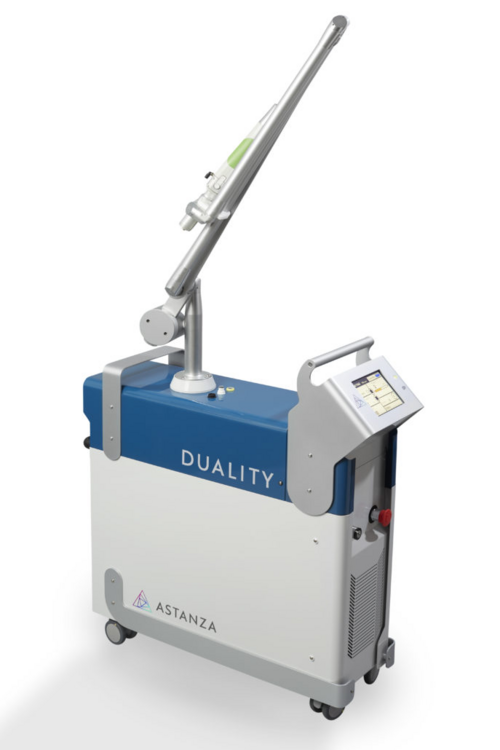
Tattoo ink sits in the dermis, the layer of skin under the surface, in particles that are too big for your body to clear on its own. A tattoo removal laser sends extremely short, powerful pulses of light into the skin. The ink absorbs that light, heats up and shatters into much smaller fragments.
Over the following weeks, your immune system carries those tiny fragments away through the lymphatic system, and the tattoo slowly fades. That is why laser tattoo removal is done in sessions spaced 6 to 8 weeks apart: the laser breaks the ink, and your body does the cleaning.
The two big families of tattoo removal lasers differ mainly in pulse length. Q-switch lasers fire in nanoseconds (billionths of a second). Pico lasers fire in picoseconds (trillionths of a second), roughly ten to a hundred times faster.
What Is a Q-Switch Laser?
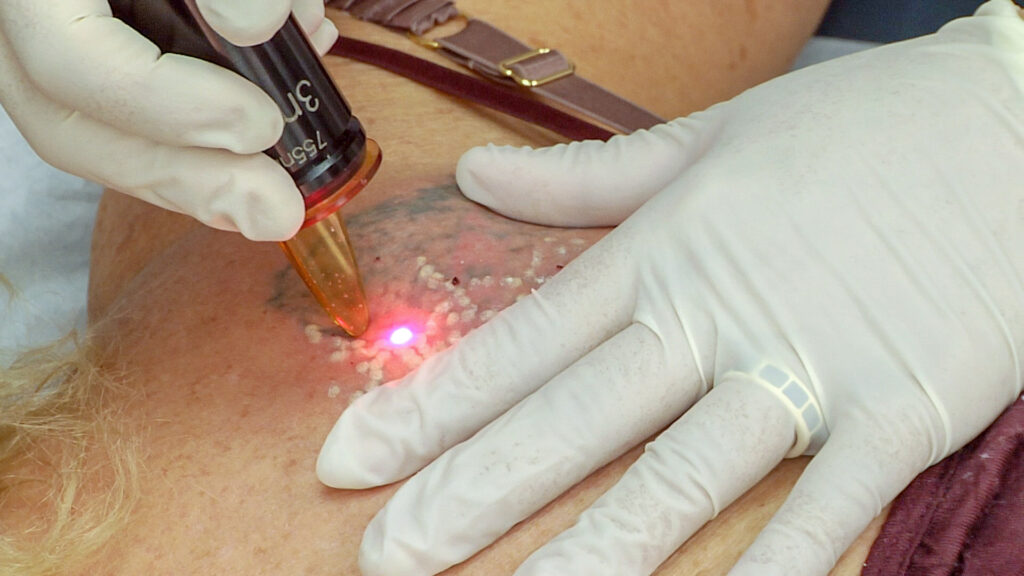
Q-switched lasers have been the standard for tattoo removal since the 1990s. The name comes from the quality switch that lets the laser store energy and release it in a single, very short burst. The most common type is the Q-switched Nd:YAG laser, which works at two wavelengths: 1064 nm for black and dark blue ink, and 532 nm for red, orange and some yellows. Q-switched ruby (694 nm) and alexandrite (755 nm) lasers are also used for green and blue.
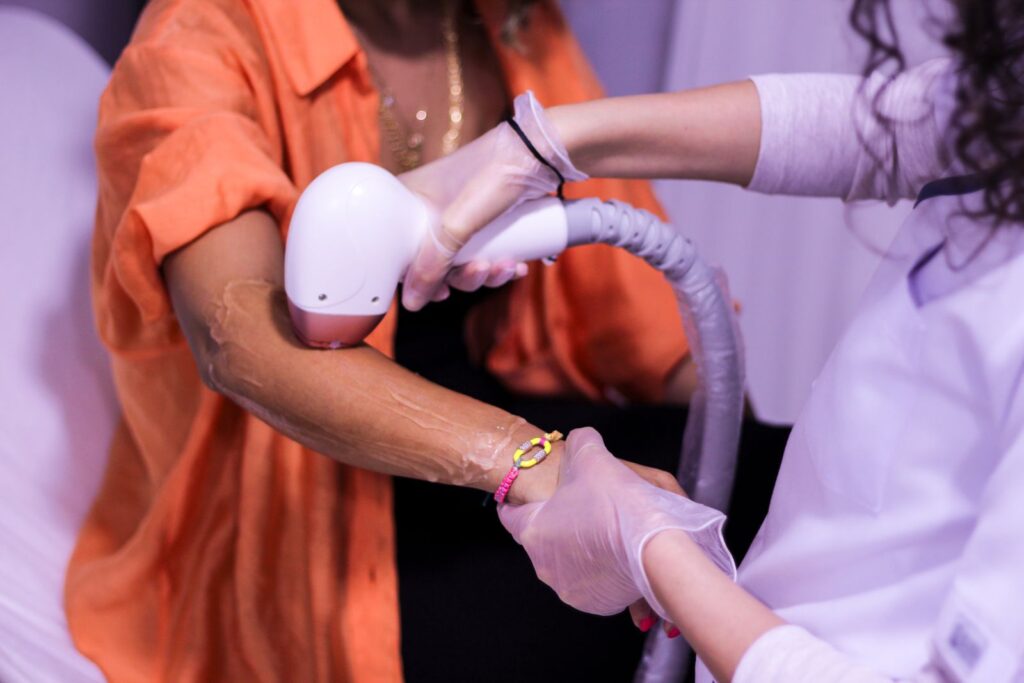
In the photo above you can see the white frosting that appears right after each pulse. It is a normal, temporary reaction caused by gas released as the ink breaks apart, and it fades within minutes. Q-switch laser tattoo removal is proven, widely available and usually cheaper per session, which is why many clinics still rely on it.
What Is a Pico Laser?
Pico lasers deliver pulses in picoseconds. The first picosecond laser cleared by the FDA for tattoo removal was PicoSure in 2012, followed by systems such as PicoWay and enlighten. Because the pulse is so short, pico laser tattoo removal relies more on a photoacoustic effect, a mechanical shock wave that shatters the ink, and less on heat.
With pico laser tattoo removal, the result is ink broken into much smaller particles, which the body may clear more easily. Many clinics report fewer sessions and better results on stubborn colors like blue and green with a pico laser, although results vary from person to person and depend heavily on the tattoo itself.
Pico Laser Tattoo Removal vs Q-Switch: 7 Key Differences
1. Pulse Speed
Q-switch lasers fire in nanoseconds. Pico lasers fire in picoseconds, about a thousand times shorter per unit. The faster pulse is the main reason pico laser tattoo removal can break ink into finer particles.
2. How the Ink Breaks Apart
Q-switch lasers rely more on heat plus some shock wave effect, breaking ink into small pebbles. Pico lasers rely mostly on the shock wave, breaking ink into something closer to dust. Smaller particles are generally easier for the immune system to remove.
3. Number of Sessions
A professional black tattoo often needs about 6 to 12 Q-switch sessions, sometimes more. With pico laser tattoo removal, many clinics quote somewhat fewer sessions for similar tattoos. Treat any exact promise with caution: the number depends on ink, depth, color, age, location and your immune system.
4. Ink Colors
Both lasers handle black ink well. Pico laser tattoo removal usually has the edge on blue and green inks and on tattoos that stopped fading after earlier Q-switch treatments. Yellow, white and some neon colors remain hard for every laser.
5. Pain and Downtime
Both feel like hot rubber bands snapping on the skin. Because pico lasers rely less on heat, some people find them slightly more comfortable, with less swelling afterward, but the difference is small. Numbing cream or cooling air is used with both. Read our guide to tattoo numbing cream.
6. Cost per Session
Pico laser tattoo removal uses expensive machines, so sessions usually cost more. In the US, a Q-switch session for a small to medium tattoo is often about $150 to $400, while pico laser tattoo removal is often about $250 to $600. Fewer sessions can partly balance the higher price. See our full tattoo removal cost guide.
7. Skin Types and Side Effects
The 1064 nm wavelength, available on both Q-switch and most pico systems, is the safest choice for darker skin because less energy is absorbed by melanin. Both technologies can cause blistering, temporary lightening or darkening of the skin and, rarely, scarring. The skill of the operator matters more than the brand of laser. Read our guide to tattoos on dark skin for more on skin tone and ink.
Which Laser Is Right for Your Tattoo?
- A simple black tattoo on a tight budget: Q-switch laser tattoo removal is a solid, proven choice.
- Blue, green or multicolor work: pico laser tattoo removal often performs better.
- A tattoo that stopped fading after Q-switch sessions: switching to pico laser tattoo removal can help break the remaining ink.
- Fading for a cover up: either laser works. Two to four sessions are often enough to lighten a tattoo before new work. See our cover up tattoo ideas.
- Darker skin: choose a clinic experienced with 1064 nm treatments, whatever the laser type.
Wavelengths and Ink Colors
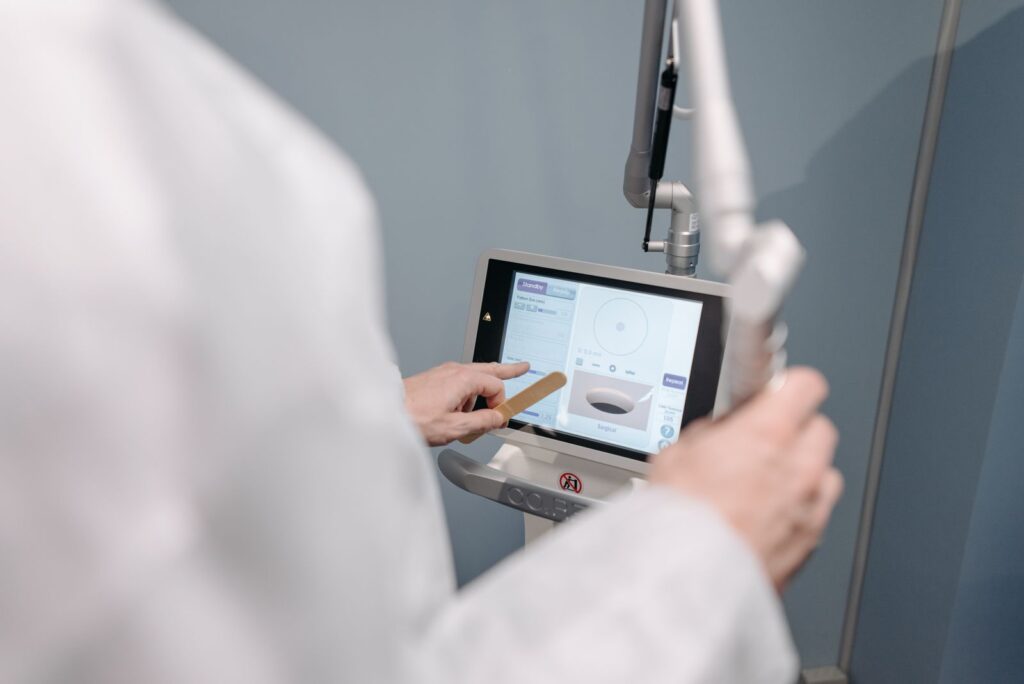
The wavelength must match the ink color, because each color absorbs different light. Your technician adjusts the wavelength, spot size and energy on the machine for every area of your tattoo:
- 1064 nm: black, dark blue and dark gray. Safest for darker skin.
- 532 nm: red, orange, pink and some yellows.
- 755 nm (alexandrite): blue and green. The original PicoSure wavelength.
- 694 nm (ruby): green and blue on lighter skin.
- 785 and 730 nm (on some pico systems): stubborn blues and greens.
A good clinic will tell you which wavelengths their laser has and which of your colors are likely to fade fully. Learn more about pigments in our tattoo ink guide.
What a Laser Removal Session Feels Like
- You will wear protective eyewear, and the area is cleaned. Some clinics apply numbing cream 30 to 60 minutes before.
- The technician tests a small spot to choose the right settings.
- The laser is passed over the tattoo. Each pulse feels like a hot snap, and a cooling device blows cold air on the skin.
- A small tattoo takes only a few minutes. Larger pieces can take 15 to 30 minutes.
- The area is covered with ointment and a bandage. Redness, swelling and frosting are normal.
Most people say the treatment hurts more than getting the tattoo, but it is much shorter. Compare body areas in our tattoo pain chart.
How Many Sessions Will You Need?
No laser removes a professional tattoo in one visit. Clinics often use the Kirby-Desai scale, which scores these factors to estimate sessions:
- Skin type: lighter skin usually allows more aggressive settings.
- Location: tattoos near the heart (chest, neck) fade faster than hands, ankles and feet, where circulation is weaker.
- Colors: black only fades fastest; multiple colors take longer.
- Amount of ink: dense professional work takes more sessions than thin amateur lines.
- Scarring or layering: old scars, cover ups and blowouts slow progress.
Smoking, poor sleep and skipping aftercare can also slow fading. Spacing sessions at least 6 to 8 weeks apart gives your body time to clear the ink and lowers the risk of side effects.
Safety, Side Effects and Choosing a Provider
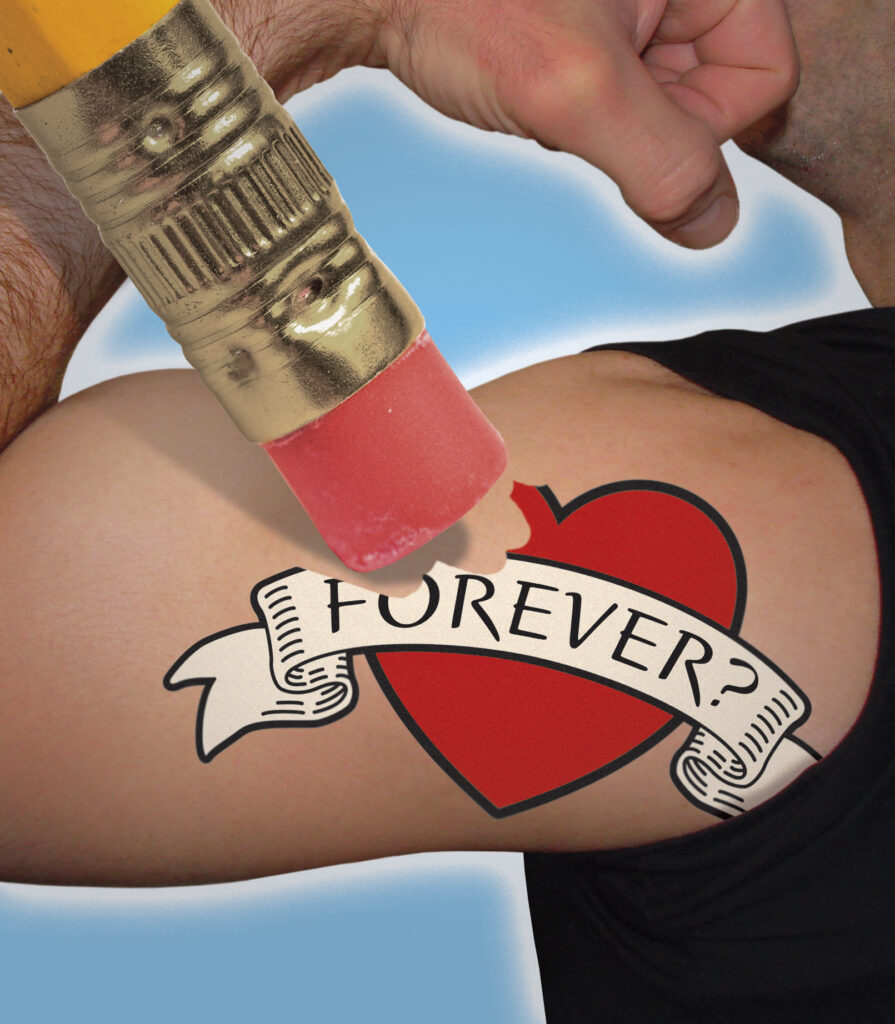
Laser tattoo removal is safe when done by a trained professional, but it is a medical procedure. Possible side effects include blisters, scabbing, temporary lightening or darkening of the skin, and rarely scarring or a texture change. Learn how to lower that risk in our guide to tattoo removal scars. The US Food and Drug Administration explains the risks and options in its guide to tattoo removal options and results, and warns against do it yourself removal creams.
When choosing a clinic, ask who performs the treatment, which laser and wavelengths they use, how many tattoos they have removed, and to see before and after photos of their own patients. The American Society for Dermatologic Surgery recommends treatment by or under the supervision of a board certified dermatologist.
Aftercare After Laser Tattoo Removal
- Keep the area clean and covered with a thin layer of ointment for the first few days.
- Do not pop blisters or pick scabs. Let them heal on their own.
- Avoid swimming, hot tubs and saunas until the skin has fully healed.
- Protect the area from the sun with clothing and, once healed, sunscreen.
- Watch for signs of infection such as spreading redness, heat or pus. See our guide to tattoo infection signs.
Most of the same principles as healing a new tattoo apply, so our tattoo aftercare guide is a helpful reference.
Frequently Asked Questions
Is pico laser tattoo removal better than Q-switch?
Pico laser tattoo removal often clears blue, green and stubborn ink with fewer sessions, but Q-switch lasers remain very effective for black ink and usually cost less per session. The best choice depends on your tattoo and the clinic's experience.
How many sessions does pico laser tattoo removal take?
Many black tattoos need roughly 4 to 10 pico sessions, but the real number depends on ink density, colors, location, age and your skin.
Does pico laser tattoo removal hurt?
Yes, it feels like hot rubber band snaps. Numbing cream and cooling air make it manageable, and small tattoos take only a few minutes.
Can a pico laser remove a tattoo completely?
In many cases yes. Pico laser tattoo removal works especially well on black ink. Some colors, like yellow and white, may leave a faint shadow even after many sessions.
Is Q-switch laser tattoo removal safe for dark skin?
Yes, when an experienced provider uses the 1064 nm wavelength and conservative settings. The same is true for pico lasers.
Image Credits
Photos from Pexels: Larysa Stratiichuk (featured image), Pavel Danilyuk and Orhun Ruzgar OZ.
- Tattoo removal laser workstation: NixTheKoolest, CC BY-SA 4.0, via Wikimedia Commons.
- Q-switch laser session: Alice Pien MD, CC BY-SA 4.0, via Wikimedia Commons.
- Tattoo removal illustration: FDA photo illustration by Michael J. Ermarth, public domain, via Wikimedia Commons.