Tattoo Blowout: 4 Proven Fixes and the Best Tips to Prevent It
You wait for the redness to calm down, the peeling to finish, and then you notice it: a blue or grey haze spreading out from the lines of your new tattoo. It looks like the ink bled under the skin. That is a tattoo blowout, one of the most common and most frustrating tattoo problems.
This guide explains exactly what a tattoo blowout is, why it happens, how to tell it apart from normal healing, whether it can get worse, and the real options to fix it, from clever cover ups to laser. We also share how to avoid it on your next tattoo.
Table of Contents
What Is a Tattoo Blowout?
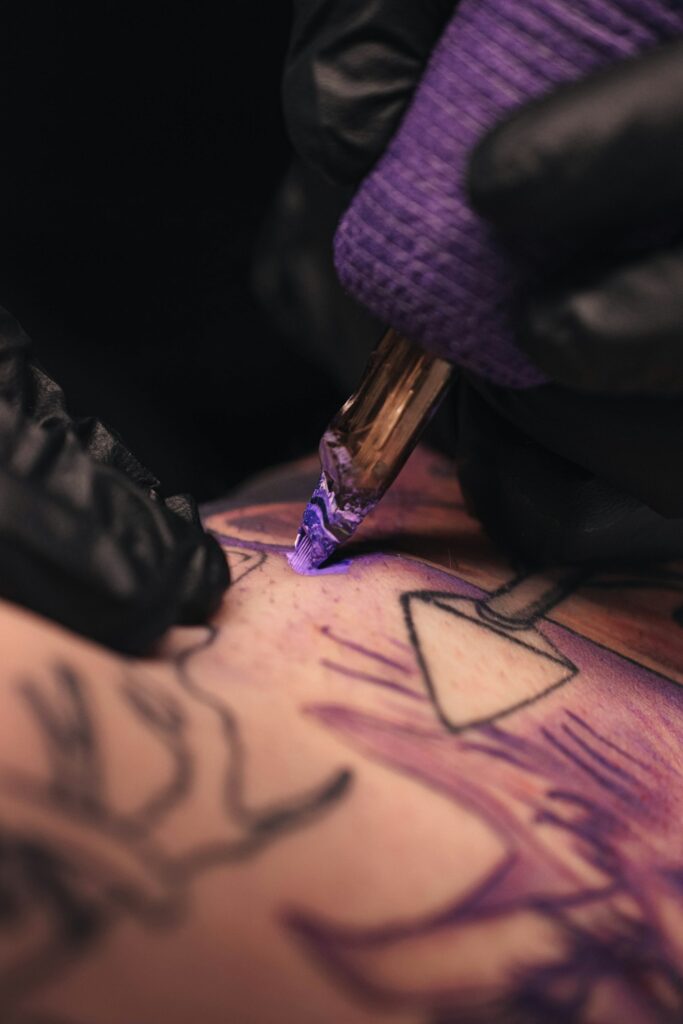
A tattoo blowout happens when ink is pushed too deep or at the wrong angle, past the dermis where it belongs and into the fatty layer below. Down there the ink spreads sideways instead of staying in a tight line. The result is a blurry, bruise like shadow around the lines of the tattoo.
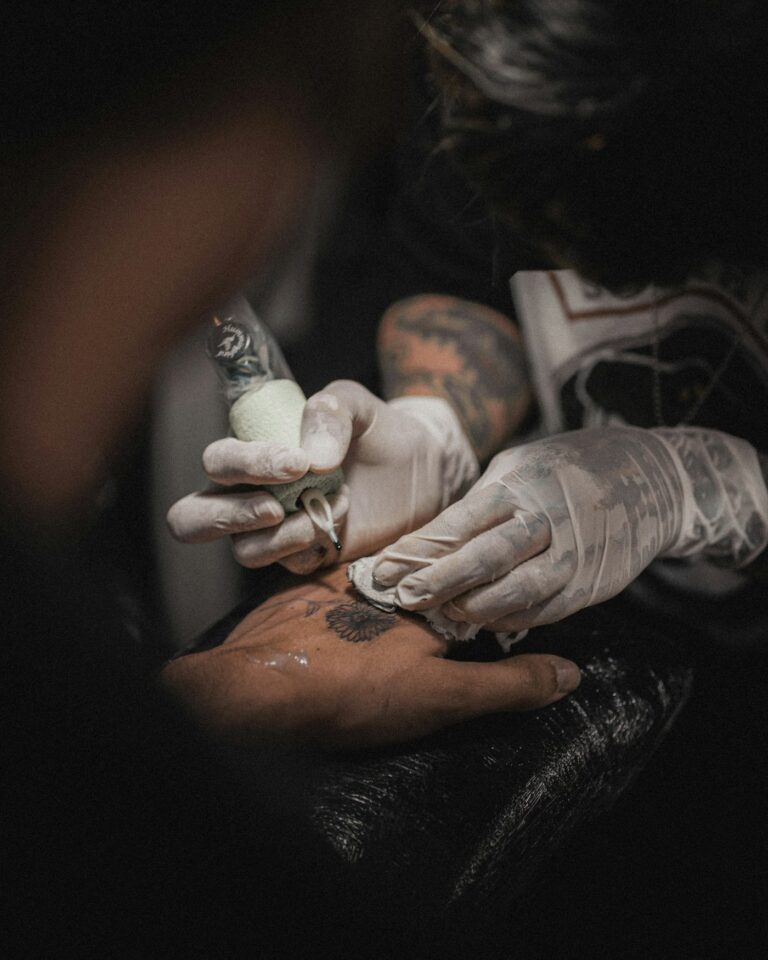
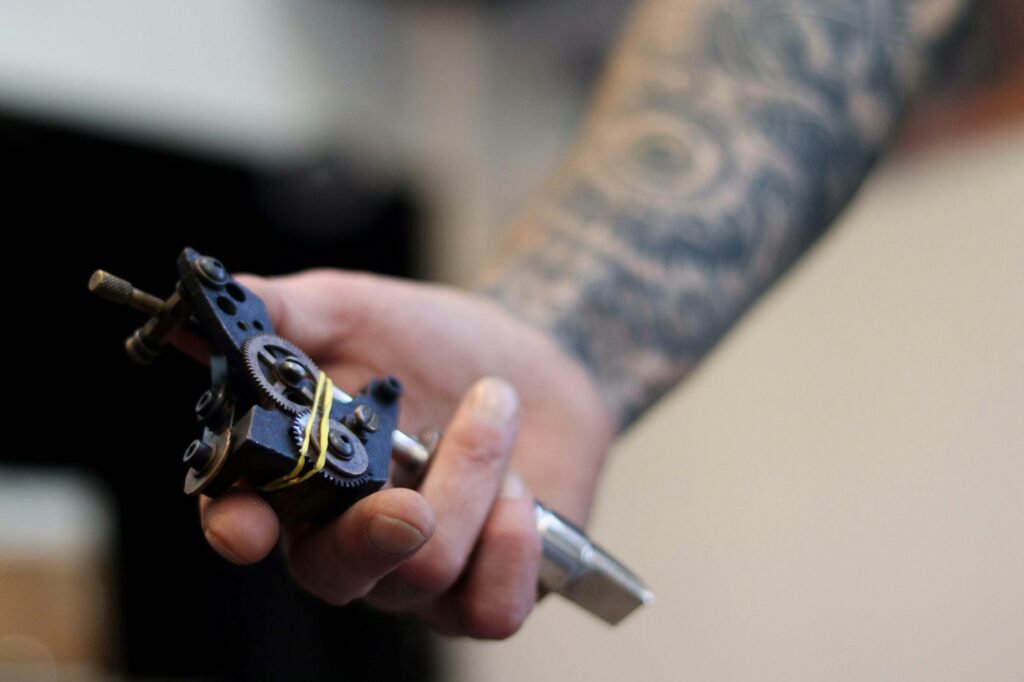
The dermis is only about 1 to 2 millimeters deep in most areas and even thinner on the hands, feet, inner arm and ankles. Tattoo needles are meant to deposit ink roughly 1.5 to 2 millimeters under the surface. A small error in depth, angle or skin tension is enough to cause a tattoo blowout. Blowouts are often linked to needle depth and machine setup. See what a tattoo gun looks like and how it works.
What Does a Tattoo Blowout Look Like?
- A blue, grey or green haze along the lines, often on one side.
- Lines that look thicker or fuzzier than the stencil.
- Blurring that shows up within days to a few weeks after the tattoo, once the swelling goes down.
- A shadow that does not fade with healing, unlike bruising.
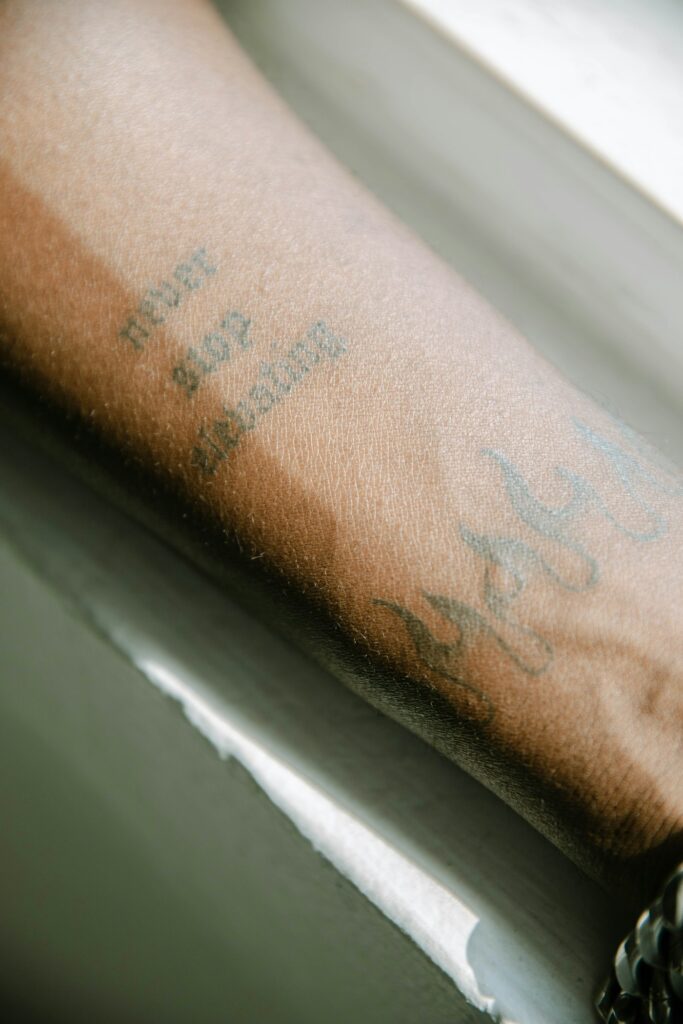
Blowouts are most visible in fine line and script tattoos, because thin letters leave no room to hide spreading ink. Bold traditional tattoos can have small blowouts that nobody notices.
Tattoo Blowout vs Normal Healing
Fresh tattoos often look a little blurry, swollen or bruised in the first few days. Bruising is red, purple or yellow, changes color and fades in about two weeks. A tattoo blowout is blue or grey, sits in a fixed position along the lines, and does not change once the skin has settled.
Give the skin at least four weeks before you judge. If the haze is still there once the tattoo healing process is complete, it is most likely a blowout. If you see spreading redness, heat, pus or fever, that is not a blowout: read our tattoo infection signs guide and see a doctor.
What Causes a Tattoo Blowout?
- Needle too deep: the most common cause, often from heavy hand pressure.
- Wrong angle: holding the machine too flat can push ink sideways.
- Loose skin: if the skin is not stretched properly, the needle can drag and dig in.
- Thin or delicate skin: the inner arm, wrist, ankle, feet, ribs and hands are high risk.
- Inexperience: blowouts are far more common with newer artists and home tattoos.
- Client movement: sudden flinching can push the needle deeper.

Where Are Blowouts Most Common?
Placement matters as much as skill. Areas with thin skin and little fat under it are the riskiest. The inner wrist, inner bicep, top of the foot, ankle and fingers are classic tattoo blowout zones. If you want a delicate tattoo in one of these spots, look for an artist who specializes in fine line tattoos and ask how they handle thin skin. Our tattoo placement guide compares every area.
Does a Tattoo Blowout Get Worse Over Time?
A blowout itself does not spread further once the skin has healed. However, all tattoos soften with age as the body slowly moves ink particles, so the haze may look slightly softer over the years. Sun exposure can make every tattoo blur faster, so daily sunscreen on healed ink is a good habit.
How to Fix a Tattoo Blowout
A tattoo blowout is permanent without treatment, but there are several ways to make it disappear or blend in.
1. Rework the Design
A skilled artist can thicken the lines, add shading or a background, or add bold outlines so the haze looks intentional. This is the fastest and cheapest fix for small blowouts.
2. Cover It Up
For larger or very visible blowouts, a new design placed on top can hide everything. See our guide to cover up tattoo ideas for designs that work.
3. Laser Correction
Laser treatment can target the blurry ink around the lines. Some clinics fade only the blowout area, others lighten the whole tattoo so the artist can redo it cleanly. Expect two to five sessions. Read our tattoo removal cost guide for prices and the American Academy of Dermatology for safety advice.
4. Live With It
Small blowouts often become invisible from a normal viewing distance. Many people decide that a slightly soft line is not worth the cost and pain of correction.
How to Prevent a Tattoo Blowout
- Choose an experienced, licensed artist and study their healed work, not just fresh photos.
- Be extra careful with fine line and script on thin skin areas.
- Stay still, breathe steadily and tell your artist before you need to move.
- Avoid alcohol and blood thinners before your session; see our first tattoo tips.
- Avoid stretching or rubbing the area while it heals and follow our tattoo aftercare guide.
If a tattoo blowout does happen, stay calm. Talk to your artist first: a professional will usually offer a free or discounted rework, and many will be honest about whether laser is a better route.
Blowout Risk by Tattoo Style
Some styles hide mistakes far better than others. Knowing the risk helps you choose a design that suits your skin.
- Fine line and single needle: highest risk to show, because one hazy line is obvious.
- Script and lettering: high risk, especially small cursive fonts where loops close up.
- Minimal symbols: medium risk; a tiny heart or star has little room for error.
- American traditional: low risk to show, since bold outlines and solid color absorb small spreads.
- Blackwork and heavy shading: lowest visibility, as the dark fill hides any haze.
How to Talk to Your Artist About It
If you think something went wrong, send your artist clear photos in daylight after the tattoo has fully healed. Stay calm and factual: describe where the haze is and ask what they suggest. Most professionals care about their reputation and will offer to look at it in person.
Ask whether they recommend a rework, a cover up or laser, and whether there will be a cost. If the artist is dismissive, get a second opinion from another experienced studio before you decide. Keep in mind that the fix should be done by someone who is confident with correction work, not necessarily by the person who made the original tattoo.
Finally, write down what you learned. Next time, choose a slightly bolder line weight for thin skin, ask about the artist's experience with that placement, and plan a check in once the piece has healed.
Frequently Asked Questions
How soon can you tell if a tattoo is blown out?
Signs can appear within a few days, but wait around four weeks for swelling and bruising to settle before you decide.
Can a tattoo blowout go away on its own?
No. Bruising fades, but a true blowout is ink in the wrong layer of skin and stays unless it is treated.
Is a tattoo blowout the artist's fault?
Usually it comes from technique, but thin skin and client movement also play a role. Most reputable artists will help fix it.
Can you tattoo over a blowout?
Yes. Reworking the lines or covering the area with a bolder design are the most common fixes.
Does aftercare cause a blowout?
No. A blowout happens during the tattoo session. Poor aftercare can cause fading or infection, but not a blowout.
Image Credits
All photos from Unsplash: Nikolas Mitsiggas, Cloutier Benjamin, Morrow Solutions, Darktopia, Faraz Ahanin and Marcelina Pawlikowska. The photos show tattooing and healed work in general and are not examples of blowouts.